Home » Others Courses » Embedded Systems Course in Pune

Embedded Systems Course in Pune

(4.9) 7458 Ratings
  • Join the Best Embedded Systems Training in Pune to Launch Your Career in Core Electronics.
  • Flexible Training Modes: Weekday, Weekend, and Online Batches Available.
  • Top Embedded Systems Training Institute in Pune with Hands-On Lab Facilities.
  • Master Key Concepts: Microcontrollers, C Programming, RTOS, ARM, Embedded C, and IoT Integration.
  • Gain Real-Time Experience Through Live Projects, Device Programming & Debugging Sessions.
  • Secure Top Electronics Roles with Placement Support, Interview Prep & Certification Assistance.

Course Duration

55+ Hrs

Live Project

3 Project

Certification Pass

Guaranteed

Training Format

Live Online (Expert Trainers)
WatchLive Classes
Course fee at
₹14500

₹18000

12258+

Professionals Trained

9+

Batches every month

2587+

Placed Students

265+

Corporate Served

What You'll Learn

Build a strong foundation in embedded systems programming with industry-standard C and C++ languages.

Master Embedded Systems Training in Pune to learn core concepts such as microcontroller architecture, real-time operating systems (RTOS), interrupts, and hardware interfacing.

Understand how embedded systems are used in various applications like IoT, robotics, automotive systems, and consumer electronics.

Learn essential coding practices for embedded software development, debugging techniques, and performance optimization.

Get hands-on experience through practical projects, simulations, and assignments that apply your knowledge in real-world scenarios.

Enroll in the Embedded Systems Course in Pune to enhance your technical expertise and launch your career in this rapidly growing field.

Comprehensive Overview of Embedded Systems Training

The Comprehensive Embedded Systems Course in Pune is a structured training program designed for both beginners and professionals looking to enhance or develop their skills in embedded systems. Embedded Systems Training in Pune covers foundational topics such as microcontroller architecture, assembly language programming, data types, control structures, and memory management.

Additional Info

Upcoming Future Transformations in Embedded Systems Course

  • AI-Powered Code Assistance: AI is revolutionizing how embedded systems developers approach programming. Future Embedded Systems courses in Pune will integrate AI-powered tools like GitHub Copilot, TabNine, and IntelliCode, which assist in code suggestions, bug detection, and syntax completion. These AI-driven assistants will help students write efficient, clean code more quickly. Learners will also receive real-time guidance on logic improvements and optimization techniques.
  • Integration with Modern Development Practices: In the evolving field of embedded systems, familiarity with modern development practices is essential. Future Embedded Systems courses will emphasize best practices in DevOps, Continuous Integration (CI), and Continuous Deployment (CD), incorporating tools like Git for version control and Jenkins for build automation Learners will engage in real-time collaboration, applying techniques such as branching, merging, and managing repositories to streamline development workflows.
  • Focus on System-Level Programming & IoT: As IoT applications continue to grow, embedded systems programming has become a vital skill for future technologies. The upcoming Embedded Systems course will focus on system-level programming offering modules on microcontroller platforms like Arduino, STM32, and Raspberry Pi. Students will gain hands-on experience in sensor integration, real-time operating systems (RTOS), and the complexities of hardware-software interaction.
  • Cross-Platform Development & Performance Optimization: As embedded systems evolve, cross-platform compatibility is becoming a priority for developers. Future courses will include modules on writing code that works seamlessly across platforms like Windows, Linux, and macOS, using tools such as Qt or CMake Students will explore techniques for multi-threading, memory profiling, and optimizing code for performance, essential skills for developing high-performance embedded applications.
  • Project-Based Learning with Real-World Applications: A hands-on approach is integral to mastering embedded systems. The future Embedded Systems course in Pune will prioritize project-based learning, where students will work on real-world applications like device drivers, embedded software for consumer electronics, and IoT-based projects. Through these projects, learners will encounter practical challenges that mirror industry workflows, such as time management, documentation and teamwork.
  • Soft Skills & Team Collaboration: In the professional world, technical skills alone are not enough. The upcoming Embedded Systems course will incorporate training soft skills such as communication teamwork and leadership all crucial for thriving in a development environment. Students will participate in group coding sessions, peer reviews, and collaborative exercises that simulate industry practices like Agile methodologies. These activities include sprint planning, daily stand-ups, and remote pair programming, providing students with the experience needed to work effectively in teams.
  • Industry Tools & IDEs Integration: Mastery of industry-standard tools is essential for embedded systems developers. The upcoming course will cover popular IDEs like Visual Studio, Eclipse, and Code::Blocks, along with debugging and profiling tools such as Valgrind and CMake. Learners will be trained in using tools for code documentation (like Doxygen) and static analysis to ensure code quality. Practical exposure to these tools will enhance students' productivity and help them develop a professional approach to embedded systems development.
  • Security & Best Practices: As embedded systems become more connected, security has become a top priority. Future Embedded Systems Certification Course in Pune will emphasize secure coding practices, covering areas such as buffer overflows, memory leaks, and pointer mismanagement, which are common vulnerabilities in low-level programming. Students will learn to implement techniques like bounds checking, safe memory allocation, and secure input handling to prevent security breaches.
  • Data Structures, Algorithms, and Interview Readiness: Embedded systems developers must have a solid understanding of data structures and algorithms. The future course will include in-depth modules on arrays, linked lists, trees, graphs, and other data structures, along with essential algorithms for sorting, searching, and optimizing performance. To help students succeed in interviews, the course will incorporate coding exercises focused on problem-solving and algorithm optimization.
  • Alignment with Industry Certifications: To further boost career prospects, the Embedded Systems training will align with globally recognized certifications such as the C++ Certified Professional Programmer (CPP) and C Certified Entry-Level Programmer (CLP). Students will be guided through certification syllabi, practice exams, and strategies for successfully passing certification tests. These credentials validate a student’s technical proficiency and add value to their resume, making them more attractive to potential employers

Understanding Tools and Technologies in Embedded Systems Course

  • Embedded C Programming: Embedded C extends standard C with specific features that cater to hardware-level programming. This module dives into writing efficient, low-level code to interact with embedded hardware. Learners will study memory-mapped I/O, bitwise operations, and hardware-specific libraries. The course also emphasizes best practices in embedded coding such as writing ISR (Interrupt Service Routines), handling real-time constraints, and ensuring low power consumption.
  • Real-Time Operating Systems (RTOS): A Real-Time Operating System enables multitasking and timing control in embedded environments. This module introduces concepts such as task scheduling, context switching, semaphores, and message queues. Learners will explore popular RTOS platforms like FreeRTOS and RTEMS. The course includes practical implementation of task creation, prioritization, and synchronization.
  • Embedded System Development Tools: The right set of tools significantly enhances embedded system development efficiency. This module covers the use of cross-compilers, assemblers, linkers, and simulators. Learners will understand the process of compiling embedded code, generating hex files, and flashing firmware onto microcontrollers using tools like Keil, MPLAB, and STM32CubeIDE. Emphasis is also placed on using logic analyzers, oscilloscopes, and protocol analyzers for system debugging.
  • Communication Protocols in Embedded Systems: Communication protocols enable embedded devices to interact with other devices and systems. This module introduces key protocols like UART, SPI, I2C, CAN, and USB. Learners will study the electrical characteristics, timing diagrams, and data framing techniques for each protocol. Real-world implementation using microcontroller registers and libraries is emphasized through practical assignments.
  • Sensor and Actuator Interface: Interfacing sensors and actuators is a core aspect of embedded systems. This module explains how to read data from analog and digital sensors (e.g., temperature, pressure, IR) and control actuators like motors, relays, and servos. Learners will explore ADC (Analog to Digital Conversion), PWM (Pulse Width Modulation), and DAC (Digital to Analog Conversion) techniques. Emphasis is placed on real-time signal processing and noise reduction.
  • Embedded Linux Basics: Embedded Linux is widely used in complex systems like routers and industrial controllers. This module introduces learners to the Linux operating system in an embedded context, covering kernel structure, device drivers, and bootloaders. Topics include building a custom Linux image using tools like Buildroot or Yocto and configuring the root filesystem. Learners will also explore process management and shell scripting.
  • Internet of Things (IoT) Integration: IoT combines embedded systems with networking to enable remote monitoring and control. This module explores IoT architecture, communication standards like MQTT, HTTP, and CoAP, and cloud integration. Learners will work with Wi-Fi and Bluetooth modules (e.g., ESP32, HC-05) to transmit data to web dashboards or mobile apps. The course includes hands-on projects like smart home automation and environmental monitoring.
  • Embedded System Project Development: Project-based learning solidifies theoretical knowledge into practical skills. In this capstone module, students will work on real-world projects involving sensor networks, automation, or wearable devices. Emphasis is placed on project planning, hardware-software integration, documentation, and testing. Learners will go through the complete lifecycle — from concept to deployment.

Understanding the Duties of Hardware & Networking Course

  • Instructor/Trainer: The instructor is responsible for delivering embedded systems course content in structured and engaging manner. They guide students through topics such as microcontroller programming, Embedded C, real-time operating systems (RTOS), communication protocols, and interfacing with sensors and actuators. Instructors conduct live coding sessions, hardware demonstrations, and practical labs to reinforce theoretical learning.
  • Curriculum Developer: The curriculum developer designs a comprehensive syllabus that reflects current trends and industry demands in embedded systems. This includes selecting relevant hardware platforms (such as ARM Cortex, AVR, or PIC), tools (like Keil, STM32CubeIDE, and MPLAB), and technologies (e.g., IoT, RTOS, Embedded Linux). They ensure that topics such as memory management, device drivers, communication protocols, and power optimization are included.
  • Technical Support Specialist: The technical support specialist provides critical assistance in resolving technical issues encountered by students during the course. They help learners install and configure embedded development tools, IDEs, toolchains, and microcontroller programming environments. Support includes troubleshooting hardware connection errors, simulation problems, or firmware upload failures.
  • Project Mentor: The project mentor helps students translate theory into practice by guiding them through real-world embedded system projects. These may include building automation systems, sensor networks, or IoT-enabled devices. Mentors assist with hardware selection, schematic design, code optimization, and debugging. They encourage students to think critically, offering constructive feedback on coding style, performance and system reliability.
  • Course Coordinator: The course coordinator oversees all administrative and operational aspects of the embedded systems course. They manage class schedules, monitor attendance, track student progress, and coordinate lab sessions. The coordinator ensures that resources such as microcontroller kits, lab manuals, and software licenses are available on time. They serve as the liaison between instructors, students, and support staff, addressing concerns related to assignments, deadlines, or materials.
  • Assessment and Evaluation Specialist: The assessment and evaluation specialist designs and manages quizzes, lab assessments, and project evaluations to test students’ understanding of embedded system concepts. They assess both theoretical knowledge and practical skill including microcontroller programming, peripheral interfacing, and real-time task handling The specialist provides detailed feedback, highlights areas for improvement, and tracks each student’s performance.
  • Learning Facilitator: The learning facilitator supports an interactive and collaborative classroom environment, ensuring that students stay engaged and motivated They assist in group activities, coordinate team-based projects, and help clarify complex topics like interrupt handling, RTOS task scheduling, and memory-mapped I/O. Facilitators promote active learning by encouraging peer discussions brainstorming sessions, and shared problem-solving.
  • Student Support Advisor: The student support advisor addresses non-academic concerns to ensure students remain focused and confident throughout the course. They help learners manage their schedules, balance coursework with personal responsibilities, and understand important deadlines. Advisors also offer guidance on how to access additional learning resources, mentoring programs, or mental wellness support.
  • Industry Expert/Guest Speaker: Industry experts and guest speakers bring practical insights and current trends from the embedded systems field. They share their experiences working on real-world applications such as automotive systems, medical devices, industrial automation, and IoT solutions. These sessions provide learners with exposure to current tools, industry standards, and career pathways.
  • Quality Assurance (QA) Specialist: The QA specialist ensures that the embedded systems course materials meet high standards of accuracy, clarity, and relevance. They review course content, lab exercises, project instructions, and assessment rubrics to ensure consistency and effectiveness The QA specialist evaluates whether the material aligns with current technologies, such as modern microcontrollers, communication protocols, and RTOS platforms.

Leading Companies Seeking Embedded Systems Talent for Innovation

  • Tata Consultancy Services (TCS): TCS is a major recruiter of embedded systems engineers, particularly those skilled in C, C++, and real-time operating systems. The company seeks professionals who can develop embedded software for applications ranging from automotive systems to IoT devices. TCS values engineers who understand microcontrollers, firmware development, and hardware-software integration.
  • Infosys: Infosys actively recruits embedded systems professionals to design and implement efficient and robust firmware and system-level software. They are looking for candidates with a solid foundation in C/C++ programming, hardware interfacing, and embedded Linux. Infosys emphasizes the importance of building reliable solutions that integrate emerging technologies such as IoT, automation, and AI.
  • Cognizant Technology Solutions (CTS): Cognizant hires embedded systems developers with deep expertise in embedded C, real-time systems, and peripheral interfacing. They seek candidates who can build scalable and optimized systems for sectors such as healthcare, automotive, and industrial automation. Cognizant supports innovation through R&D and encourages engineers to integrate new technologies like machine learning and edge computing into embedded solutions.
  • Wipro Technologies: Wipro seeks embedded systems engineers to work on advanced software for embedded devices, with a focus on system performance, reliability, and scalability. Candidates with knowledge of C/C++, embedded RTOS, and digital signal processing are especially valued. Wipro offers roles in domains such as automotive electronics, medical devices, and home automation.
  • Accenture: Accenture recruits embedded systems professionals to drive digital transformation by designing next-gen embedded solutions. They look for developers proficient in embedded programming, real-time systems, and hardware abstraction. With projects that span industries such as automotive, aerospace, and smart cities, Accenture provides embedded engineers the chance to build innovative, scalable systems.
  • HCL Technologies: HCL Technologies hires embedded engineers who can design, develop, and test system-level software for complex embedded applications. They prioritize candidates with experience in microcontroller programming, device drivers, and system performance optimization HCL works on projects involving smart appliances, automotive systems, and industrial IoT, pushing boundaries in embedded innovation.
  • Capgemini: Capgemini is actively hiring embedded system developers to work on real-time software solutions across various sectors. The company seeks professionals skilled in embedded C/C++, device interfacing, and Linux-based development. Engineers are expected to contribute to projects involving robotics, connected devices, and automation. Capgemini values innovation and adaptability, and provides a structured career path for embedded engineers.
  • L&T Infotech (LTI): L&T Infotech hires embedded systems professionals who specialize in building efficient, reliable, and scalable software for embedded platforms. Candidates with experience in real-time systems, ARM-based development, and system integration are highly sought after. LTI is involved in projects across sectors like automotive safety systems, industrial control, and smart utilities. The company supports innovation-driven development and encourages its engineers to adopt new tools and techniques.
  • Tech Mahindra: Tech Mahindra is looking for embedded systems developers to contribute to innovative solutions in telecom, automotive, and consumer electronics. They seek candidates proficient in embedded programming, debugging tools, and real-time OS platforms. Tech Mahindra’s embedded teams work on the forefront of connected technologies, including 5G devices, automotive infotainment systems, and edge-based solutions.
  • IBM India: IBM India hires embedded systems professionals to work on high-performance, reliable software for smart devices and system integration. They are interested in developers with strong C/C++ skills, knowledge of embedded Linux, and the ability to work with low-level hardware components. IBM offers opportunities to develop solutions that blend embedded systems with AI, cloud computing, and advanced analytics.
View more

Embedded Sysytems Course Objectives

To enroll in Embedded Systems, it is recommended that learners have a basic understanding of electronics, programming fundamentals (especially in C or C++), and computer architecture. Familiarity with microcontrollers, digital logic, and operating systems will be advantageous. Though not mandatory, prior exposure to real-time operating systems (RTOS) or any hands-on experience with hardware boards like Arduino or Raspberry Pi can enhance the learning experience significantly.
The Embedded Systems Course in Pune provides a foundation in both hardware and software aspects of embedded design. You will gain hands-on experience with microcontrollers, embedded C programming, real-time systems, and device interfacing. The course is designed to enhance problem-solving and debugging skills, preparing you for real-world engineering challenges. It also improves your employability by aligning the curriculum with industry demands and offering project-based learning.
Embedded systems are a backbone of modern technology, playing a critical role in sectors like automotive, healthcare, telecommunications, and consumer electronics. As industries increasingly shift toward automation, smart devices, and IoT solutions, the demand for skilled embedded engineers is on the rise. Companies are seeking professionals who can build reliable, optimized, and real-time systems to power the next generation of devices, making embedded systems expertise highly valuable in today's competitive job market.
Yes, students are encouraged to apply theoretical knowledge through real-world projects during the Embedded Systems Course in Pune. These projects simulate actual industry scenarios and involve designing and developing embedded applications using hardware kits, microcontrollers, and interfacing devices. Project-based learning not only enhances technical skills but also improves teamwork, documentation, and problem-solving capabilities, better preparing students for professional roles.
  • Growth in smart and connected devices
  • Increasing demand in the automotive industry
  • Expansion of automation in manufacturing
  • Rising healthcare innovations
  • Defense and aerospace applications
  • Introduction to Embedded Systems
  • Embedded C and C++ Programming
  • Microcontroller Architecture
  • Real-Time Operating Systems
  • Interfacing with Sensors and Actuators
  • Automotive and Transportation
  • Consumer Electronics
  • Healthcare and Medical Devices
  • Aerospace and Defense
  • Industrial Automation
  • Telecommunications
the Embedded Systems significantly improves your chances of employment by providing industry-relevant skills, hands-on project experience, and placement assistance. With a strong portfolio and the right skill set developed during the course, students can confidently apply for roles in top tech companies and embedded system startups. The course is a strong stepping stone toward a successful career in embedded technology.
  • Strong foundation in hardware and software integration
  • Hands-on experience with microcontrollers and interfacing
  • Skill development in real-time systems and debugging
  • Improved employability in tech-focused industries
  • Access to real-world projects and mentorship
Participants will gain hands-on experience with industry-standard tools and platforms such as Keil µVision, MPLAB, Code Composer Studio, Arduino IDE, and STM32CubeIDE. Additionally, they’ll work with hardware kits including Arduino, Raspberry Pi, and STM32 boards. Tools like Proteus, MATLAB Simulink, and Logic Analyzers may also be introduced for simulation and debugging.
view More view Less

Embedded Systems Course Benefits

An Embedded Systems Certification Course in Pune equips students with essential technical skills for designing and developing intelligent hardware-software integrated solutions. The Embedded Systems Course With Placement focuses on core embedded concepts such as microcontroller architecture, embedded C programming, real-time operating systems (RTOS), and hardware interfacing with sensors and actuators. Embedded Systems Placement Course Students will also explore advanced topics like communication protocols (SPI, I2C, UART), embedded Linux, device drivers, and IoT fundamentals.

  • Designation
  • Annual Salary
    Hiring Companies
  • 8L
    Min
  • 10L
    Average
  • 20L
    Max
  • 7L
    Min
  • 10L
    Average
  • 20L
    Max
  • 4L
    Min
  • 6L
    Average
  • 15L
    Max
  • 6L
    Min
  • 9L
    Average
  • 20L
    Max

About Your Embedded Systems Course

Our Embedded Systems Training Institute in Pune offers comprehensive training in embedded C and C++ programming, focusing on essential concepts such as microcontroller architecture, memory management, hardware interfacing, and real-time operating systems (RTOS). Gain hands-on experience in writing efficient, real-time Embedded Systems Projects in Pune, debugging firmware, and integrating hardware components using tools like Keil µVision, STM32CubeIDE, Arduino IDE, and Proteus.

Top Skills You Will Gain

  • Embedded Programming
  • Microcontroller Interfacing
  • Real-Time Systems
  • Firmware Development
  • C Programming
  • Hardware Debugging
  • Device Drivers
  • Serial Communication

12+ Embedded Systems Tools

Online Classroom Batches Preferred

Weekdays (Mon - Fri)
15 - Dec - 2025
08:00 AM (IST)
Weekdays (Mon - Fri)
17 - Dec - 2025
08:00 AM (IST)
Weekend (Sat)
20 - Dec - 2025
11:00 AM (IST)
Weekend (Sun)
21 - Dec - 2025
11:00 AM (IST)
Can't find a batch you were looking for?
₹18000 ₹14500 10% OFF Expires in

No Interest Financing start at ₹ 5000 / month

Corporate Training

  • Customized Learning
  • Enterprise Grade Learning Management System (LMS)
  • 24x7 Support
  • Enterprise Grade Reporting

Why Embedded Systems Course From Learnovita ? 100% Money Back Guarantee

Embedded Systems Training Curriculum

Trainers Profile

Our Embedded Systems Course in Pune is led by experienced trainers with strong expertise in embedded systems and hardware-software integration. They provide in-depth training in key areas such as microcontroller programming, RTOS, firmware development, and device driver interfacing. The curriculum is designed to reflect current industry trends and practical applications, helping students gain real-world skills. Through hands-on sessions and expert guidance, learners build a solid foundation in embedded technologies. This training is further supported by the Embedded Systems Internship in Pune to enhance career readiness.

Syllabus for Embedded Systems Course Download syllabus

  • Overview Embedded Systems
  • Key Embedded Differences
  • Embedded Development Environments
  • Setup Embedded Compiler
  • Integrated Development Environments
  • Embedded Syntax Structure
  • Data Types Overview
  • Variables, Constants, Expressions
  • Control Structures (if, loops)
  • Pointers, Arrays Basics
  • Dynamic Memory Allocation
  • Pointer Arithmetic Usage
  • Structures and Unions
  • Preprocessor Directives Usage
  • Error Debugging Techniques
  • Object-Oriented Programming Basics
  • Classes, Objects in C++
  • Constructors and Destructors
  • Access Modifiers Explained
  • Polymorphism and Inheritance
  • Memory Management (new)
  • Exception Handling (try)
  • File Handling (fstream)
  • Templates (functions, classes)
  • Complex Data Structures
  • Arrays, Linked Lists
  • Stacks and Queues
  • Trees and Graphs
  • Searching, Sorting Algorithms
  • Hash Tables Usage
  • Multithreading Basics Explained
  • Thread Creation Management
  • Synchronization Mechanisms Used
  • Race Conditions, Deadlocks
  • Memory Models Explained
  • Binary File Handling
  • Random Access Files
  • System-Level Programming
  • OS API Interfacing
  • Low-Level System Functions
  • Debugging Techniques Overview
  • Using GDB Debugger
  • Compiler Warnings Errors
  • Memory Leak Detection
  • Program Design Planning
  • Implementing Algorithms Efficiently
  • Memory Management Strategies
  • Debugging and Optimization
  • Project Testing Deployment
(15) view More view Less
Need customized curriculum?

Industry Projects

Project 1
Embedded Systems Design and Prototyping

Focus on the end-to-end design and prototyping of embedded systems, including hardware selection, circuit design, and software development. Learn how to integrate microcontrollers, sensors, and actuators with embedded software to create functional prototypes.

Project 2
Quality Assurance and Testing

Create a strategy for ensuring the quality and reliability of embedded systems by implementing testing protocols for both hardware and software. Develop test cases for various components, including unit tests, integration tests, and system-level tests.

Project 3
Embedded Systems Project Deployment

Plan and execute the deployment of embedded systems into real-world environments, including deployment strategies, firmware updates, and post-deployment support. Create a maintenance plan that includes monitoring system performance.

Career Support

Our Hiring Partner

Exam & Embedded Systems Certifications

  • Basic understanding of programming languages (C/C++)
  • Familiarity with microcontroller architecture and embedded systems
  • Knowledge of electronics and circuit design
  • Experience with real-time operating systems (RTOS)
Having an Embedded Systems certification demonstrates your proficiency in designing, programming, and testing embedded systems, making you stand out to potential employers. It shows you have the technical skills to develop real-time systems, microcontroller-based applications, and hardware-software integration.
While an Embedded Systems certification significantly enhances your employability and provides an edge in the competitive job market, it does not guarantee a job. However, it increases your chances by demonstrating your expertise and technical skills. Employers value certifications as they signify that candidates have a solid foundation in embedded systems concepts and can contribute to real-world projects.
  • Embedded Systems Engineer
  • Firmware Developer
  • IoT Developer
  • Hardware-Software Integration Specialist
  • Embedded Software Architect
  • Electronics Design Engineer
  • Robotics Engineer
An Embedded System certification will empower you to work on cutting-edge technologies and complex system across such as automotive, aerospace healthcare and robotics. It equips you with the skills needed for system-level programming, hardware integration, and real-time systems. With this certification, you can take on more advanced roles in embedded system design and development, access leadership positions, and potentially move into areas like research and development.

Our Student Successful Story

checkimage Regular 1:1 Mentorship From Industry Experts checkimage Live Classes checkimage Career Support

How are the Embedded Systems Course with LearnoVita Different?

Feature

LearnoVita

Other Institutes

Affordable Fees

Competitive Pricing With Flexible Payment Options.

Higher Embedded Systems Fees With Limited Payment Options.

Live Class From ( Industry Expert)

Well Experienced Trainer From a Relevant Field With Practical Embedded Systems Training

Theoretical Class With Limited Practical

Updated Syllabus

Updated and Industry-relevant Embedded Systems Course Curriculum With Hands-on Learning.

Outdated Curriculum With Limited Practical Training.

Hands-on projects

Real-world Embedded Systems Projects With Live Case Studies and Collaboration With Companies.

Basic Projects With Limited Real-world Application.

Certification

Industry-recognized Embedded Systems Certifications With Global Validity.

Basic Embedded Systems Certifications With Limited Recognition.

Placement Support

Strong Placement Support With Tie-ups With Top Companies and Mock Interviews.

Basic Placement Support

Industry Partnerships

Strong Ties With Top Tech Companies for Internships and Placements

No Partnerships, Limited Opportunities

Batch Size

Small Batch Sizes for Personalized Attention.

Large Batch Sizes With Limited Individual Focus.

Additional Features

Lifetime Access to Embedded Systems Course Materials, Alumni Network, and Hackathons.

No Additional Features or Perks.

Training Support

Dedicated Mentors, 24/7 Doubt Resolution, and Personalized Guidance.

Limited Mentor Support and No After-hours Assistance.

Embedded Systems Course FAQ's

Certainly, you are welcome to join the demo session. However, due to our commitment to maintaining high-quality standards, we limit the number of participants in live sessions. Therefore, participation in a live class without enrollment is not feasible. If you're unable to attend, you can review our pre-recorded session featuring the same trainer. This will provide you with a comprehensive understanding of our class structure, instructor quality, and level of interaction.
All of our instructors are employed professionals in the industry who work for prestigious companies and have a minimum of 9 to 12 years of significant IT field experience. A great learning experience is provided by all of these knowledgeable people at LearnoVita.
  • LearnoVita is dedicated to assisting job seekers in seeking, connecting, and achieving success, while also ensuring employers are delighted with the ideal candidates.
  • Upon successful completion of a career course with LearnoVita, you may qualify for job placement assistance. We offer 100% placement assistance and maintain strong relationships with over 650 top MNCs.
  • Our Placement Cell aids students in securing interviews with major companies such as Embedded Systems , HP, Wipro, Accenture, Google, IBM, Tech Mahindra, Amazon, CTS, TCS, Sports One , Infosys, MindTree, and MPhasis, among others.
  • LearnoVita has a legendary reputation for placing students, as evidenced by our Placed Students' List on our website. Last year alone, over 5400 students were placed in India and globally.
  • We conduct development sessions, including mock interviews and presentation skills training, to prepare students for challenging interview situations with confidence. With an 85% placement record, our Placement Cell continues to support you until you secure a position with a better MNC.
  • Please visit your student's portal for free access to job openings, study materials, videos, recorded sections, and top MNC interview questions.
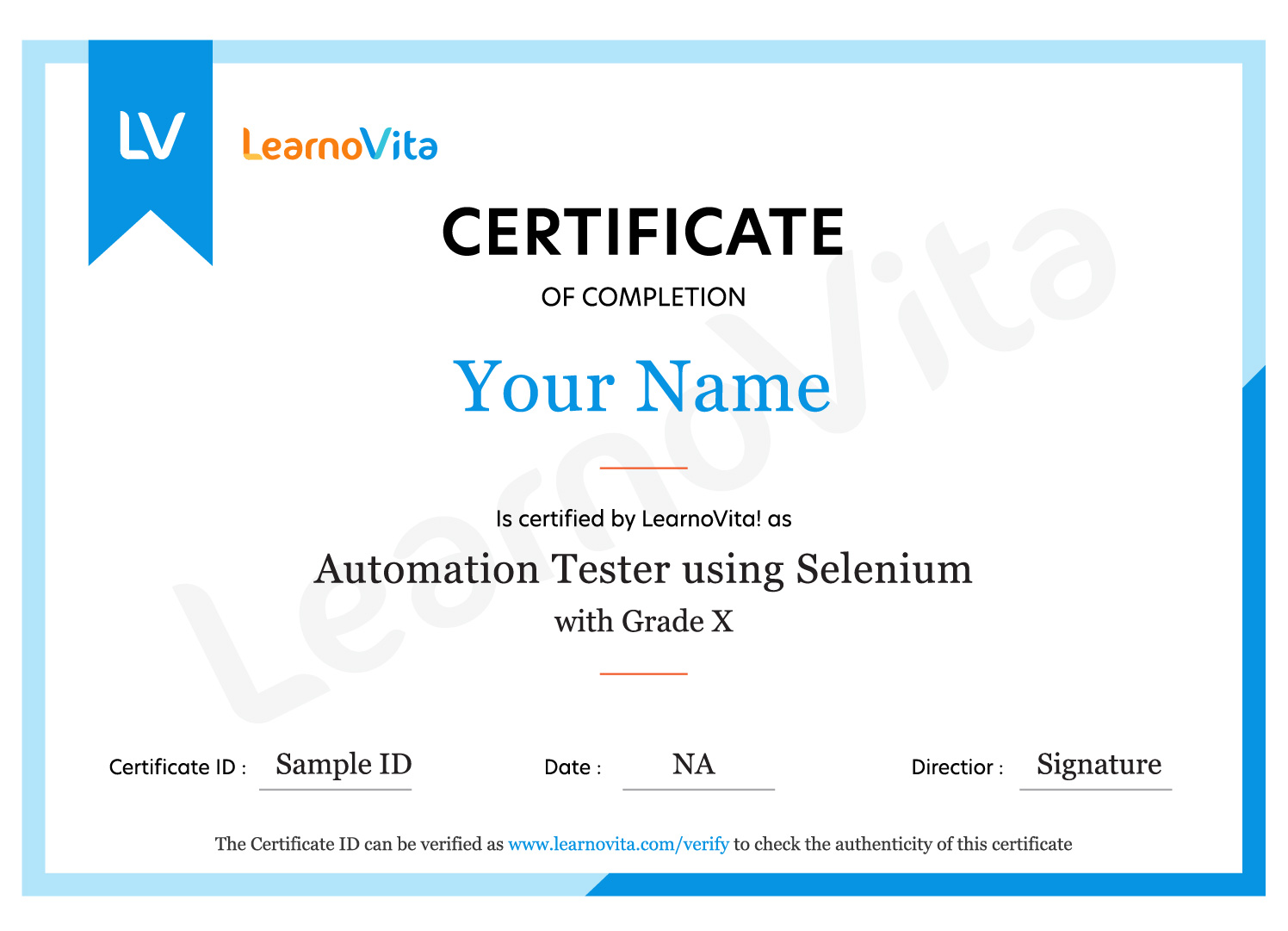
LearnoVita Certification is awarded upon course completion and is recognized by all of the world's leading global corporations. LearnoVita are the exclusive authorized Embedded Systems , Microsoft, Pearson Vue, and Embedded Systems I exam centers, as well as an authorized partner of Embedded Systems . Additionally, those who want to pass the National Authorized Certificate in a specialized IT domain can get assistance from LearnoVita's technical experts.
As part of the training program, LearnoVita provides you with the most recent, pertinent, and valuable real-world projects. Every program includes several projects that rigorously assess your knowledge, abilities, and real-world experience to ensure you are fully prepared for the workforce. Your abilities will be equivalent to six months of demanding industry experience once the tasks are completed.
At LearnoVita, participants can choose from instructor-led online training, self-paced training, classroom sessions, one-to-one training, fast-track programs, customized training, and online training options. Each mode is designed to provide flexibility and convenience to learners, allowing them to select the format that best suits their needs. With a range of training options available, participants can select the mode that aligns with their learning style, schedule, and career goals to excel in Embedded Systems . .
LearnoVita guarantees that you won't miss any topics or modules. You have three options to catch up: we'll reschedule classes to suit your schedule within the course duration, provide access to online class presentations and recordings, or allow you to attend the missed session in another live batch.
Please don't hesitate to reach out to us at contact@learnovita.com if you have any questions or need further clarification.
To enroll in the Embedded Systems at LearnoVita, you can conveniently register through our website or visit any of our branches in India for direct assistance.
Yes, after you've enrolled, you will have lifetime access to the student portal's study materials, videos, and top MNC interview questions.
At LearnoVita, we prioritize individual attention for students, ensuring they can clarify doubts on complex topics and gain a richer understanding through interactions with instructors and peers. To facilitate this, we limit the size of each Embedded Systems Service batch to 5 or 6 members.
The average annual salary for Embedded Systems Professionals in India is 5 LPA to 9 LPA.
view More view Less
Career Assistance
  • Build a Powerful Resume for Career Success
  • Get Trainer Tips to Clear Interviews
  • Practice with Experts: Mock Interviews for Success
  • Crack Interviews & Land Your Dream Job

Find Embedded Systems Training in Other Cities

Get Our App Now!