Home » Designing & Animation » MEAN Stack Online Training

MEAN Stack Online Training

(4.6) 7652 Ratings
  • Enroll in the MEAN Stack Online Course to learn how to build applications using MongoDB, Express.js and Node.js.
  • Master key components such as Angular, Node.js, APIs with Express, and database handling using MongoDB.
  • Gain hands-on experience through real-time projects, application development, RESTful services, and deployment.
  • Ideal for Web Developers, Full-Stack Engineers, Front-End Designers, and IT Professionals aiming to develop solutions.
  • Choose from flexible batch timings: Weekday, Weekend, or Fast-Track learning schedules.
  • Benefit from placement assistance, interview preparation, and certification guidance.

Course Duration

55+ Hrs

Live Project

3 Project

Certification Pass

Guaranteed

Training Format

Live Online (Expert Trainers)
WatchLive Classes
Course fee at
₹16000

₹21000

11323+

Professionals Trained

2695+

Batches every month

10+

Placed Students

203+

Corporate Served

What You'll Learn

Master full-stack JavaScript development using MongoDB, Express, Angular, and Node.js in real-world project scenarios.

Develop dynamic web applications with responsive frontends and robust backend APIs.

Enhance coding efficiency with hands-on training in RESTful services and asynchronous programming.

Learn advanced techniques in database handling, API integration, and server-side scripting in MEAN Stack Online Course.

Gain industry-level skills with MEAN Stack Online Training and become job-ready in modern web technologies.

Earn a valuable certification to accelerate your career as a professional MEAN stack developer.

An Overview of MEAN Stack Training

The MEAN Stack Certification Course is tailored to provide learners with in-depth knowledge of full-stack development using MongoDB, Express, Angular, and Node.js. Through MEAN Stack Online Training, students gain hands-on coding experience, guided by real-world applications and expert instructors. The MEAN Stack course supports diverse learning needs with self-paced and instructor-led formats. Completing the MEAN Stack certification opens opportunities for MEAN Stack internship and placement, making you career-ready for in-demand development roles. Enrolling through a reputed MEAN Stack institute gives you the practical exposure and confidence to excel in tech-driven environments.Join now for MEAN Stack Online Course and start your career.

Additional Info

Future Trends for MEAN Stack Course

  • Serverless Architecture: The deployment and scaling of MEAN Stack apps is being revolutionized by serverless architecture. Infrastructure overhead is decreased since developers may now run code without thinking about server management. It allows faster development and cost-efficient deployments. MEAN Stack learners gain hands-on skills integrating serverless functions with Node.js and MongoDB. This trend ensures applications are scalable, efficient and future-ready.
  • Progressive Web Applications: Progressive Web Applications (PWAs) are the next step in delivering app-like experiences through the web. MEAN Stack developers get the skills necessary to create applications that are quick to load, responsive, and offline-capable. Techniques for caching, service workers, and push notifications are now covered in training. PWAs lessen reliance on app stores while increasing user engagement. To provide smooth functionality, learners practice integrating Angular with backend APIs. This trend is crucial for businesses seeking innovative online experiences.
  • Real-Time Data Processing: Real-time data processing is becoming more and more necessary for modern online applications. These days, one of the most important aspects of MEAN Stack training is combining WebSockets and Node.js streams for real-time updates. Developers are trained to create collaboration platforms, dashboards and chat tools. The real-time features of MongoDB enhance backend functions. Practical assignments guarantee that students comprehend how to manage large amounts of low-latency data. Web apps are becoming more interactive and user-responsive thanks to this trend.
  • Cloud-Native Integration: Cloud-native integration allows MEAN Stack applications to leverage cloud services for storage, computing and analytics. Developers gain skills in deploying apps on AWS, Azure or Google Cloud. Training programs cover containerization, microservices and cloud APIs. This approach improves scalability, reliability and global access. Learners gain practical knowledge in combining Angular frontend with cloud-hosted Node.js services. Cloud-native skills are highly sought after in enterprise development.
  • Microservices Architecture: Applications are divided into smaller, independently deployable parts via microservices. Node.js and MongoDB modular service design is now covered in MEAN Stack training. Angular frontends can effectively use GraphQL or REST to access these services. Developers get practical experience creating systems that are scalable and maintainable. Microservices improve fault separation and allow continuous delivery. This architectural trend is essential to the development of enterprise-grade apps.
  • Artificial Intelligence Integration: Integrating AI and machine learning with MEAN Stack applications is a growing trend. Developers learn to implement AI-driven recommendations, predictive analytics and smart dashboards. Training focuses on integrating TensorFlow.js models or AI APIs with the Node.js backend. Large datasets are efficiently stored by MongoDB for AI processing. Users can see insights dynamically thanks to Angular. Applications become sophisticated and competitive in the market because to this integration.
  • Containerization with Docker: MEAN Stack applications operate uniformly across environments thanks to containerization. Docker fundamentals, container construction and Kubernetes orchestration are now covered in training. Developers get the skills necessary to effectively deploy, manage dependencies and isolate programs. This trend streamlines CI/CD pipelines and increases scalability. Through hands-on experience, learners are able to package Angular, Node.js and MongoDB together. Containerization expertise is essential for modern DevOps procedures.
  • API-First Development: When creating modular MEAN Stack applications, API-first development is essential. Node.js services offer REST or GraphQL APIs that are used by Angular frontends. The main goal of training is to provide scalable, reusable, and reliable APIs. MongoDB effectively maintains and saves data for use by APIs. Students get hands-on experience using Postman or comparable tools to test APIs. API-first guarantees improved development team cooperation and seamless integration.
  • Mobile-First Web Development: For people who are constantly on the go, mobile-first design is crucial. Mobile-friendly Angular interfaces are taught through MEAN Stack training. Node.js and MongoDB handle efficient backend operations for mobile traffic. Developers also learn performance optimization, caching and progressive enhancements. Hands-on projects include mobile-friendly dashboards and e-commerce platforms. This trend ensures web applications reach a wider audience with optimal performance.

Tools and Technologies of MEAN Stack Course

  • MongoDB: MongoDB is a NoSQL database widely used in MEAN Stack applications to store and manage large volumes of unstructured data. It allows developers to create flexible, scalable database schemas that adapt to changing project requirements. In training, learners get hands-on experience with queries, indexing and aggregation pipelines. Node.js and MongoDB work together easily to manage backend tasks effectively. Developers can create reliable, data-driven web apps by mastering MongoDB.
  • Express.js: A Node.js backend framework called Express.js makes server-side development easier. It offers middleware, routing and strong API handling features. In MEAN Stack training, students investigate creating RESTful APIs and connecting them to databases. Scalable server-side applications may be developed quickly thanks to Express.js. Express expertise is necessary to develop backend services that are safe and effective.
  • Angular: Angular is a powerful frontend framework used to create dynamic and responsive user interfaces. Components, modules, services and two-way data binding are all covered in training. Students get practical experience creating single-page apps and interactive dashboards. Angular seamlessly integrates with MongoDB and Node.js for full-stack development. Gaining proficiency with Angular guarantees that developers can produce cutting-edge, fast online apps.
  • Node.js: JavaScript is able to execute on the server side because the Node.js runtime environment. The focus of MEAN Stack training is on event-driven architecture using Node.js and asynchronous programming. Students work on developing backend services that are scalable and integrating them with databases. Real-time applications like chat apps and teamwork tools are made possible by Node.js. Proficiency in full-stack web development requires an understanding of Node.js.
  • Git: A version control system called Git keeps track of code changes and supports collaborative development. MEAN Stack learners use Git to manage project revisions and maintain code integrity. Training includes committing changes, branching, merging and resolving conflicts. Git ensures team projects are organized and reduces deployment errors. Proficiency in Git is fundamental for professional software development workflows.
  • GitHub: A cloud-based solution for hosting Git repositories is called GitHub and collaborating on projects. It allows MEAN Stack developers to share code, review contributions and deploy applications. Pull requests, code reviews and repository administration are highlighted in the training. GitHub facilitates deployments by integrating with CI/CD tools. GitHub knowledge is necessary for full-stack collaborative projects.
  • Postman: Postman is a tool for testing APIs and backend services efficiently. MEAN Stack learners use Postman to verify RESTful API endpoints and JSON responses. Sending queries, reviewing answers and automating tests are all part of the training process. Before interacting with the frontend, Postman makes sure that backend services are operating properly. Gaining proficiency with Postman speeds up debugging and enhances development quality.
  • Robo 3T: Robo 3T is a GUI tool for managing and interacting with MongoDB databases. Training introduces learners to creating collections, running queries and visualizing data. It simplifies database administration and improves productivity for MEAN Stack developers. Hands-on experience with Robo 3T helps learners understand data modeling and indexing. Proficiency in this tool enhances database management skills.
  • NPM: Installing NPM (Node Package Manager) and manage libraries and dependencies for Node.js applications. MEAN Stack training teaches learners to leverage NPM to include essential modules and frameworks. It simplifies package management and ensures projects remain consistent across environments. Learners gain practical knowledge of scripts, versioning and module updates. NPM is critical for efficient development and maintaining project scalability.
  • Visual Studio Code: The code editor Visual Studio Code is one that is both lightweight and flexible ideal for MEAN Stack development. Training covers debugging, extensions and integrated terminal usage. Developers can write, test and deploy code efficiently within a single interface. VS Code enhances productivity through intelligent code completion and version control integration. Mastery of VS Code improves development speed and overall project workflow.

Roles and Responsibilities of MEAN Stack Course

  • Full-Stack Developer: Working on both the front end and the back end, a full-stack developer components of a MEAN Stack application. They design, develop and deploy scalable web solutions using Angular, Node.js, Express and MongoDB. During training, learners practice integrating these components into a cohesive system. They also focus on writing clean, efficient and maintainable code. Full-Stack Developers handle debugging, testing and optimization tasks. Mastery in this role ensures readiness for diverse web development projects.
  • Frontend Developer: Frontend developers are experts in using Angular to create dynamic user interfaces. They emphasize smooth user experiences, UI elements, and responsive design. Learners may create dynamic dashboards and single-page applications with the aid of MEAN Stack training. They also guarantee cross-browser compatibility and put state management into practice. To connect APIs, frontend developers work in tandem with backend teams. This position improves web application design and technical expertise.
  • Backend Developer: Backend Developers manage server-side logic, APIs and database integration using Node.js and Express. They ensure data flow between client applications and MongoDB databases is efficient and secure. Training emphasizes building RESTful APIs and handling asynchronous operations. Backend developers also implement authentication, authorization and performance optimization. Working together with frontend devs is essential when creating full-stack apps. Strong and scalable server-side solutions are guaranteed by proficiency in this role.
  • Database Administrator: Database Administrators handle MongoDB design, management and optimization. They maintain collections, indexing and data integrity for web applications. MEAN Stack training teaches learners how to manage complex datasets effectively. Administrators ensure fast query execution and seamless data retrieval for front-end applications. They also handle backup, security and recovery tasks. Mastery in this role ensures reliable and scalable data management.
  • DevOps Engineer: DevOps Engineers integrate MEAN Stack applications with continuous integration and deployment pipelines. They oversee server performance, automate installations, and oversee cloud infrastructure. Training exposes participants to CI/CD workflows and containerization using Docker. Applications' high availability and security are guaranteed by DevOps engineers. Maintaining seamless operations requires cooperation with developers. This role strengthens practical skills in modern software delivery processes.
  • UI/UX Designer: The goal of UI/UX designers is to design user interfaces that are visually compelling as well as simple to use. They guarantee that Angular components are user-friendly, responsive, and captivating. Wireframing, prototyping and usability testing are introduced to students throughout training. Designers collaborate with developers to implement their ideas effectively. Improving user involvement and interaction with applications is their aim. This role bridges creativity and technical implementation in MEAN projects.
  • QA Engineer: MEAN Stack applications are made to work properly and adhere to quality requirements by QA engineers. They perform manual and automated testing for frontend and backend components. Training teaches testing tools, debugging and performance verification. QA Engineers identify bugs, security issues and usability problems. They collaborate closely with developers to implement fixes. This role ensures reliable and error-free applications for end-users.
  • API Developer: API Developers design and implement RESTful or GraphQL APIs for MEAN Stack applications. They provide smooth front-end and back-end system connectivity. Training focuses on building scalable, secure and reusable APIs. Developers also handle authentication, request validation and performance optimization. Collaboration with full-stack teams ensures integrated application functionality. Mastery in this role is crucial for building dynamic, data-driven applications.
  • Technical Analyst: Technical Analysts evaluate application requirements, architecture and performance for MEAN Stack projects. They work with stakeholders to define functional specifications. Training teaches learners how to assess scalability, security and efficiency. Analysts offer suggestions to enhance system architecture and code quality. They also preserve project transparency and record workflows. This position guarantees that applications successfully accomplish technical and business goals.
  • Solution Consultant: Solution consultants assist development teams and clients in putting MEAN Stack solutions into practice. They provide suitable technology architectures and comprehend business needs. Project planning, integration tactics and deployment techniques are all covered in the training. Consultants make sure that applications meet industry standards and client requirements. Additionally, they offer direction and technical help at every stage of the development process. Project success rates and client satisfaction are increased when this job is mastered.

Companies Hiring MEAN Stack Professionals

  • Infosys: Infosys is seeking MEAN Stack specialists to deliver scalable online applications and enterprise solutions. An understanding of Angular, Node.js, Express and MongoDB is highly valued by them. Experts work on projects ranging from dashboards to complex client interfaces. Real-time application and API practical experience is highly regarded. The company offers innovative solutions and contributes to extensive IT solutions.
  • TCS (Tata Consultancy Services): TCS hires MEAN Stack developers for building modern web applications and enterprise-grade platforms. Knowledge of full-stack development, data management and API integration is essential. Developers collaborate with global teams on high-impact projects. Training experience in real-time MEAN Stack projects is advantageous. TCS focuses on delivering quality, secure and responsive applications for clients.
  • Wipro: Wipro actively seeks MEAN Stack experts to work on web-based applications, cloud integrations and scalable software solutions. Professionals leverage MongoDB, Express, Angular and Node.js for full-stack development. They participate in designing, testing and deploying efficient applications. Experience working on real projects is highly regarded while hiring. The organization provides access to state-of-the-art technologies and cooperative settings.
  • Capgemini: Capgemini recruits MEAN Stack developers to build responsive web applications and full-stack solutions for clients worldwide. They appreciate hands-on expertise with Angular frontends and Node.js servers. Experts work on cloud deployment, database administration and API development. For a project to succeed, cooperation among cross-functional teams is essential. Delivering effective and maintainable software products is the company's core goal.
  • Tech Mahindra: Tech Mahindra seeks MEAN Stack professionals for projects in web applications, enterprise portals and cloud integrations. Developers use Node.js, Express, Angular and MongoDB to build scalable solutions. They take part in application testing, deployment and troubleshooting. It is preferred to have hands-on expertise with real-time MEAN Stack projects. For its teams, the organization promotes creativity and ongoing skill development.
  • HCL Technologies: HCL Technologies hires MEAN Stack experts for designing and developing full-stack applications for clients. They emphasize strong coding skills, database handling and API integration. Developers engage in real-time project implementation, testing and maintenance. Experience with dashboards and dynamic web applications adds value. HCL provides opportunities to work with modern technologies in a collaborative environment.
  • IBM: IBM looks for MEAN Stack developers to create enterprise-grade applications, dashboards and cloud-based solutions. Professionals use MongoDB, Express, Angular and Node.js for full-stack development. Hands-on experience with API integration, deployment and security is preferred. Developers collaborate with global teams on scalable software projects. IBM focuses on innovation and delivering high-quality solutions to clients.
  • Oracle: Oracle recruits MEAN Stack professionals for web applications, cloud portals and data-driven software solutions. Developers leverage Node.js, Angular, Express and MongoDB for full-stack implementation. Job readiness is enhanced through training in real-time MEAN projects. Performance, scalability, and application security are given top priority by the organization. Experts are shown cutting-edge technologies and enterprise-level projects.
  • Mindtree: Mindtree uses MEAN Stack engineers to develop responsive web apps and enterprise solutions. Experts use Node.js with MongoDB for backend programming and Angular for frontend development. Acquiring practical work experience improves comprehension and productivity. For a project to be completed successfully, cross-functional group collaboration is necessary. Mindtree encourages skill enhancement and innovative solutions for client projects.
View more

MERN Stack Developer Training Objectives

To join MEAN Stack training, learners should have a basic understanding of HTML, CSS, and JavaScript. Familiarity with web development concepts and programming logic helps in grasping advanced full-stack topics quickly. Basic knowledge of databases like MongoDB is advantageous but not mandatory. A willingness to work on real-time projects and learn server-client interactions is essential.
MEAN Stack training equips learners with skills to develop dynamic web applications using MongoDB, Express.js, Angular, and Node.js. Participants gain hands-on experience with full-stack development, API integration, and responsive UI design. The training enhances problem-solving abilities and prepares students for real-world projects. Learners also receive guidance on industry best practices, debugging, and performance optimization. Overall, it significantly improves career prospects in web development.
MEAN Stack has become highly valuable in today’s job market due to the demand for full-stack developers who can handle both frontend and backend tasks. Companies seek professionals capable of building dynamic, responsive, and scalable web applications. Knowledge of MongoDB, Express.js, Angular, and Node.js is considered a critical skill set for modern web projects. The training provides real-world application experience, making candidates more employable.
Yes, students will work on multiple real-world projects covering end-to-end full-stack development. They will build applications involving database integration, dynamic frontends, and backend logic. Projects include dashboards, e-commerce portals, and interactive web apps. Hands-on experience ensures learners understand deployment, debugging, and performance optimization. This practical exposure prepares participants for industry requirements.
  • Full-stack web development for startups and enterprises
  • Building scalable and high-performance web applications
  • Integration with cloud services and microservices architecture
  • Opportunities in frontend, backend, and API development roles
  • MongoDB database fundamentals and CRUD operations
  • Express.js framework for server-side development
  • Angular framework for dynamic frontend applications
  • Node.js runtime environment and backend logic
  • RESTful API design and integration
  • IT services and software development firms
  • E-commerce and retail technology companies
  • Fintech and banking technology solutions
  • Healthcare and telemedicine application development
  • EdTech and online learning platform development
While the training enhances your skills and employability, a job guarantee can be assured. However, completing the course with real-time project experience, certification, and placement support significantly improves your chances of securing a web development role in reputed companies.
  • In-depth knowledge of full-stack web development
  • Hands-on experience with real-time projects
  • Skill development in frontend, backend, and database integration
  • Exposure to modern frameworks and industry tools
Participants will gain proficiency in MongoDB, Express.js, Angular, Node.js, Git, GitHub, Postman, Visual Studio Code, Robo 3T, and NPM, enabling them to build, test, and deploy robust web applications efficiently.
view More view Less

MEAN Stack Course Benefits

The MEAN Stack Online Training and Internship Program delivers immersive learning in full-stack development using MongoDB, Express.js, Angular, and Node.js. Build dynamic web apps while strengthening your coding, debugging, and deployment abilities through real-world coding tasks. Our expert-led sessions include personalized support and access to curated MEAN Stack training resources. Get 100% MEAN Stack Course with placement assistance after completing the course to accelerate your career in modern web development.

  • Designation
  • Annual Salary
    Hiring Companies
  • 3.24L
    Min
  • 6.5L
    Average
  • 13.5L
    Max
  • 4.50L
    Min
  • 8.5L
    Average
  • 16.5L
    Max
  • 4.0L
    Min
  • 6.5L
    Average
  • 13.5L
    Max
  • 3.24L
    Min
  • 6.5L
    Average
  • 12.5L
    Max

About Mean Stack Certification Training

Our MEAN Stack Certification Course offers an affordable path to mastering full-stack web technologies, including MongoDB, Express, Angular, and Node.js. With transparent MEAN Stack fees and flexible learning formats, this program fits various career goals. Learn through real-time MEAN Stack projects, hands-on coding, and expert guidance. Upon completing the MEAN Stack Training, gain industry-recognized certification and strong placement support to boost your career.

Top Skills You Will Gain
  • REST APIs
  • Data Modeling
  • Server Routing
  • JSON Parsing
  • Component Design
  • Template Binding
  • CRUD Operations
  • Session Handling

12+ MEAN Stack Tools

Online Classroom Batches Preferred

Weekdays (Mon - Fri)
01 - Dec - 2025
08:00 AM (IST)
Weekdays (Mon - Fri)
03 - Dec - 2025
08:00 AM (IST)
Weekend (Sat)
06 - Dec - 2025
11:00 AM (IST)
Weekend (Sun)
07 - Dec - 2025
11:00 AM (IST)
Can't find a batch you were looking for?
₹21000 ₹16000 10% OFF Expires in

No Interest Financing start at ₹ 5000 / month

Corporate Training

  • Customized Learning
  • Enterprise Grade Learning Management System (LMS)
  • 24x7 Support
  • Enterprise Grade Reporting

Why MEAN Stack Course From Learnovita ? 100% Money Back Guarantee

MEAN Stack Course Curriculam

Trainers Profile

Our MEAN Stack Online Training is designed to empower learners with end-to-end development knowledge using cutting-edge technologies.Led by full-stack experts, the course includes robust MEAN Stack training materials for practical and conceptual clarity.Participants explore Node.js, Angular, and MongoDB with hands-on guidance to build scalable web apps.Earn a valuable MEAN Stack Certification to validate your skills and boost your career in full-stack development.

Syllabus for MEAN Stack Course Download syllabus

  • Variables and Data Types
  • Functions and Scope
  • Arrays and Objects
  • Loops and Conditions
  • DOM Manipulation
  • Event Handling
  • Node.js Architecture
  • Creating a Web Server
  • Working with File System
  • Modules and Exports
  • NPM Packages
  • Debugging Techniques
  • Introduction to Express
  • Routing and Middleware
  • Handling Requests and Responses
  • RESTful API Development
  • Error Handling
  • Authentication Basics
  • Collections and Documents
  • CRUD Operations
  • Data Modeling
  • Aggregation Framework
  • Indexing
  • Components and Templates
  • Modules and Services
  • Data Binding
  • Directives and Pipes
  • Forms Handling
  • Dependency Injection
  • Routing and Navigation
  • Observables and RxJS
  • HTTPClient Module
  • State Management
  • Unit Testing Angular Apps
  • Lazy Loading
  • Connecting Angular to Express
  • API Consumption
  • Cross-Origin Requests
  • Real-Time Data Updates
  • Session Handling
  • JWT Authentication
  • Role-Based Access Control
  • Input Validation
  • Password Hashing
  • HTTPS Implementation
  • Security Headers
  • Caching Strategies
  • Load Balancing
  • Query Optimization
  • Lazy Loading in Angular
  • Static File Serving
  • Unit Testing with Jasmine
  • Integration Testing
  • Using Karma
  • Debugging Node and Angular
  • Logging Mechanisms
(15) view More view Less
Need customized curriculum?

Industry Projects

Project 1
Smart Appointment Scheduler

Build a full-stack web app for clinics or salons using MEAN Stack that allows users to book, reschedule, and cancel appointments. Integrate a calendar view and admin dashboard with real-time updates using sockets.

Project 2
IoT Device Dashboard

Create a monitoring system for IoT devices, where data is collected via APIs and visualized in Angular dashboards. The project uses MongoDB to store device logs and Node.js for handling API requests.

Project 3
Real-Time Chat Support System

Develop a secure, real-time chat platform for customer service using Angular and Socket.io. Node.js handles message routing, and MongoDB stores conversation history with user authentication built in.

Career Support

Our Hiring Partner

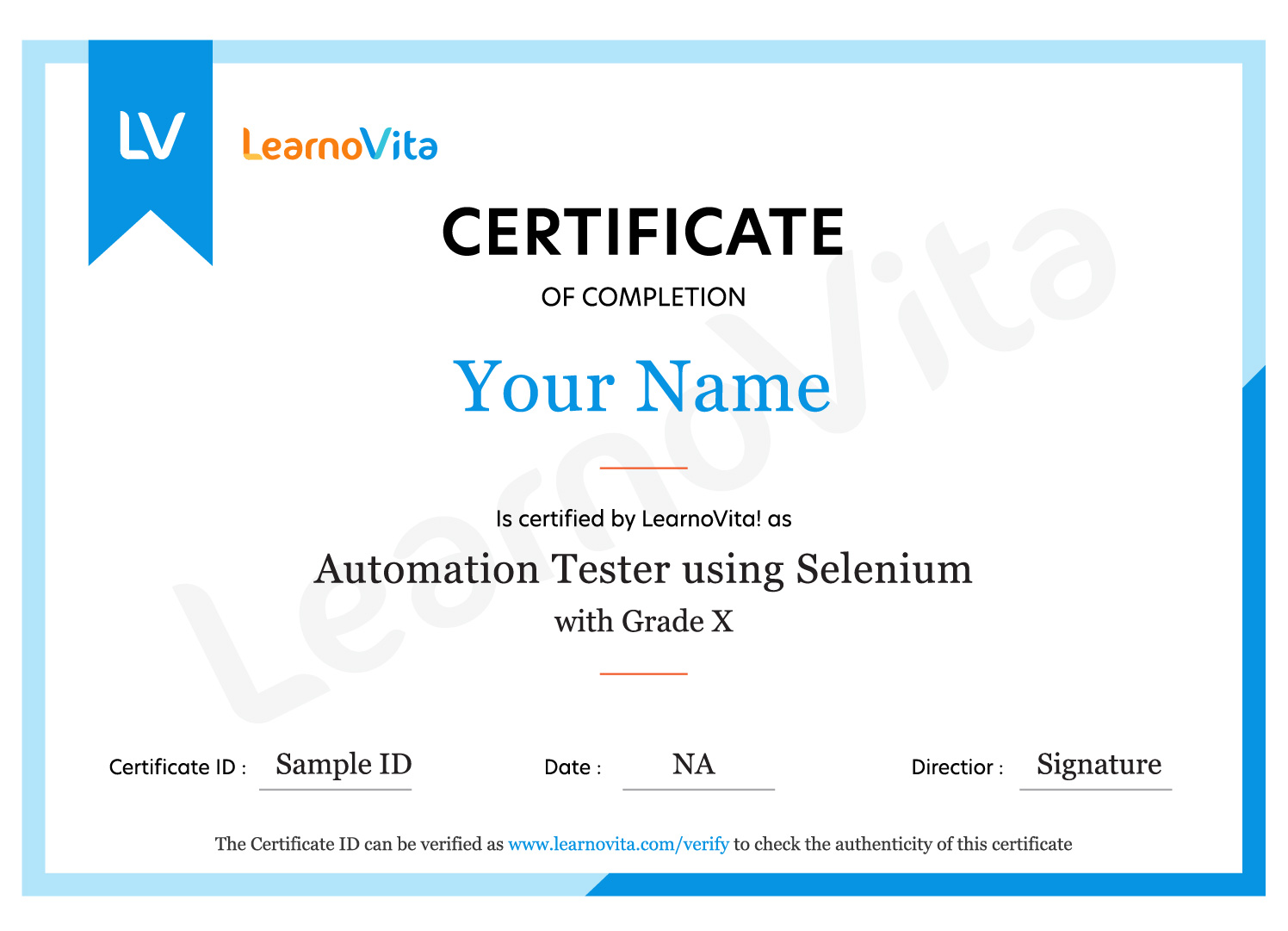
Exam & MEAN Stack Certification

At LearnoVita, You Can Enroll in Either the instructor-led Online Classroom Training or Online Self-Paced Training. Online Classroom:
  • Participate and Complete One batch of MEAN Stack Training Course
  • Successful completion and evaluation of any one of the given projects
Online Self-learning:
  • Complete 85% of the MEAN Stack Certification course
  • Successful completion and evaluation of any one of the given projects
Honestly Yes, We Provide 1 Set of Practice test as part of Your MEAN Stack Training course. It helps you to prepare for the actual MEAN Stack Certification exam. You can try this free MEAN Stack Fundamentals Practice Test to Understand the Various type of tests that are Comes Under the Parts of Course Curriculum at LearnoVita.
These are the Four Different Kinds of Certification levels that was Structured under the Oracle’s MEAN Stack Certification Path.
  • Oracle Certified Associate (OCA)
  • Oracle Certified Professional (OCP)
  • Oracle Certified Expert (OCE)
  • Oracle Certified Master (OCM)
  • Learn About the Certification Paths.
  • Write Code Daily This will help you develop Coding Reading and Writing ability.
  • Refer and Read Recommended Books Depending on Which Exam you are Going to Take up.
  • Join LearnoVita Online Training Course That Gives you a High Chance to interact with your Subject Expert Instructors and fellow Aspirants Preparing for Certifications.
  • Solve Sample Tests that would help you to Increase the Speed needed for attempting the exam and also helps for Agile Thinking.
Honestly Yes, Please refer to the link This Would Guide you with the Top 20 Interview Questions & Answers for MEAN Stack Developers.

Our Student Successful Story

checkimage Regular 1:1 Mentorship From Industry Experts checkimage Live Classes checkimage Career Support

How are the MEAN Stack Course with LearnoVita Different?

Feature

LearnoVita

Other Institutes

Affordable Fees

Competitive Pricing With Flexible Payment Options.

Higher MEAN Stack Fees With Limited Payment Options.

Live Class From ( Industry Expert)

Well Experienced Trainer From a Relevant Field With Practical MEAN Stack Training

Theoretical Class With Limited Practical

Updated Syllabus

Updated and Industry-relevant MEAN Stack Course Curriculum With Hands-on Learning.

Outdated Curriculum With Limited Practical Training.

Hands-on projects

Real-world MEAN Stack Projects With Live Case Studies and Collaboration With Companies.

Basic Projects With Limited Real-world Application.

Certification

Industry-recognized MEAN Stack Certifications With Global Validity.

Basic MEAN Stack Certifications With Limited Recognition.

Placement Support

Strong Placement Support With Tie-ups With Top Companies and Mock Interviews.

Basic Placement Support

Industry Partnerships

Strong Ties With Top Tech Companies for Internships and Placements

No Partnerships, Limited Opportunities

Batch Size

Small Batch Sizes for Personalized Attention.

Large Batch Sizes With Limited Individual Focus.

Additional Features

Lifetime Access to MEAN Stack Course Materials, Alumni Network, and Hackathons.

No Additional Features or Perks.

Training Support

Dedicated Mentors, 24/7 Doubt Resolution, and Personalized Guidance.

Limited Mentor Support and No After-hours Assistance.

MEAN Stack Course FAQ's

Certainly, you are welcome to join the demo session. However, due to our commitment to maintaining high-quality standards, we limit the number of participants in live sessions. Therefore, participation in a live class without enrollment is not feasible. If you're unable to attend, you can review our pre-recorded session featuring the same trainer. This will provide you with a comprehensive understanding of our class structure, instructor quality, and level of interaction.
All of our instructors are employed professionals in the industry who work for prestigious companies and have a minimum of 9 to 12 years of significant IT field experience. A great learning experience is provided by all of these knowledgeable people at LearnoVita.
  • LearnoVita is dedicated to assisting job seekers in seeking, connecting, and achieving success, while also ensuring employers are delighted with the ideal candidates.
  • Upon successful completion of a career course with LearnoVita, you may qualify for job placement assistance. We offer 100% placement assistance and maintain strong relationships with over 650 top MNCs.
  • Our Placement Cell aids students in securing interviews with major companies such as Oracle, HP, Wipro, Accenture, Google, IBM, Tech Mahindra, Amazon, CTS, TCS, Sports One , Infosys, MindTree, and MPhasis, among others.
  • LearnoVita has a legendary reputation for placing students, as evidenced by our Placed Students' List on our website. Last year alone, over 5400 students were placed in India and globally.
  • We conduct development sessions, including mock interviews and presentation skills training, to prepare students for challenging interview situations with confidence. With an 85% placement record, our Placement Cell continues to support you until you secure a position with a better MNC.
  • Please visit your student's portal for free access to job openings, study materials, videos, recorded sections, and top MNC interview questions.
LearnoVita Certification is awarded upon course completion and is recognized by all of the world's leading global corporations. LearnoVita are the exclusive authorized Oracle, Microsoft, Pearson Vue, and MEAN Stack exam centers, as well as an authorized partner of MEAN Stack . Additionally, those who want to pass the National Authorized Certificate in a specialized IT domain can get assistance from LearnoVita's technical experts.
As part of the training program, LearnoVita provides you with the most recent, pertinent, and valuable real-world projects. Every program includes several projects that rigorously assess your knowledge, abilities, and real-world experience to ensure you are fully prepared for the workforce. Your abilities will be equivalent to six months of demanding industry experience once the tasks are completed.
At LearnoVita, participants can choose from instructor-led online training, self-paced training, classroom sessions, one-to-one training, fast-track programs, customized training, and online training options. Each mode is designed to provide flexibility and convenience to learners, allowing them to select the format that best suits their needs. With a range of training options available, participants can select the mode that aligns with their learning style, schedule, and career goals to excel in MEAN Stack.
LearnoVita guarantees that you won't miss any topics or modules. You have three options to catch up: we'll reschedule classes to suit your schedule within the course duration, provide access to online class presentations and recordings, or allow you to attend the missed session in another live batch.
Please don't hesitate to reach out to us at contact@learnovita.com if you have any questions or need further clarification.
To enroll in the MEAN Stack at LearnoVita, you can conveniently register through our website or visit any of our branches in India for direct assistance.
Yes, after you've enrolled, you will have lifetime access to the student portal's study materials, videos, and top MNC interview questions.
At LearnoVita, we prioritize individual attention for students, ensuring they can clarify doubts on complex topics and gain a richer understanding through interactions with instructors and peers. To facilitate this, we limit the size of each MEAN Stack Service batch to 5 or 6 members.
The average annual salary for MEAN Stack Professionals in India is 4 LPA to 9 LPA.
view More view Less
Career Assistance
  • Build a Powerful Resume for Career Success
  • Get Trainer Tips to Clear Interviews
  • Practice with Experts: Mock Interviews for Success
  • Crack Interviews & Land Your Dream Job

Find MEAN Stack Training in Other Cities

Get Our App Now!