
MongoDB Certification Course in Sydney
 19564
19564 Ratings


- Enroll in the MongoDB Course in Sydney to learn how to design and manage modern NoSQL databases efficiently.
- Master core concepts such as collections, indexing, aggregation framework, and schema design.
- Gain hands-on experience through real-time projects, query building, data modeling, and performance tuning.
- Ideal for MongoDB Developers, Database Engineers, and IT Professionals working with data-driven applications.
- Choose from flexible batch timings: Weekday, Weekend, or Fast-Track learning options.
- Benefit from placement assistance, interview preparation, and certification guidance.
Course Duration
50+ HrsLive Project
3 ProjectCertification Pass
GuaranteedTraining Format
Live Online (Expert Trainers)Quality Training With Affordable Fee
 Fees Starts From

11658+
Professionals Trained
10+
Batches every month
2658+
Placed Students
245+
Corporate ServedWhat You'll Learn
MongoDB Certification Course in Sydney delivers deep understanding of modern database systems, data storage strategies, and high-performance application support.
Learn MongoDB fundamentals including document structure, indexing methods, and real-time data handling for scalable applications.
Build efficient database solutions by designing schemas, optimizing queries, and improving data retrieval speed for better system performance.
Gain practical exposure through MongoDB training in Sydney by working on live datasets and managing large volumes of data.
Explore advanced MongoDB features such as aggregation pipelines, replication, and sharding to handle complex and distributed environments.
Earn valuable expertise in MongoDB to boost career opportunities in database development, backend engineering, and data-driven IT roles.
MongoDB Course Objectives
- Increasing adoption in cloud-based application development
- High demand in startups and product-based companies
- Growing usage in big data and real-time analytics
- Expansion in mobile and web application backends
- Integration with modern technologies like AI and IoT
- Rising need for NoSQL experts across global markets
- Introduction to NoSQL and MongoDB architecture
- Installation and configuration of MongoDB
- CRUD operations and data modeling
- Indexing and performance optimization
- Aggregation framework and data processing
- Security, backup, and recovery techniques
- Working with MongoDB Atlas and cloud integration
- Real-time application development using MongoDB
- Information Technology and Software Development
- E-commerce and Online Retail
- Banking and Financial Services
- Healthcare and Life Sciences
- Media and Entertainment platforms
- Telecommunications and Networking
- Education Technology and eLearning
- Logistics and Supply Chain sectors
- Builds strong foundation in NoSQL database concepts
- Enhances ability to handle large and dynamic data
- Improves backend development knowledge
- Opens opportunities in modern application development
- Supports career growth in cloud and data technologies
- Helps in working with scalable and high-performance systems
Request more informations
WhatsApp (For Call & Chat):
+91 72003 88604
MongoDB Course Benefits
The MongoDB course in the Sydney is designed to give learners strong practical exposure through real-time workflows, automation practices, and deployment environments used in modern tech teams. Students get access to guided projects and a valuable MongoDB internship experience that helps them apply concepts in real business scenarios. The program also covers advanced topics such as container-based development, infrastructure setup, and continuous delivery with expert mentoring. With dedicated career guidance, this MongoDB course with placement support prepares candidates for opportunities in leading tech companies and fast-growing startups.
- Designation
-
Annual SalaryHiring Companies








About MongoDB Certification Training
The MongoDB certification course in the Sydney is structured to build strong expertise in designing, developing, and deploying modern database-driven applications using MongoDB. Learners gain in-depth knowledge through practical sessions that focus on real-time data handling and scalable architecture. The program emphasizes hands-on learning with industry-relevant MongoDB projects that simulate real business environments. With strong placement assistance and industry connections, this course prepares candidates for rewarding roles in top tech organizations.
Top Skills You Will Gain
- Database Design
- Query Writing
- Data Modeling
- Index Optimization
- Schema Design
- Aggregation Logic
- Performance Tuning
- Cloud Integration
12+ MongoDB Tools
Online Classroom Batches Preferred
No Interest Financing start at ₹ 5000 / month
Corporate Training
- Customized Learning
- Enterprise Grade Learning Management System (LMS)
- 24x7 Support
- Enterprise Grade Reporting
Not Just Studying
We’re Doing Much More!
Empowering Learning Through Real Experiences and Innovation


MongoDB Course Curriculum
Trainers Profile
The MongoDB course in the Sydney is delivered by experienced industry professionals who bring deep technical insight into modern database technologies and application development. The training focuses on practical understanding, enabling learners to confidently work with real-time data environments. Participants receive well-structured MongoDB training materials that simplify complex concepts and support continuous learning. This approach helps individuals build strong hands-on skills and prepares them to perform effectively in real-world MongoDB roles.
Syllabus for MongoDB Course Download syllabus
- Overview of NoSQL databases
- MongoDB architecture basics
- Key features and advantages
- Comparison with relational databases
- Use cases of MongoDB
- Installing MongoDB on different systems
- Environment configuration
- MongoDB server setup
- Introduction to MongoDB shell
- Basic command usage
- BSON data format
- Creating documents
- Understanding collections
- Data types in MongoDB
- Document structure design
- Insert operations
- Querying documents
- Update methods
- Delete operations
- Filtering and projections
- Conditional queries
- Logical operators
- Array querying
- Sorting and limiting results
- Query optimization basics
- Introduction to indexes
- Creating indexes
- Types of indexes
- Index usage
- Improving query performance
- Aggregation pipeline
- Data grouping
- Filtering with aggregation
- Transformation operations
- Working with stages
- Embedded documents
- Referencing documents
- Schema design approaches
- Handling relationships
- Structuring collections
- Replica sets overview
- Primary and secondary nodes
- Data synchronization
- Failover handling
- Configuration steps
- Sharding concept
- Data distribution
- Shard keys
- Cluster setup basics
- Scaling data horizontally
Request more informations
WhatsApp (For Call & Chat):
+91 72003 88604
REAL

UPGRADE

sowmiya

UPGRADE

Rajkumar

UPGRADE

Thon
UPGRADE

Lavanya

Industry Projects
Exam & MongoDB Certification
- Basic understanding of database concepts
- Familiarity with any programming language
- Knowledge of data structures
- Awareness of web application basics
- Interest in NoSQL technologies
- MongoDB Developer
- Database Administrator
- Backend Developer
- Data Engineer
- Application Developer
- Cloud Database Specialist
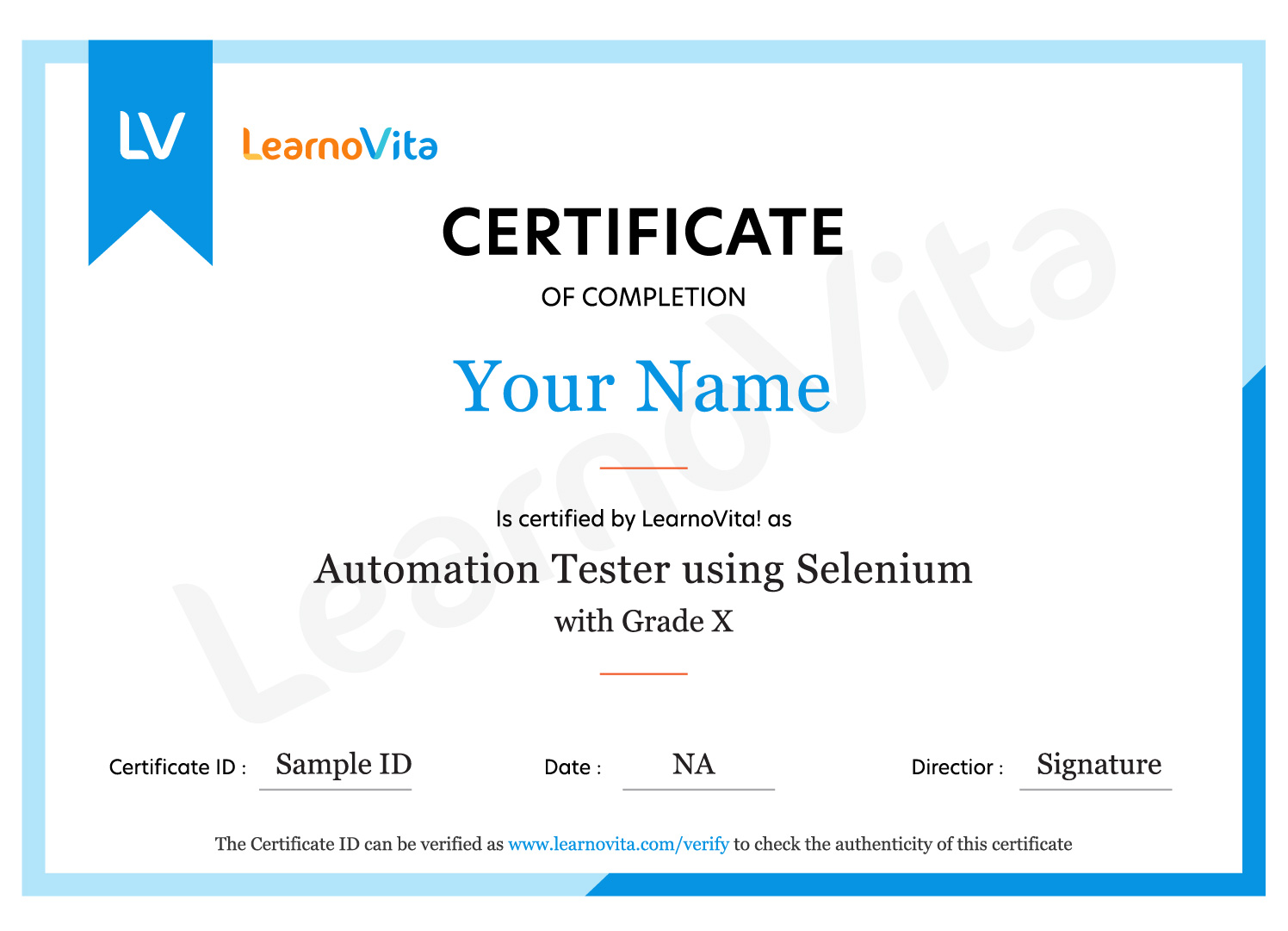
MNC Recognized course
complete certification
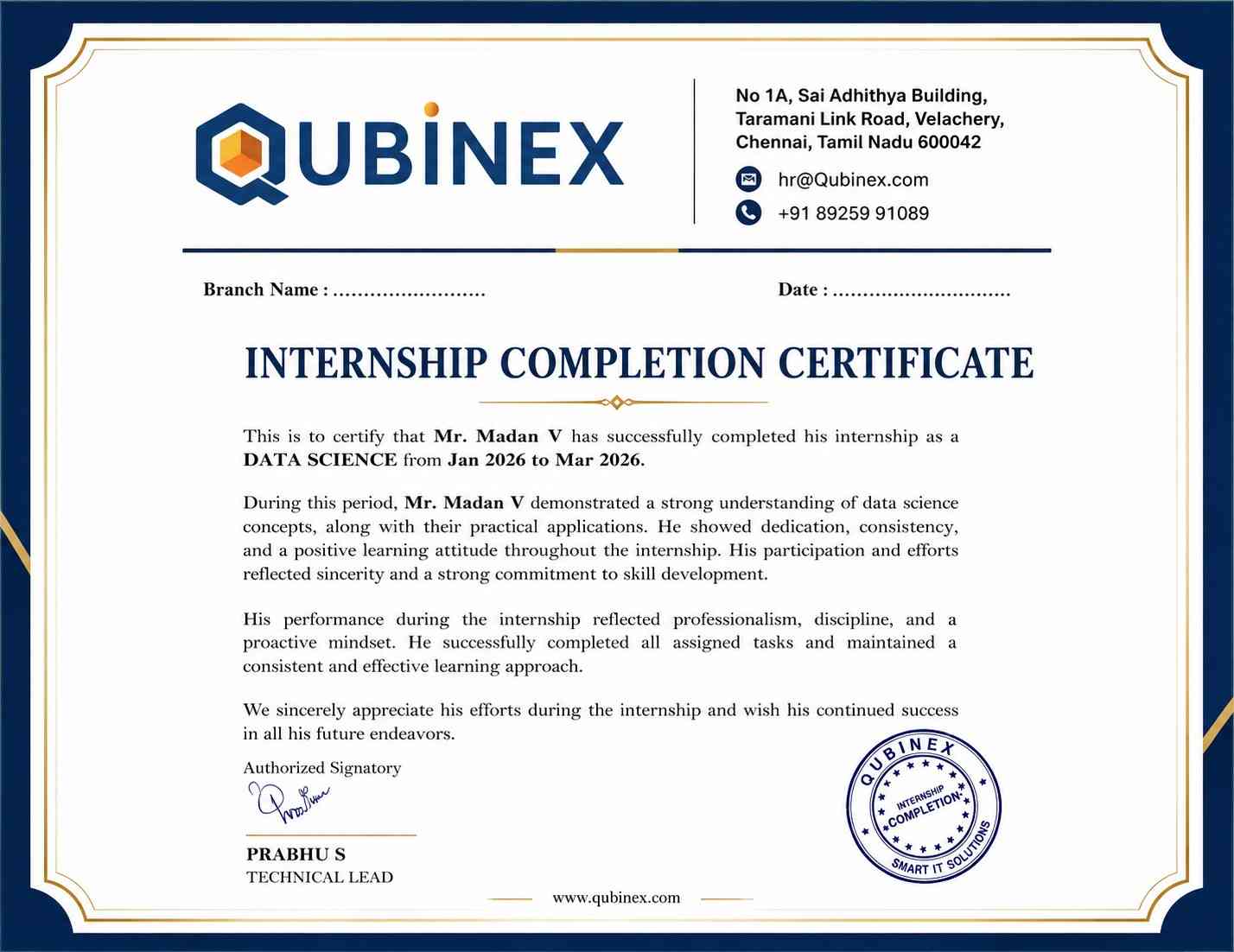
Intership
complete certification
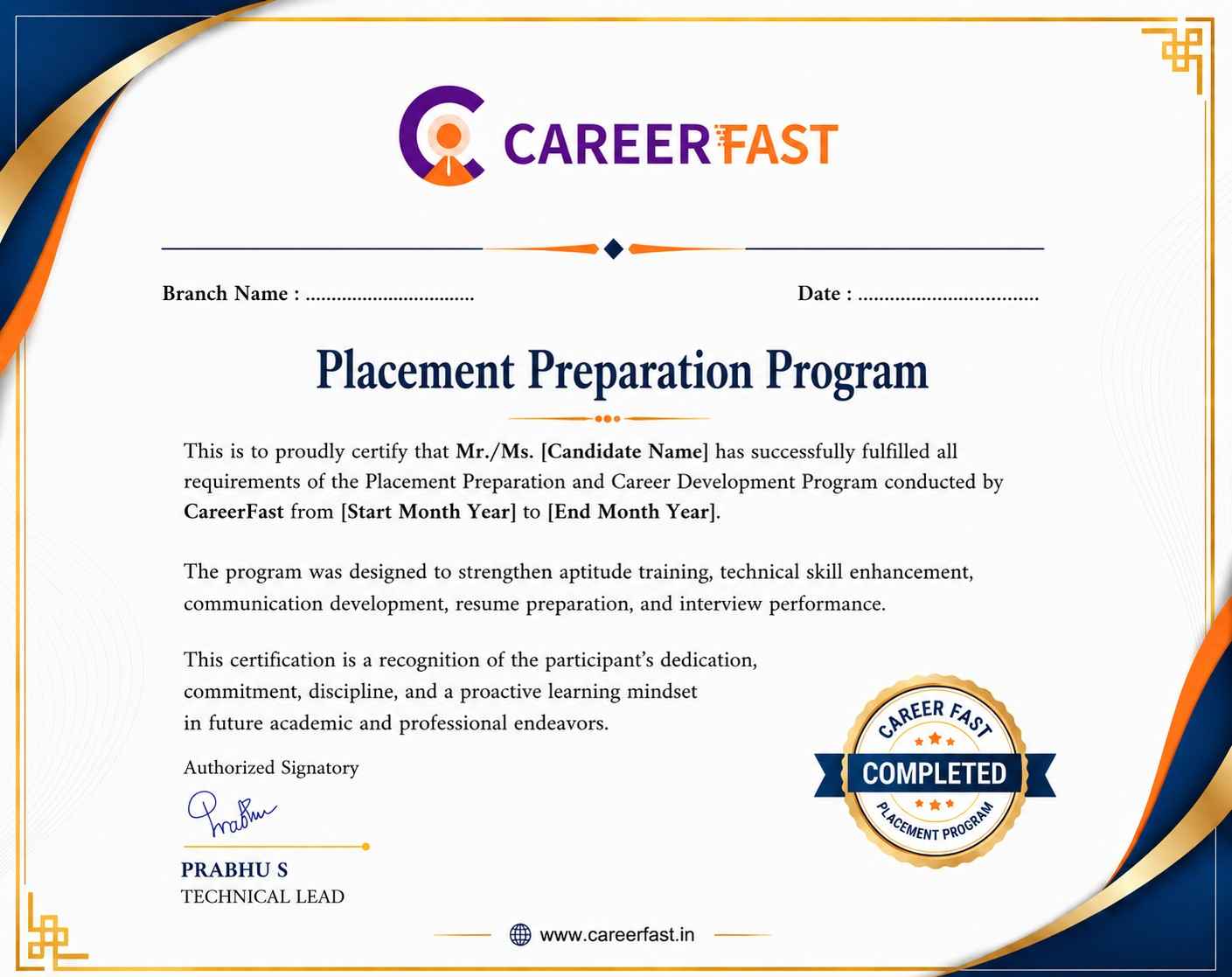
Placement
complete certification
Our learners
transformed their careers

A majority of our alumni
fast-tracked into managerial careers.
Get inspired by their progress in the Career Growth Report.
Our Student Successful Story
 Regular 1:1 Mentorship From Industry Experts
Live Classes
Career Support
Regular 1:1 Mentorship From Industry Experts
Live Classes
Career Support

Sandeep Kumar D
Software Engineer, Cisco Systems )

Vinoth P
UI Developer, TCS
Vijeyalakshme kannan
QA Engineer, Amazon Development Center
Pranav Srinivas
Software Testing, Capgemini
Prasanna
SAP Admin, HCLHow are the MongoDB Course with LearnoVita Different?
Feature
LearnoVita
Other Institutes
Affordable Fees
Competitive Pricing With Flexible Payment Options.
Higher MongoDB Fees With Limited Payment Options.
Live Class From ( Industry Expert)
Well Experienced Trainer From a Relevant Field With Practical MongoDB Training
Theoretical Class With Limited Practical
Updated Syllabus
Updated and Industry-relevant MongoDB Course Curriculum With Hands-on Learning.
Outdated Curriculum With Limited Practical Training.
Hands-on projects
Real-world MongoDB Projects With Live Case Studies and Collaboration With Companies.
Basic Projects With Limited Real-world Application.
Certification
Industry-recognized MongoDB Certifications With Global Validity.
Basic MongoDB Certifications With Limited Recognition.
Placement Support
Strong Placement Support With Tie-ups With Top Companies and Mock Interviews.
Basic Placement Support
Industry Partnerships
Strong Ties With Top Tech Companies for Internships and Placements
No Partnerships, Limited Opportunities
Batch Size
Small Batch Sizes for Personalized Attention.
Large Batch Sizes With Limited Individual Focus.
Additional Features
Lifetime Access to MongoDB Course Materials, Alumni Network, and Hackathons.
No Additional Features or Perks.
Training Support
Dedicated Mentors, 24/7 Doubt Resolution, and Personalized Guidance.
Limited Mentor Support and No After-hours Assistance.
MongoDB Course FAQ's
- LearnoVita will assist the job seekers to Seek, Connect & Succeed and delight the employers with the perfect candidates.
- On Successfully Completing a Career Course with LearnoVita, you Could be Eligible for Job Placement Assistance.
- 100% Placement Assistance* - We have strong relationship with over 650+ Top MNCs, When a student completes his/ her course successfully, LearnoVita Placement Cell helps him/ her interview with Major Companies like Oracle, HP, Wipro, Accenture, Google, IBM, Tech Mahindra, Amazon, CTS, TCS, HCL, Infosys, MindTree and MPhasis etc...
- LearnoVita is the Legend in offering placement to the students. Please visit our Placed Students's List on our website.
- More than 5400+ students placed in last year in India & Globally.
- LearnoVita Conducts development sessions including mock interviews, presentation skills to prepare students to face a challenging interview situation with ease.
- 85% percent placement record
- Our Placement Cell support you till you get placed in better MNC
- Please Visit Your Student's Portal | Here FREE Lifetime Online Student Portal help you to access the Job Openings, Study Materials, Videos, Recorded Section & Top MNC interview Questions
- LearnoVita Certification is Accredited by all major Global Companies around the World.
- LearnoVita is the unique Authorized Oracle Partner, Authorized Microsoft Partner, Authorized Pearson Vue Exam Center, Authorized PSI Exam Center, Authorized Partner Of AWS.
- Also, LearnoVita Technical Experts Help's People Who Want to Clear the National Authorized Certificate in Specialized IT Domain.
- LearnoVita is offering you the most updated, relevant, and high-value real-world projects as part of the training program.
- All training comes with multiple projects that thoroughly test your skills, learning, and practical knowledge, making you completely industry-ready.
- You will work on highly exciting projects in the domains of high technology, ecommerce, marketing, sales, networking, banking, insurance, etc.
- After completing the projects successfully, your skills will be equal to 6 months of rigorous industry experience.
- We will reschedule the classes as per your convenience within the stipulated course duration with all such possibilities.
- View the class presentation and recordings that are available for online viewing.
- You can attend the missed session, in any other live batch.

- Build a Powerful Resume for Career Success
- Get Trainer Tips to Clear Interviews
- Practice with Experts: Mock Interviews for Success
- Crack Interviews & Land Your Dream Job
Global Quality Training
At The Lowest Fees & Expert Trainer








Need custom pricing?

