Home » Designing & Animation » SQL Course in Pune

SQL Course in Pune

(4.6) 17111 Ratings
  • Get Enrolled in the Best SQL Training in Pune to Master Database Querying Skills.
  • Flexible SQL Course Timings: Weekday, Weekend, and Online Options Available.
  • Top SQL Training Institute in Pune with Hands-On Practice and Real-Time Guidance.
  • Learn Key Concepts Like Joins, Subqueries, Stored Procedures, and Database Design.
  • Interactive Training with Live Projects, Expert Mentors, and Case-Based Scenarios.
  • Enhance Your Job Prospects with Resume Support, Interview Preparation, and Placement Assistance.

Course Duration

50+ Hrs

Live Project

3 Project

Certification Pass

Guaranteed

Training Format

Live Online (Expert Trainers)
Quality Training With Affordable Fee

⭐ Fees Starts From

INR 38,000
INR 18,500

10987+

Professionals Trained

9+

Batches every month

2892+

Placed Students

171+

Corporate Served

What You'll Learn

The fundamental ideas of relational databases and SQL programming are covered in this SQL course in Pune.

Develop your database skills by learning the basics of SQL, such as joins, queries, and data manipulation.

Learn the foundational concepts of SQL, such as normalization, optimization, and data integrity.

SQL Training in Pune to gain practical experience writing complex SQL queries for efficient data administration.

Learn SQL from the fundamentals to the more complex ideas to enhance your data handling abilities.

Obtain practical database management tools and earn a certification to advance your profession.

A Comprehensive of SQL Course Overview

Our SQL training in Pune offers a comprehensive dive into database management and query optimization. Participants will gain a deep understanding of SQL's fundamental concepts and its application in real-world scenarios. The SQL Course in Pune covers essential topics such as SQL syntax, database design, and advanced querying techniques. Key areas of focus include crafting efficient SQL queries and data manipulation with complex joins, subqueries, and aggregation functions. Hands-on practice with database creation, schema design, and performance tuning is integrated through interactive sessions and practical projects. With a focus on real-world problem-solving and industry applications, the SQL Certification Course in Pune ensures that learners are equipped with the skills needed to excel in database management roles and achieve their career goals.

Additional Info

Navigating the Future: Advancing Your SQL Skills

  • Emerging SQL Trends: Explore the latest trends in SQL, including advancements in database technologies and new SQL standards. Grasping these trends will keep you ahead of the curve and enable you to leverage the most recent features. Focus on developments such as SQL on cloud platforms and integration with big data technologies. Staying updated with trends ensures your skills remain relevant and cutting-edge.
  • Advanced Query Optimization Techniques: Dive into advanced query optimization methods to enhance database performance. Techniques such as indexing strategies, query refactoring, and execution plan analysis are crucial for efficient SQL queries. Mastering these methods helps reduce query execution time and improve overall system efficiency. Understanding optimization techniques is critical for working with large datasets and complex queries.
  • SQL for Big Data Integration Learn how SQL interfaces with big data platforms like Hadoop and Spark. This integration allows you to manage and analyze large volumes of data more effectively. Developing skills in SQL for big data will enhance your ability to handle and query vast datasets. Explore how SQL queries can be adapted for big data environments and technologies.
  • Data Warehousing and SQL: Understand the role of SQL in data warehousing solutions and architecture. Data warehousing involves gathering and integrating data from various sources into a central repository, and SQL plays a critical role in querying and managing this data. Learn about schema design, ETL processes, and data warehousing best practices. Practical data warehousing skills are essential for business intelligence and analytics.
  • SQL and Cloud Computing: Examine how SQL is utilized in various cloud computing environments such as AWS, Azure, and Google Cloud. Cloud platforms offer scalable and flexible solutions for database management and SQL querying. Familiarize yourself with cloud-based SQL services and tools that enhance your database management capabilities. Cloud computing skills are increasingly important as more businesses migrate to cloud environments.
  • Mastering SQL Security Practices: Gain knowledge of advanced SQL security practices to protect sensitive data and maintain database integrity. Topics include user access controls, encryption, and vulnerability assessments. Enforcing robust security protocols is essential against data breaches and unauthorized access. Security expertise is vital to ensuring compliance and protecting valuable information.
  • SQL and Machine Learning Integration: Explore how SQL can be integrated with machine learning models and techniques. Understanding how to use SQL for data preparation and feature engineering is vital for building effective machine-learning solutions. Learn about SQL-based tools and extensions that support machine learning workflows. This integration bridges the gap between data management and advanced analytics.
  • Automating SQL Tasks: Learn about automating repetitive SQL tasks to increase efficiency and reduce manual effort. Automation tools and scripts can streamline database administration, report generation, and data processing. Familiarize yourself with scheduling, scripting, and automation frameworks. Automation skills are valuable for improving productivity and maintaining consistent performance.
  • SQL Performance Monitoring and Troubleshooting: Develop expertise in monitoring and troubleshooting SQL performance issues. Techniques include using performance monitoring tools, analyzing performance metrics, and diagnosing query problems. Effective monitoring and troubleshooting skills help identify and resolve issues promptly, ensuring smooth database operations. Performance management is crucial for maintaining optimal database performance.
  • SQL in Data Analytics: Understand how SQL is used in data analytics to derive insights and make data-driven decisions. Learn about advanced analytical functions, aggregation techniques, and data visualization integration. SQL skills in analytics enable you to transform raw data into actionable insights. Mastering data analytics with SQL supports better business decision-making and strategic planning.

Critical Technologies and Tools for Mastering SQL

  • SQL Server Management Studio (SSMS): SQL Server Management Studio (SSMS) is a robust integrated environment for managing SQL Server databases. It provides tools for configuring, managing, and administering SQL Server instances. SSMS supports query writing, execution, and debugging, making it essential for database administrators and developers. The interface allows for comprehensive database management and performance tuning.
  • Oracle SQL Developer: Oracle SQL Developer is a free integrated development environment for working with SQL and PL/SQL. It simplifies database development with features for writing and debugging code, managing database objects, and running queries. The tool includes built-in data modelling and reporting capabilities. It is widely used for managing Oracle databases and developing complex SQL queries.
  • MySQL Workbench: MySQL Workbench is a comprehensive visual tool for database design, development, and administration. It provides a graphical interface for managing MySQL databases, running queries, and designing schemas. The tool includes features for data modelling, query optimization, and server configuration. MySQL Workbench is essential for MySQL database administrators and developers.
  • PgAdmin: PgAdmin is a popular open-source management tool for PostgreSQL databases. It offers a user-friendly interface for managing database objects, executing SQL queries, and analyzing query performance. The tool supports advanced features like database design, data import/export, and monitoring. PgAdmin is widely used in PostgreSQL environments for its comprehensive functionality.
  • Toad for SQL Server: Toad for SQL Server is a versatile database management tool that enhances productivity with its advanced SQL editing and debugging features. It provides tools for query optimization, data analysis, and database administration. The tool supports the automation of repetitive tasks and integration with version control systems. Toad is particularly useful for SQL Server database developers and administrators.
  • DBeaver: DBeaver is a free, open-source tool for managing databases that supports multiple database platforms, including SQL Server, MySQL, PostgreSQL, and Oracle. It offers features for database exploration, query execution, and data visualization. DBeaver's extensible architecture allows for customization and integration with various plugins, making it ideal for users working with diverse database technologies.
  • SQLAlchemy: SQLAlchemy is a SQL toolkit and Object-Relational Mapping (ORM) library for Python. It provides a high-level API for interacting with databases using SQL and object-oriented programming techniques. SQLAlchemy supports multiple database backends and offers powerful features for building complex queries and managing database transactions. It is widely used in Python applications for database interaction.
  • Apache Hive: Apache Hive is a data warehouse system that operates on top of Hadoop for querying and managing large datasets. It provides a SQL-like query language called HiveQL for data analysis and reporting. Hive integrates with Hadoop to handle big data processing and storage. It is essential for data engineers and analysts working with large-scale data processing environments.
  • Redgate SQL Toolbelt: Redgate SQL Toolbelt is a collection of tools designed for SQL Server database development, deployment, and administration. It includes tools for source control, database comparison, and performance monitoring. The Toolbelt enhances productivity and collaboration by providing solutions for database versioning and change management. It is widely used in SQL Server environments for its comprehensive capabilities.

Essential Functions and Responsibilities of SQL Experts

  • Database Administrator (DBA): Database Administrators oversee the installation, configuration, and maintenance of database systems. They ensure the integrity, security, and availability of data by managing user access and performing regular backups. DBAs also monitor database performance and optimize queries to enhance efficiency. Their role includes troubleshooting issues and implementing updates and patches to keep systems running smoothly.
  • SQL Developer: SQL Developers design and implement complex SQL queries and scripts to support application development. They collaborate closely with software engineers to ensure that database interactions are efficient and meet business requirements. Their responsibilities also include creating and managing database objects such as tables, indexes, and views. SQL Developers frequently test and optimize SQL code to ensure performance and accuracy.
  • Data Analyst: Data Analysts use SQL to extract, manipulate, and analyze data from diverse sources to derive actionable insights. They create reports and visualizations to support decision-making processes within an organization. Their role involves writing complex SQL queries to access and aggregate data and identify trends and patterns. Data Analysts also collaborate with other teams to understand their data needs and provide relevant solutions.
  • Data Engineer: Data Engineers design and build robust data pipelines and architectures using SQL to handle large volumes of data efficiently. They focus on optimizing data storage and retrieval processes to ensure data is readily available for analysis. Their role includes integrating data from different sources and maintaining data quality.
  • Business Intelligence (BI) Developer: BI Developers utilize SQL to design and develop data models, reports, and dashboards that provide business insights. They work with data warehouses and ETL processes to ensure data is accurately captured and presented. Their responsibilities include creating SQL queries that drive BI tools and generating actionable reports for stakeholders. BI Developers also collaborate with business users to understand their reporting needs and deliver tailored solutions.
  • Database Architect: Database Architects design and create the overall structure of databases to ensure they meet organizational needs. They define database schemas, optimize database performance, and ensure scalability and reliability. Their role involves evaluating database technologies and selecting the appropriate solutions for different applications. Database Architects also provide guidance on best practices and standards for database design.
  • ETL Developer: ETL Developers use SQL to design and implement ETL (Extract, Transform, Load) processes for data integration. They ensure that data from various sources is accurately extracted, transformed, and loaded into data warehouses or other systems. Their responsibilities include writing SQL scripts for data manipulation and ensuring data quality and consistency. ETL Developers work closely with Data Engineers and Analysts to facilitate seamless data flow.
  • SQL Server Administrator: SQL Server Administrators manage SQL Server instances, ensuring that they operate efficiently and securely. They handle tasks such as installation, configuration, and patching of SQL Server software. Their role includes monitoring server performance, managing user permissions, and performing backups and restorations. SQL Server Administrators also troubleshoot issues and optimize database configurations for improved performance.
  • Data Scientist: Data Scientists use SQL to extract and preprocess data for advanced statistical analysis and machine learning. They write complex SQL queries to prepare data for modelling and ensure that it is accurate and reliable. Their responsibilities also include integrating SQL with other programming languages and tools to build predictive models and analyze data. Data Scientists collaborate with business stakeholders to translate data insights into actionable recommendations.
  • Data Warehouse Developer: Data Warehouse Developers design and implement data warehousing solutions using SQL. They focus on structuring and managing large volumes of data to support business intelligence and reporting needs. Their role includes creating ETL processes, optimizing data storage, and ensuring data integrity and accessibility. Data Warehouse Developers also work on data integration and transformation to ensure that the data warehouse meets organizational requirements.

In-Demand Job Roles for SQL Certification Holders

  • Data Analyst at JPMorgan Chase: Data Analysts at JPMorgan Chase utilize SQL to extract and analyze large datasets, helping the company make data-driven decisions. They work with various business units to identify trends and insights that drive strategic initiatives. Their proficiency in SQL allows them to query databases efficiently and create reports for internal stakeholders. The role provides a deep understanding of data visualization and statistical analysis tools.
  • Database Administrator at IBM: IBM's Database Administrators are responsible for maintaining and optimizing large-scale database systems using SQL. They ensure data integrity, performance, and security across diverse databases. This role involves troubleshooting and resolving complex database issues to support business operations. SQL certification is essential for managing IBM's sophisticated database environments effectively.
  • Business Intelligence Developer at Microsoft: Business Intelligence Developers at Microsoft use SQL to design and implement data models and reporting solutions. They work closely with business leaders to understand requirements and deliver actionable insights through BI tools. Mastery of SQL is crucial for creating complex queries and optimizing data processing. This role also involves integrating data from various sources to enhance business intelligence.
  • Data Scientist at Google: Google's Data Scientists leverage SQL to manage and analyze vast amounts of data, enabling advanced analytics and machine learning applications. They build and refine algorithms that drive insights and innovations across Google's products and services. SQL certification supports their ability to query and manipulate data efficiently. This role demands a strong foundation in data science principles and SQL.
  • Database Developer at Oracle: Oracle’s Database Developers design, implement, and optimize database solutions using SQL. They develop and maintain complex SQL queries and stored procedures to support application development. SQL certification is vital for ensuring the high performance and scalability of Oracle’s database systems. The role also involves collaborating with software engineers to integrate database solutions into applications.
  • Data Engineer at Amazon Web Services (AWS): Data Engineers at AWS use SQL to build and manage data pipelines and perform ETL processes. They work on cloud-based solutions to handle large-scale data processing and storage. SQL certification helps in developing efficient queries and ensuring data accuracy in AWS’s data infrastructure. The role provides working with a range of AWS services and big data technologies.
  • Business Analyst at Deloitte: Business Analysts at Deloitte use SQL to extract and analyze business data, providing insights that inform strategic decisions. They develop reports and dashboards to present findings to clients and stakeholders. SQL certification enhances their ability to manage data and generate actionable business insights. The role also involves collaborating with clients to understand their data needs.
  • ETL Developer at SAP: SAP’s ETL Developers design and implement data extraction, transformation, and loading processes using SQL. They work on integrating data from multiple sources into SAP systems, ensuring data consistency and accuracy. SQL certification supports their role in creating robust ETL solutions. The position requires expertise in both SQL and SAP’s data management tools.
  • SQL Server Developer at Cisco Systems: SQL Server Developers at Cisco Systems develop and manage SQL Server databases and applications. They write complex queries and optimize database performance to support Cisco’s technology solutions. SQL certification is critical for ensuring the efficient operation of Cisco’s SQL Server environments. The role also involves working with software developers to integrate SQL Server with applications.
  • Analytics Consultant at PwC: Analytics Consultants at PwC use SQL to analyze and interpret complex data sets for various client projects. They develop customized analytics solutions and provide recommendations based on data insights. SQL certification enhances their ability to perform in-depth data analysis and deliver valuable business insights. The role includes working with clients to understand their analytical needs and providing strategic solutions.
View more

SQL Training Objectives

To enrol in an SQL course, a basic understanding of database concepts and data management principles is advantageous. Familiarity with basic programming logic and general IT concepts will enhance your grasp of SQL. While previous experience with other database systems or query languages can be beneficial, it is not mandatory. Strong analytical and problem-solving skills will support your ability to learn and apply SQL functionalities effectively.
This course is ideal for database administrators, data analysts, and IT professionals interested in mastering data management and querying. It is particularly suited for individuals seeking to advance their careers in data-driven roles or those involved in system design and reporting. Additionally, project managers and business analysts who need to work with databases will benefit from understanding SQL.
Learnovita’s SQL course provides various resources, including detailed instructional materials, hands-on practice labs, and interactive exercises. Participants benefit from expert-led sessions, real-world case studies, and practical projects. The training also includes access to database management tools and query development environments, ensuring a comprehensive learning experience.
  • Database Administrator
  • Data Analyst
  • SQL Developer
  • Business Intelligence Analyst
  • Database Developer
Our SQL course offers comprehensive training and hands-on practice, complemented by solid career support services. While the course significantly enhances your job readiness, our placement assistance—including resume building and interview preparation—is designed to help you secure relevant employment opportunities.
  • SQL Management Studio
  • Oracle SQL Developer
  • MySQL Workbench
  • PostgreSQL
  • Microsoft SQL Server
Enrolling in Learnovita’s SQL course provides you with in-depth knowledge of database management and query optimization. You will gain practical skills in SQL that are applicable across various industries and roles. This positions you as a proficient SQL professional, ready to tackle data management challenges and advance your career in data-driven fields.
  • Introduction to SQL and Database Concepts
  • Database Design and Normalization
  • Writing SQL Queries
  • Data Analysis and Reporting
  • Database Security and Performance Tuning
Yes, the SQL course incorporates extensive practical experience through exercises such as database design, query writing, and performance tuning. Participants develop SQL scripts, manage databases, and analyze data through real-world projects. These practical components are designed to enhance your SQL skills and application of database concepts.
  • Finance
  • Healthcare
  • Technology
  • Retail
  • Education
view More view Less

SQL Course Benefits

Advanced SQL techniques, query optimization, and database administration are all covered in detail in our SQL Certification Course in Pune. An SQL Internship in Pune allows you to work on real-world SQL Projects in Pune and obtain practical experience. If you receive professional assistance, you will be ready for industry roles. Get complete SQL placement assistance after completing the course.

  • Designation
  • Annual Salary
    Hiring Companies
  • 5.24L
    Min
  • 7.5L
    Average
  • 13.45L
    Max
  • 4.57L
    Min
  • 8.65L
    Average
  • 16.15L
    Max
  • 4.8L
    Min
  • 6.85L
    Average
  • 13.35L
    Max
  • 5.24L
    Min
  • 8.5L
    Average
  • 15.5L
    Max

About Your SQL Certification Training

Our SQL Training Institute in Pune offers comprehensive and reasonably priced instruction in advanced SQL skills, query optimization, and database administration. You will gain practical experience with a focus on real-world applications. Upon completion, you receive a SQL Certification, which increases your employability. The cost of SQL Course With Placement is reasonable and value-based.

Top Skills You Will Gain
  • Network Fundamentals
  • Routing Protocols
  • Switching Concepts
  • IP Addressing
  • Subnet Calculation
  • Access Control
  • WAN Technologies
  • Troubleshooting Methods

12+ SQL Tools

Online Classroom Batches Preferred

Weekdays (Mon - Fri)
16 - Feb - 2026
08:00 AM (IST)
Weekdays (Mon - Fri)
18 - Feb- 2026
08:00 AM (IST)
Weekend (Sat)
21 - Feb - 2026
11:00 AM (IST)
Weekend (Sun)
22 - Feb - 2026
11:00 AM (IST)
Can't find a batch you were looking for?
₹38,000 ₹18,500 10% OFF Expires in

No Interest Financing start at ₹ 5000 / month

Corporate Training

  • Customized Learning
  • Enterprise Grade Learning Management System (LMS)
  • 24x7 Support
  • Enterprise Grade Reporting

Not Just Studying
We’re Doing Much More!

Empowering Learning Through Real Experiences and Innovation
Hiring
Hiring
Hiring
Hiring
Hiring
Hiring
Hiring
User
User
User
User
User
User

SQL Course Curriculum

Trainers Profile

At Learnovita, our SQL Course in Pune is delivered by industry veterans with extensive practical experience in database management, data analytics, and system optimization across diverse sectors. These experts, drawn from prominent global companies, offer an in-depth perspective on SQL’s functionalities and its vital role in managing and querying relational databases. This course will provide you with critical skills in designing complex queries, optimizing database performance, and ensuring data integrity, significantly boosting your proficiency in the tech industry.

Syllabus of SQL Course Download syllabus

  • Overview of Different Database Types
  • Introduction to Structured Query Language (SQL)
  • Differences between Client-Server and File-Server Databases
  • Getting Started with SQL Server Management Studio
  • Basics of SQL Tables
  • Data Types and Functions in SQL
  • Entities and Entity Collections
  • Attributes and Their Varieties
  • Collections of Entities
  • Collections of Relationships
  • Relationship Cardinality
  • Overview of relational databases
  • Basic principles of relational data structures
  • Exploration of various operators
  • Introduction to aggregate functions
  • Understanding the concept of unique keys
  • Advanced SQL Table Concepts
  • SQL Functions
  • Operators and Queries
  • Creating Tables
  • Retrieving Data from Tables
  • Introduction to SQL Functions
  • Scalar Functions
  • Aggregate Functions
  • Functions for Various Data Types
  • Inline SQL Functions
  • General Functions
  • Functions for Handling Duplicates
  • Introduction to SQL subqueries and their guidelines.
  • Comprehending SQL subqueries and their rules.
  • Operators and statements are compatible with subqueries.
  • Modifying subqueries using the SET clause.
  • Exploring various subquery types
  • Techniques for creating and viewing subqueries.
  • Introduction to SQL Views
  • Creating and Managing Views
  • Overview of Stored Procedures
  • Utilizing Stored Procedures
  • Exploring User-Defined Functions
  • Handling Errors
  • Understanding User-Defined Functions
  • Types of User-Defined Functions
  • Inline Table-Valued Functions
  • Multi-Statement Table-Valued Functions
  • Using Stored Procedures
  • Data Management
  • Creating Clustered Indexes
  • Indexes for Query Optimization
  • Common Table Expressions
  • Indexing Best Practices
  • Handling Transactions
  • Identifying DML Statements
  • Implicit vs. Explicit Transactions
  • Managing Isolation Levels
  • Concurrency and Locking
  • Memory-Optimized Tables
(15) view More view Less
Need customized curriculum?

REAL

start
STORIES SUCCESS INSPIRATION
CAREER
UPGRADE
sowmiya

sowmiya

CAREER
UPGRADE
Rajkumar

Rajkumar

CAREER
UPGRADE
Thon

Thon

CAREER
UPGRADE
lavanya

Lavanya

Industry Projects

Project 1
Healthcare Patient Management

Design an SQL database to track patient information, appointments, and medical history. SQL is used to support reporting improving patient care and operational efficiency.

Project 2
Telecommunications Network Monitoring

Create a SQL database to monitor network performance and manage service outages. Use SQL queries to analyze network data and identify potential issues or areas for improvement.

Project 3
Retail Inventory Management

Build a SQL database to track inventory levels, supplier information, and sales data. Utilize SQL to optimize stock levels, reduce overstocking, and enhance supply chain efficiency.

Our Hiring Partner

Exam & SQL Certification

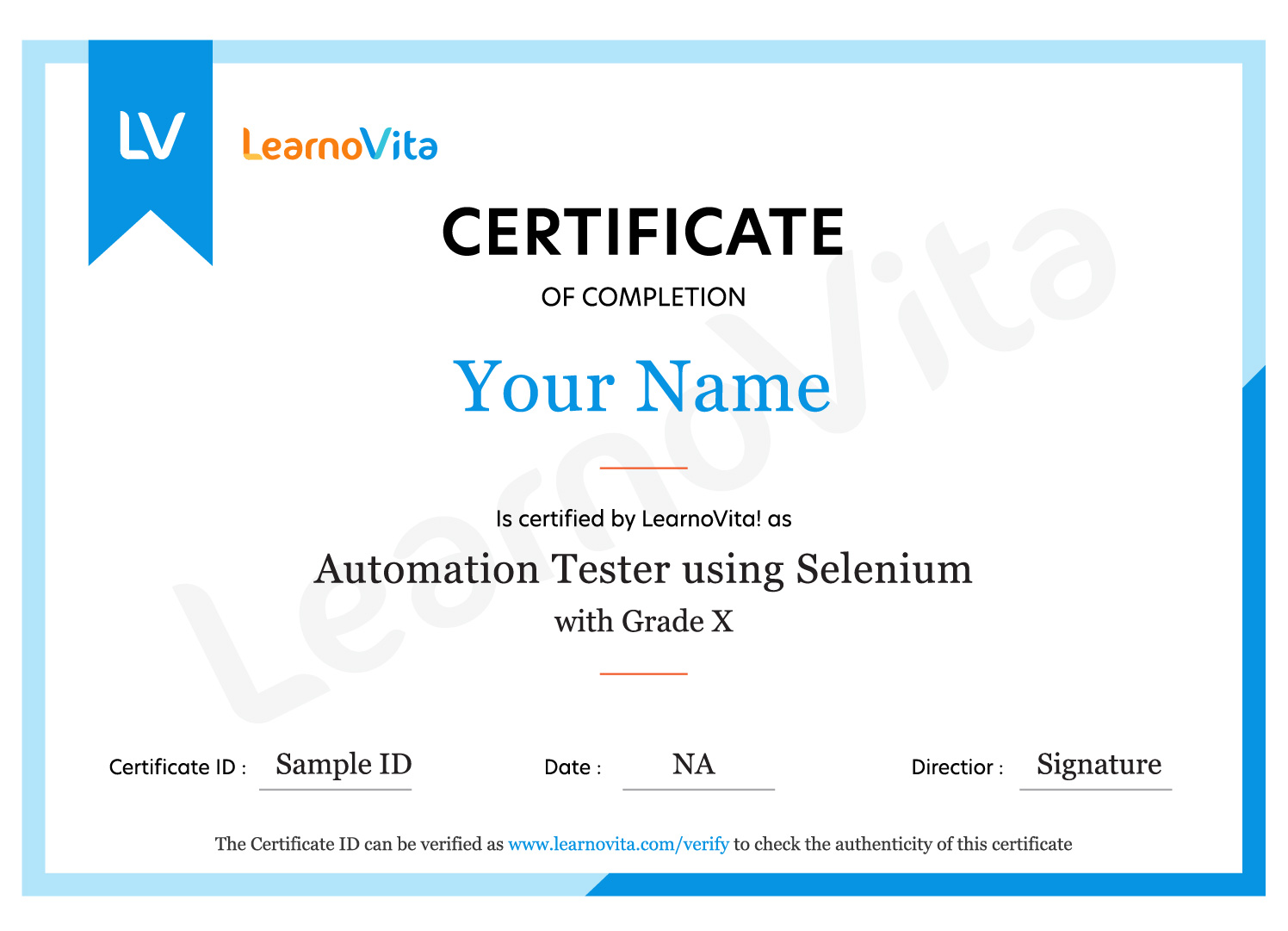
  • Achieving an SQL certification from Learnovita showcases your expertise in database management and query optimization.
  • This certification can lead to career opportunities as a Database Administrator, Data Analyst, or SQL Developer.
  • Learnovita’s robust career support and job placement services will enhance your job prospects and assist you in securing relevant positions.
  • The certification validates your skills, making you a strong candidate for roles requiring in-depth SQL knowledge.
  • Microsoft Certified: Azure Data Engineer Associate
  • Oracle Certified Professional, MySQL Database Administrator
  • IBM Certified Database Administrator – DB2Google Professional Data Engineer
  • Microsoft Certified: SQL Server Database Development
To pursue an SQL certification, a fundamental understanding of database concepts and essential data management is recommended. Familiarity with SQL syntax, data querying techniques, and relational database design will enhance your preparation. Experience with other programming languages or database systems can be advantageous but is not mandatory. Practical experience with SQL through hands-on projects or real-world applications will further solidify your readiness for the certification exam.
Yes, Learnovita’s SQL training program incorporates various practice assessments to reinforce your understanding. These assessments cover critical areas such as database design, query writing, and data manipulation. Regular practice tests and practical exercises are designed to emulate real-world database scenarios, helping you apply your theoretical knowledge effectively. Personalized feedback from these assessments ensures you are well-prepared for both certification exams and practical database challenges.
Earning an SQL certification from Learnovita offers several advantages, including advanced skills in database management and query execution. It enhances your ability to design, manage, and optimize databases, making you a valuable asset for various technical roles. The certification boosts your career prospects, opening opportunities in data management, analysis, and development. Learnovita’s program ensures you stand out in the job market, demonstrating your SQL expertise to potential employers.

Our learners
transformed their careers

35 Laks
Highest Salary Offered
50%
Average Salary Hike
30K+
Placed in MNC's
15+
Year's in Training
Our Alumni
Alumni

A majority of our alumni

fast-tracked into managerial careers.

Get inspired by their progress in the Career Growth Report.

Our Student Successful Story

checkimage Regular 1:1 Mentorship From Industry Experts checkimage Live Classes checkimage Career Support

How are the SQL Course with LearnoVita Different?

Feature

LearnoVita

Other Institutes

Affordable Fees

Competitive Pricing With Flexible Payment Options.

Higher SQL Fees With Limited Payment Options.

Live Class From ( Industry Expert)

Well Experienced Trainer From a Relevant Field With Practical SQL Training

Theoretical Class With Limited Practical

Updated Syllabus

Updated and Industry-relevant SQL Course Curriculum With Hands-on Learning.

Outdated Curriculum With Limited Practical Training.

Hands-on projects

Real-world SQL Projects With Live Case Studies and Collaboration With Companies.

Basic Projects With Limited Real-world Application.

Certification

Industry-recognized SQL Certifications With Global Validity.

Basic SQL Certifications With Limited Recognition.

Placement Support

Strong Placement Support With Tie-ups With Top Companies and Mock Interviews.

Basic Placement Support

Industry Partnerships

Strong Ties With Top Tech Companies for Internships and Placements

No Partnerships, Limited Opportunities

Batch Size

Small Batch Sizes for Personalized Attention.

Large Batch Sizes With Limited Individual Focus.

Additional Features

Lifetime Access to SQL Course Materials, Alumni Network, and Hackathons.

No Additional Features or Perks.

Training Support

Dedicated Mentors, 24/7 Doubt Resolution, and Personalized Guidance.

Limited Mentor Support and No After-hours Assistance.

SQL Course FAQ's

Certainly, you are welcome to join the demo session. However, due to our commitment to maintaining high-quality standards, we limit the number of participants in live sessions. Therefore, participation in a live class without enrollment is not feasible. If you're unable to attend, you can review our pre-recorded session featuring the same trainer. This will provide you with a comprehensive understanding of our class structure, instructor quality, and level of interaction.
All of our instructors are employed professionals in the industry who work for prestigious companies and have a minimum of 9 to 12 years of significant IT field experience. A great learning experience is provided by all of these knowledgeable people at LearnoVita.
  • LearnoVita is dedicated to assisting job seekers in seeking, connecting, and achieving success, while also ensuring employers are delighted with the ideal candidates.
  • Upon successful completion of a career course with LearnoVita, you may qualify for job placement assistance. We offer 100% placement assistance and maintain strong relationships with over 650 top MNCs.
  • Our Placement Cell aids students in securing interviews with major companies such as Oracle, HP, Wipro, Accenture, Google, IBM, Tech Mahindra, Amazon, CTS, TCS, Sports One , Infosys, MindTree, and MPhasis, among others.
  • LearnoVita has a legendary reputation for placing students, as evidenced by our Placed Students' List on our website. Last year alone, over 5400 students were placed in India and globally.
  • We conduct development sessions, including mock interviews and presentation skills training, to prepare students for challenging interview situations with confidence. With an 85% placement record, our Placement Cell continues to support you until you secure a position with a better MNC.
  • Please visit your student's portal for free access to job openings, study materials, videos, recorded sections, and top MNC interview questions.
LearnoVita Certification is awarded upon course completion and is recognized by all of the world's leading global corporations. LearnoVita are the exclusive authorized Oracle, Microsoft, Pearson Vue, and SQL I exam centers, as well as an authorized partner of SQL . Additionally, those who want to pass the National Authorized Certificate in a specialized IT domain can get assistance from LearnoVita's technical experts.
As part of the training program, LearnoVita provides you with the most recent, pertinent, and valuable real-world projects. Every program includes several projects that rigorously assess your knowledge, abilities, and real-world experience to ensure you are fully prepared for the workforce. Your abilities will be equivalent to six months of demanding industry experience once the tasks are completed.
At LearnoVita, participants can choose from instructor-led online training, self-paced training, classroom sessions, one-to-one training, fast-track programs, customized training, and online training options. Each mode is designed to provide flexibility and convenience to learners, allowing them to select the format that best suits their needs. With a range of training options available, participants can select the mode that aligns with their learning style, schedule, and career goals to excel in SQL .
LearnoVita guarantees that you won't miss any topics or modules. You have three options to catch up: we'll reschedule classes to suit your schedule within the course duration, provide access to online class presentations and recordings, or allow you to attend the missed session in another live batch.
Please don't hesitate to reach out to us at contact@learnovita.com if you have any questions or need further clarification.
To enroll in the SQL at LearnoVita, you can conveniently register through our website or visit any of our branches in India for direct assistance.
Yes, after you've enrolled, you will have lifetime access to the student portal's study materials, videos, and top MNC interview questions.
At LearnoVita, we prioritize individual attention for students, ensuring they can clarify doubts on complex topics and gain a richer understanding through interactions with instructors and peers. To facilitate this, we limit the size of each SQL Service batch to 5 or 6 members.
The average annual salary for SQL Professionals in India is 7 LPA to 8 LPA.
view More view Less
Career Assistance
  • Build a Powerful Resume for Career Success
  • Get Trainer Tips to Clear Interviews
  • Practice with Experts: Mock Interviews for Success
  • Crack Interviews & Land Your Dream Job

Find SQL Training in Other Cities

Acte Technologies WhatsApp