Home » Cyber Security & Networking » Cyber Security Course in Hebbal

Cyber Security Course in Hebbal

(4.8) 18659 Ratings
  • Enroll in the Cyber Security Course in Hebbal to build expertise in cybersecurity and information security.
  • Learn essential cybersecurity concepts including network security, threat detection, and security controls.
  • Gain hands-on experience through real-time Cyber Security projects and practical security exercises.
  • Ideal for aspiring Cyber Security Analysts, Security Engineers, SOC Analysts, and Career Starters.
  • Choose from Flexible Batch Timings: Weekday, Weekend, or Fast-Track Learning Schedules.
  • Benefit from Placement Assistance, Interview Preparation, and Cyber Security Career Guidance.

Course Duration

55+ Hrs

Live Project

3 Project

Certification Pass

Guaranteed

Training Format

Live Online (Expert Trainers)
Quality Training With Affordable Fee

⭐ Fees Starts From

INR 38,000
INR 18,500

12054+

Professionals Trained

11+

Batches every month

2874+

Placed Students

241+

Corporate Served

What You'll Learn

The Cyber Security Course covers network security, information security, threat detection, vulnerability management, and security monitoring.

Understand key cybersecurity concepts including security frameworks, common threats, vulnerabilities, access controls, and network protection.

Develop practical skills in identifying vulnerabilities, analyzing security threats, implementing security controls, and protecting systems.

Gain hands-on experience through cybersecurity exercises, security monitoring, incident analysis, vulnerability assessment, and real-time projects.

Explore advanced cybersecurity topics such as penetration testing, SIEM, incident response, security operations, and risk management.

Complete the training with practical cybersecurity skills and prepare for roles involving security analysis, and information security.

Comprehensive Overview of Cyber Security Course

The Cyber Security Course in Hebbal is designed to provide practical knowledge of cybersecurity fundamentals, information security, network protection, ethical hacking, vulnerability assessment, and modern security practices followed by organizations. The training helps learners understand cyber threats, attack prevention techniques, security frameworks, risk management, and incident response using relevant cybersecurity tools and technologies. Participants gain hands-on experience through security labs, real-time scenarios, vulnerability assessments, penetration testing activities, threat analysis, and live Cyber Security projects, helping them develop practical skills for opportunities in the growing cybersecurity field.

Additional Info

Upcoming Future Transformations for Cyber Security Training in Hebbal

  • AI-Powered Cyber Security: Artificial intelligence and machine learning are transforming cyber security through automated threat detection, predictive analysis, and faster incident response. Modern organizations use intelligent security tools to identify suspicious activities and strengthen protection against evolving cyber threats.
  • Cloud Security Adoption: The growing use of cloud platforms has increased the need for advanced cloud security solutions. Organizations are adopting secure cloud environments, access controls, encryption, and monitoring tools to protect applications, data, and infrastructure from unauthorized access and emerging cyber risks.
  • Cyber Security Across Industries: Cyber security is becoming essential across banking, healthcare, manufacturing, government, and IT sectors. Organizations use network security, vulnerability assessment, ethical hacking, penetration testing, and data protection practices to safeguard critical systems and sensitive information.
  • Automated Security Operations: Security automation is improving threat detection, vulnerability scanning, incident monitoring, and response processes. Automated security platforms reduce manual efforts, improve operational efficiency, and help security teams identify potential risks faster while maintaining continuous protection across digital environments.
  • Advanced Threat Intelligence: Threat intelligence enables organizations to understand emerging cyber threats, attack patterns, and vulnerabilities. Security teams use real-time monitoring, threat analysis, and intelligence platforms to detect suspicious activities, strengthen defenses, and respond effectively to potential security incidents.
  • Security in Digital Transformation: Cyber security supports digital transformation by protecting applications, networks, cloud platforms, and business data. Integrated security solutions provide centralized monitoring, risk assessment, compliance support, and better visibility, helping organizations manage security challenges while adopting new digital technologies.
  • Remote Security Management: Remote and hybrid work models have increased the demand for secure access, identity management, endpoint protection, and cloud security. Organizations implement centralized monitoring and authentication solutions to protect remote users, business applications, and sensitive information from evolving cyber threats.
  • Growth of SIEM Technologies: Security Information and Event Management platforms are improving how organizations collect, monitor, and analyze security events. SIEM solutions provide centralized visibility, real-time alerts, threat correlation, and incident analysis, helping security teams identify risks and respond to security events efficiently.
  • Identity and Access Management: Identity and Access Management solutions help organizations control user identities, authentication, permissions, and access to critical resources. Strong IAM practices reduce unauthorized access risks while supporting secure remote operations, cloud adoption, compliance requirements, and protection of sensitive business information.
  • Cyber Security Career Opportunities: The increasing adoption of modern security technologies is creating opportunities for skilled professionals. Knowledge of ethical hacking, network security, cloud security, SIEM, digital forensics, vulnerability assessment, and incident response can support careers in diverse cyber security roles.

Building Tools and Techniques with Cyber Security Training

  • Cyber Security Fundamentals: Learn core security concepts, cyber threats, malware, phishing, risk management, authentication, encryption, and data protection. Practical labs and attack simulations help learners build essential skills for identifying threats and protecting digital assets.
  • Network Security: Understand network architecture, firewalls, security protocols, traffic analysis, and monitoring techniques. Learners practice identifying vulnerabilities, detecting unauthorized access, and implementing network protection methods to develop practical skills for cyber defense and security operations.
  • Ethical Hacking: Learn authorized hacking techniques to identify security weaknesses in systems, networks, and applications. Training covers reconnaissance, scanning, exploitation, and security testing through controlled labs, helping learners develop practical skills for ethical hacking and penetration testing roles.
  • Vulnerability Assessment: Learn how to identify, analyze, prioritize, and manage vulnerabilities across networks, applications, and systems. Learners explore scanning techniques, risk assessment, vulnerability management, and remediation practices through practical exercises designed to strengthen organizational security.
  • Penetration Testing: Understand how security professionals simulate authorized attacks to evaluate system defenses. Learners explore testing methodologies, scanning, exploitation, reporting, and remediation through practical labs and real-world scenarios, developing skills required for penetration testing and security assessment roles.
  • SIEM and Security Monitoring: Learn how SIEM platforms collect, correlate, and analyze security logs from multiple sources. Training covers alert monitoring, threat detection, event analysis, and incident investigation, helping learners develop practical capabilities for SOC analyst and security monitoring positions.
  • Firewalls and Intrusion Detection: Understand how firewalls and IDS solutions protect networks through traffic filtering, access control, and threat detection. Learners gain practical knowledge of security configurations, monitoring techniques, intrusion detection, and defensive strategies for strengthening network security.
  • Identity and Access Management: Learn authentication, authorization, user management, role-based access control, permissions, and identity governance. Practical training helps learners understand how organizations secure enterprise resources, prevent unauthorized access, and manage identities across modern IT environments.
  • Cloud and Application Security: Learn techniques for protecting cloud platforms, applications, infrastructure, and sensitive data. Training covers cloud risks, secure configurations, application vulnerabilities, security testing, access controls, and data protection practices required for modern digital environments.
  • Digital Forensics and Incident Response: Learn how security teams investigate cyber incidents, collect digital evidence, analyze attacks, and manage recovery. Practical exercises cover incident detection, containment, forensic investigation, evidence handling, reporting, and response procedures for effective cyber security operations.

Additional Roles and Responsibilities of Cyber Security Training

  • Security Consultant: A Security Consultant helps organizations identify security risks, evaluate existing controls, and recommend effective protection strategies. They assess networks, applications, cloud environments, and security policies while supporting risk management, audits, compliance, and security improvement initiatives.
  • Security Architect: A Security Architect designs secure technology environments and develops security frameworks for enterprise systems. They work with network protection, cloud security, access controls, firewalls, and security technologies to create scalable solutions that protect business applications, infrastructure, and sensitive information.
  • SOC Manager: A SOC Manager oversees security operations teams responsible for monitoring, detecting, investigating, and responding to cyber threats. They manage security processes, coordinate incident response activities, review alerts, improve SOC performance, and ensure effective protection of organizational systems and digital assets.
  • Threat Intelligence Analyst: A Threat Intelligence Analyst researches emerging cyber threats, attack patterns, vulnerabilities, and threat indicators. They collect and analyze intelligence from multiple sources, identify potential risks, prepare reports, and provide actionable insights that help security teams strengthen defenses against evolving cyber attacks.
  • Security Auditor: A Security Auditor evaluates an organization's security controls, policies, systems, and procedures to identify gaps and compliance risks. They conduct security assessments, review configurations, document findings, and recommend improvements to strengthen security practices and maintain effective protection across enterprise environments.
  • Compliance Analyst: A Compliance Analyst helps organizations meet security standards, regulatory requirements, and internal policies. They assess security controls, review documentation, identify compliance gaps, prepare reports, and coordinate corrective actions to improve governance, risk management, data protection, and overall security compliance.
  • Malware Analyst: A Malware Analyst examines malicious software to understand its behavior, attack methods, and potential impact. They analyze suspicious files, investigate malware activities, identify indicators of compromise, and provide technical insights that help security teams detect threats and strengthen defensive security measures.
  • Security Administrator: A Security Administrator manages security configurations, user access, authentication controls, and protection systems across enterprise environments. They monitor security activities, maintain access policies, support vulnerability management, and implement security controls to protect organizational systems, applications, networks, and sensitive information.
  • Cloud Security Engineer: A Cloud Security Engineer protects cloud infrastructure, applications, and data by implementing security controls and monitoring cloud environments. They manage access policies, secure configurations, vulnerability assessments, and threat monitoring while helping organizations maintain secure and compliant cloud-based technology environments.
  • Application Security Engineer: An Application Security Engineer identifies and addresses vulnerabilities in software applications throughout the development lifecycle. They perform security testing, code reviews, vulnerability assessments, and risk analysis while collaborating with development teams to implement secure coding practices and protect applications from cyber threats.

Top Companies Hiring for Cyber Security Professionals

  • Deloitte: Deloitte hires Cyber Security professionals for security consulting, risk management, threat detection, and enterprise security projects. Professionals work with Network Security, SIEM, Vulnerability Assessment, IAM, Cloud Security, and Penetration Testing while gaining exposure to large-scale cybersecurity initiatives.
  • Ernst & Young (EY): EY recruits Cyber Security professionals for cybersecurity consulting, risk management, and digital transformation projects. Employees work with Ethical Hacking, Network Security, Vulnerability Assessment, Cloud Security, IAM, Cyber Threat Intelligence, and Incident Response across global client environments.
  • KPMG: KPMG employs Cyber Security specialists for consulting, compliance, risk management, and enterprise security projects. Professionals work with Network Security, SIEM, Ethical Hacking, Firewalls, IDS, Digital Forensics, and Incident Response while supporting organizations in strengthening their cyber defense capabilities.
  • HCL Technologies: HCL Technologies hires Cyber Security professionals for security implementation, monitoring, and managed security services. Employees gain experience in Network Security, Cloud Security, Application Security, Ethical Hacking, Vulnerability Assessment, Penetration Testing, SIEM, IAM, and enterprise threat management.
  • Capita: Capita recruits Cyber Security professionals for security operations, risk management, monitoring, and enterprise protection. Employees work with Cyber Security Fundamentals, Network Security, SIEM, Firewalls, IDS, and Incident Response while developing practical skills in threat analysis and security operations.
  • Tech Mahindra: Tech Mahindra hires Cyber Security professionals for global security implementation, testing, and digital transformation projects. Employees work with Network Security, Cloud Security, Cyber Threat Intelligence, Ethical Hacking, Penetration Testing, Application Security, SIEM, and Incident Response technologies.
  • Hitachi Vantara: Hitachi Vantara recruits Cyber Security professionals for enterprise security, data protection, and digital transformation initiatives. Employees work with Vulnerability Assessment, Penetration Testing, Cyber Threat Intelligence, Digital Forensics, Cloud Security, and security monitoring technologies across enterprise environments.
  • NTT Data: NTT Data hires Cyber Security consultants for global security implementation, consulting, and managed security services. Professionals work with Network Security, IAM, SIEM, Application Security, Digital Forensics, monitoring, configuration, and incident response while supporting secure enterprise technology environments.
  • DXC Technology: DXC Technology recruits Cyber Security professionals for enterprise security implementation, support, and protection services. Employees gain experience in Cloud Security, Network Security, Vulnerability Assessment, Penetration Testing, Incident Response, SIEM monitoring, Firewalls, and cybersecurity process optimization.
  • Oracle: Oracle hires Cyber Security professionals for cloud protection, enterprise security, and application security projects. Employees work with Cloud Security, IAM, Network Security, Cyber Threat Intelligence, Digital Forensics, security automation, and monitoring technologies to support secure enterprise environments and digital transformation.
View more

Cyber Security Course Objectives

Cyber Security Training helps learners develop practical skills for protecting digital systems, networks, and applications from cyber threats. Participants gain knowledge of threat detection, vulnerability assessment, ethical hacking, security monitoring, incident response, and implementing effective security controls with industry-relevant tools.
Cyber Security Training is valuable as organizations face evolving cyber threats, data breaches, and security risks. Professionals can develop skills for roles involving Network Security, Ethical Hacking, SIEM monitoring, Vulnerability Assessment, Cloud Security, Incident Response, and other cybersecurity operations.
The scope of Cyber Security Training continues to expand with digital transformation, cloud adoption, artificial intelligence, and increasingly sophisticated cyber threats. Organizations across industries require skilled professionals to secure applications, networks, infrastructure, business systems, and sensitive information.
  • Basic knowledge of computers and networking concepts is helpful.
  • Understanding operating systems, databases, and IT fundamentals can be beneficial.
  • An interest in information security, ethical hacking, and cybersecurity technologies is recommended.
  • Beginners can start without previous professional cybersecurity experience.
  • A willingness to learn security tools, techniques, and practical implementation methods is important.
Yes, Cyber Security Training can include practical projects and hands-on security exercises. Learners may work on vulnerability assessment, penetration testing, threat analysis, security monitoring, and incident response scenarios to develop practical skills relevant to professional cybersecurity roles.
  • Cyber Security Fundamentals
  • Network Security and Threat Protection
  • Ethical Hacking and Penetration Testing
  • Vulnerability Assessment and Risk Management
  • Security Information and Event Management (SIEM)
  • Firewalls and Intrusion Detection Systems (IDS)
  • Identity and Access Management (IAM)
  • Cloud Security and Application Security
  • Digital Forensics and Incident Response
Cyber Security Training may provide placement assistance, resume development, interview preparation, and career guidance. Training can help learners build practical cybersecurity skills, but employment depends on individual knowledge, experience, interview performance, qualifications, and specific employer requirements.
  • Information Technology and Software Organizations
  • Banking and Financial Services
  • Healthcare and Pharmaceutical Industries
  • Telecommunications and Networking
  • Government and Defense Organizations
  • E-commerce and Retail Businesses
  • Manufacturing and Enterprise Organizations
Cyber Security Training develops technical knowledge in threat prevention, security monitoring, vulnerability management, and cyber defense. It can prepare learners for roles such as Cyber Security Analyst, Ethical Hacker, SOC Analyst, Security Engineer, and Penetration Tester while strengthening practical security capabilities.
  • SIEM Tools
  • Wireshark
  • Kali Linux
  • Metasploit Framework
  • Nmap
  • Burp Suite
  • Splunk
  • Firewalls and IDS Tools
  • Cloud Security Tools
view More view Less

Benefits of Cyber Security Course

The Cyber Security Course in Hebbal offers comprehensive hands-on training, practical labs, and real-time cybersecurity projects to help learners understand how to secure enterprise systems, networks, applications, and sensitive information against evolving cyber threats. The course covers Cyber Security Fundamentals, Network Security, Ethical Hacking, Vulnerability Assessment, Penetration Testing, Security Monitoring, and Incident Response using relevant industry-standard tools and technologies. Learners gain practical exposure through project-based learning and real-world security scenarios, helping them strengthen their technical knowledge and problem-solving skills. The Cyber Security Certification Training in Hebbal also provides placement support, interview preparation, resume guidance, and career assistance.

  • Designation
  • Annual Salary
    Hiring Companies
  • 3.5L
    Min
  • 7.0L
    Average
  • 14.5L
    Max
  • 5.50L
    Min
  • 9.5L
    Average
  • 17.5L
    Max
  • 5.0L
    Min
  • 7.0L
    Average
  • 14.5L
    Max
  • 3.0L
    Min
  • 7.5L
    Average
  • 13.5L
    Max

About Cyber Security Course

Cyber Security Course in Hebbal is designed to provide practical knowledge of cybersecurity fundamentals, network security, ethical hacking, vulnerability assessment, penetration testing, security monitoring, and incident response. Participants gain hands-on exposure to threat analysis, security controls, vulnerability scanning, network protection, security operations, and risk management. The program includes guided cybersecurity exercises, real-time projects, practical assignments, and industry-oriented security scenarios that help learners strengthen their technical skills, cybersecurity knowledge, problem-solving abilities, and confidence in handling security challenges effectively.

Top Skills You Will Gain
  • Cyber Security Fundamentals
  • Network Security Concepts
  • Ethical Hacking Techniques
  • Vulnerability Assessment Methods
  • Penetration Testing Practices
  • SIEM
  • Firewalls and IDS
  • Incident Response Management

12+ Cyber Security Tools

Online Classroom Batches Preferred

Weekdays (Mon - Fri)
19 - Oct - 2026
08:00 AM (IST)
Weekdays (Mon - Fri)
21 - Oct - 2026
08:00 AM (IST)
Weekend (Sat)
24 - Oct - 2026
11:00 AM (IST)
Weekend (Sun)
25 - Oct - 2026
11:00 AM (IST)
Can't find a batch you were looking for?
₹38,000 ₹18,500 10% OFF Expires in

No Interest Financing start at ₹ 5000 / month

Corporate Training

  • Customized Learning
  • Enterprise Grade Learning Management System (LMS)
  • 24x7 Support
  • Enterprise Grade Reporting

Not Just Studying
We’re Doing Much More!

Empowering Learning Through Real Experiences and Innovation

Hiring
Hiring
Hiring
Hiring
Hiring
Hiring
Hiring
User
User
User
User
User
User

Cyber Security Course Curriculam

Trainers Profile

Our Cyber Security Course in Hebbal is led by experienced industry professionals with expertise in cybersecurity operations, network security, ethical hacking, vulnerability assessment, and enterprise security. Participants develop practical skills through hands-on labs, real-time security scenarios, security assessments, and industry-oriented Cyber Security projects. Comprehensive training materials are provided to support learning, revision, and technical development. The course helps learners strengthen their knowledge of threat detection, vulnerability management, security monitoring, incident response, and risk assessment, preparing them for career opportunities in cybersecurity, information security, and related technology roles.

Syllabus for Cyber Security Course Download syllabus

  • Cyber Security overview
  • Importance of information security
  • Cyber threats and attack methods
  • Security principles and frameworks
  • Industry applications of cybersecurity
  • Cyber Security Fundamentals concepts
  • Security architecture basics
  • Authentication and authorization concepts
  • Data protection methods
  • Security best practices
  • Network Security concepts
  • Network attacks and prevention methods
  • Secure network architecture
  • VPN and encryption concepts
  • Network monitoring techniques
  • Introduction to Ethical Hacking
  • Hacking methodologies
  • Reconnaissance techniques
  • Security testing approaches
  • Ethical hacking tools and practices
  • Vulnerability Assessment fundamentals
  • Identifying security weaknesses
  • Vulnerability scanning techniques
  • Risk analysis methods
  • Security improvement strategies
  • Penetration Testing concepts
  • Pen testing methodologies
  • Web and network penetration testing
  • Exploitation techniques
  • Security reporting practices
  • SIEM architecture
  • Log monitoring and analysis
  • Threat detection techniques
  • Security event management
  • Real-time incident monitoring
  • Firewall concepts
  • Firewall configuration
  • IDS and intrusion prevention systems
  • Network traffic monitoring
  • Security policy implementation
  • IAM concepts
  • User authentication management
  • Access control methods
  • Privilege management
  • Identity security practices
  • Cloud Security fundamentals
  • Cloud threat protection
  • Application Security concepts
  • Secure application development
  • Security testing practices
(15) view More view Less
Need customized curriculum?

REAL

start
STORIES SUCCESS INSPIRATION
CAREER
UPGRADE
sowmiya

sowmiya

CAREER
UPGRADE
Rajkumar

Rajkumar

CAREER
UPGRADE
Thon

Thon

CAREER
UPGRADE
lavanya

Lavanya

Industry Projects

Project 1
Network Security Implementation Project

Implement network security practices through firewall configuration, IDS monitoring, traffic analysis, vulnerability identification, and security testing. Gain practical experience in protecting enterprise networks and strengthening overall infrastructure security.

Project 2
Ethical Hacking & Penetration Testing Project

Perform ethical hacking and penetration testing using vulnerability assessment techniques to identify security weaknesses, evaluate system risks, analyze potential threats, and understand practical methods for improving application and network security.

Project 3
Cloud Security Implementation Project

Apply cloud security practices covering identity and access management, secure configurations, threat monitoring, and access controls. Gain practical knowledge of securing cloud environments and supporting enterprise cloud security requirements.

Our Hiring Partner

Exam & Cyber Security Certification

  • Cybersecurity Basics
  • Networking Knowledge
  • Information Security Concepts
  • Operating System Basics
  • Security Fundamentals
Cyber Security certification demonstrates knowledge of network security, threat detection, vulnerability assessment, ethical hacking, security monitoring, and incident response. It can support career development in cybersecurity, information security, SOC operations, and security engineering.
Cyber Security certification does not guarantee employment. However, practical cybersecurity projects, hands-on labs, interview preparation, and placement assistance can help learners prepare for relevant security, SOC, ethical hacking, vulnerability management, and information security opportunities.
  • Cyber Security Analyst
  • Security Engineer
  • SOC Analyst
  • Ethical Hacker
  • Vulnerability Assessment Analyst
  • Information Security Analyst
Cyber Security certification helps strengthen knowledge of network protection, threat analysis, vulnerability management, security monitoring, ethical hacking, and incident response. These skills can support career opportunities in cybersecurity, information security, SOC operations, and security engineering environments.

MNC Recognized course
complete certification

Intership
complete certification

Placement
complete certification

Our learners
transformed their careers

35 Laks
Highest Salary Offered
50%
Average Salary Hike
30K+
Placed in MNC's
15+
Year's in Training
Our Alumni
Alumni

A majority of our alumni

fast-tracked into managerial careers.

Get inspired by their progress in the Career Growth Report.

Our Student Successful Story

checkimage Regular 1:1 Mentorship From Industry Experts checkimage Live Classes checkimage Career Support

How are the Cyber Security Course with LearnoVita Different?

Feature

LearnoVita

Other Institutes

Affordable Fees

Competitive Pricing With Flexible Payment Options.

Higher Cyber Security Fees With Limited Payment Options.

Live Class From ( Industry Expert)

Well Experienced Trainer From a Relevant Field With Practical Cyber Security Training

Theoretical Class With Limited Practical

Updated Syllabus

Updated and Industry-relevant Cyber Security Course Curriculum With Hands-on Learning.

Outdated Curriculum With Limited Practical Training.

Hands-on projects

Real-world Cyber Security Projects With Live Case Studies and Collaboration With Companies.

Basic Projects With Limited Real-world Application.

Certification

Industry-recognized Cyber Security Certifications With Global Validity.

Basic Cyber Security Certifications With Limited Recognition.

Placement Support

Strong Placement Support With Tie-ups With Top Companies and Mock Interviews.

Basic Placement Support

Industry Partnerships

Strong Ties With Top Tech Companies for Internships and Placements

No Partnerships, Limited Opportunities

Batch Size

Small Batch Sizes for Personalized Attention.

Large Batch Sizes With Limited Individual Focus.

Additional Features

Lifetime Access to Cyber Security Course Materials, Alumni Network, and Hackathons.

No Additional Features or Perks.

Training Support

Dedicated Mentors, 24/7 Doubt Resolution, and Personalized Guidance.

Limited Mentor Support and No After-hours Assistance.

Cyber Security Course FAQ's

Yes, you can attend a demo session before enrolling. To maintain an effective learning environment, participation in live classes is limited to enrolled learners. If you cannot attend a live demo, you can watch a pre-recorded session conducted by the same trainer to understand the teaching approach, course structure, and level of interaction.
LearnoVita instructors are experienced industry professionals with expertise in their respective technology domains. Many trainers have 9 to 12 years or more of industry experience and bring practical knowledge of cybersecurity operations, security tools, and enterprise environments into the training sessions.
  • LearnoVita provides career support to help eligible learners explore job opportunities, prepare for interviews, and connect with potential employers.
  • After completing a career-oriented course, eligible learners may receive placement assistance along with guidance throughout their job search.
  • The Placement Cell supports learners with interview opportunities, resume preparation, mock interviews, communication skills, and interview preparation for various organizations.
  • Learners can also access placement-related resources and information about available job opportunities through the student portal.
  • Career development sessions, including mock interviews and presentation skills training, help participants build confidence and prepare for professional interviews.
  • The student portal provides access to relevant job openings, study materials, training videos, recorded sessions, and interview preparation resources.
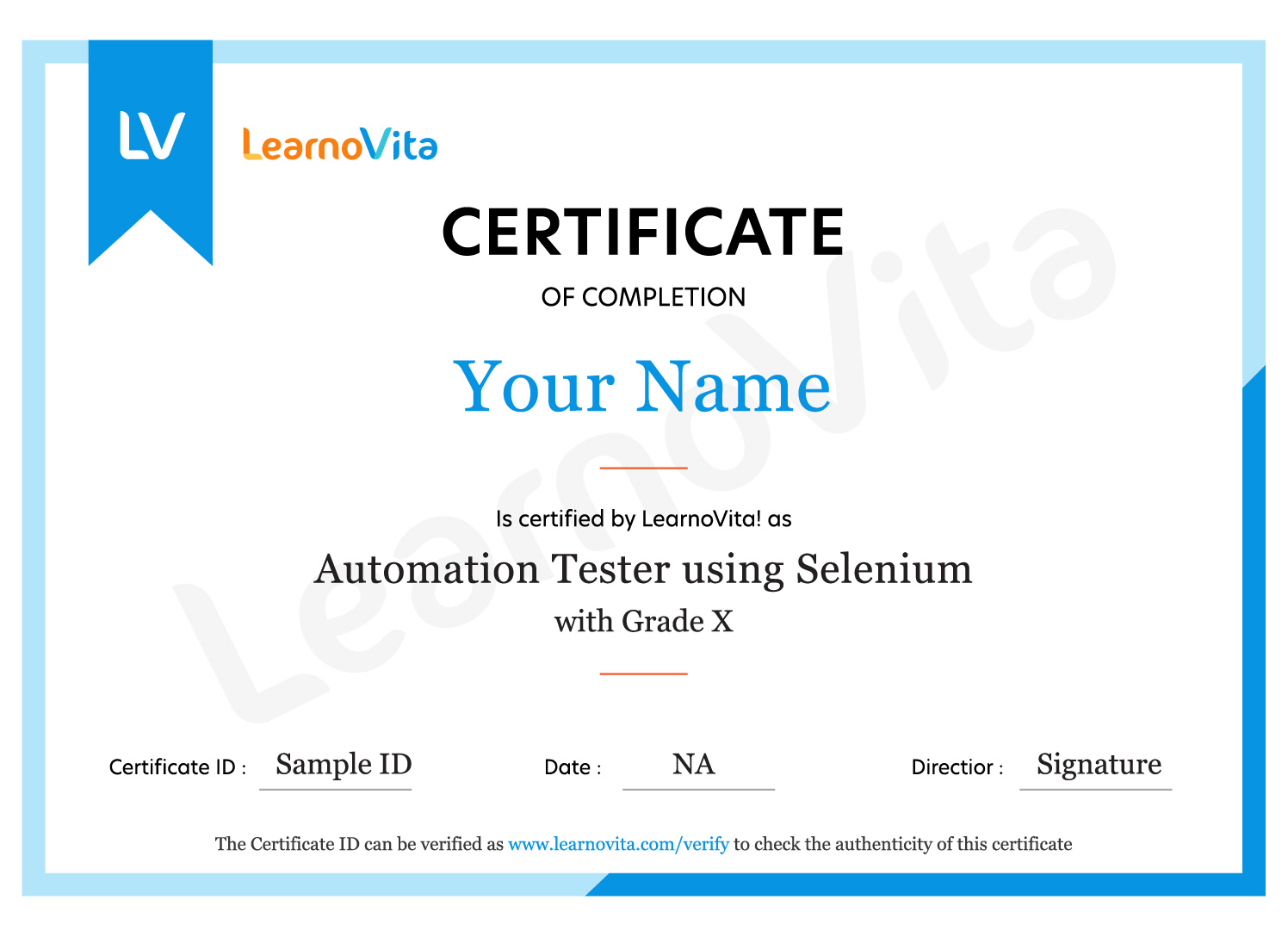
After successfully completing the course, learners receive a LearnoVita course completion certificate. The training also provides guidance on relevant industry certifications and examination preparation where applicable. Trainers can help participants understand certification requirements and build the technical knowledge needed for cybersecurity certification exams.
Yes, the training includes practical and industry-oriented projects designed to strengthen hands-on learning. Participants work with real-world security scenarios involving vulnerability assessment, network security, ethical hacking, security monitoring, and incident response. These projects help learners apply concepts in practical environments and build job-relevant skills.
LearnoVita offers multiple training formats, including instructor-led online training, self-paced learning, classroom training, one-to-one sessions, fast-track programs, customized training, and online learning options. These formats provide flexibility for learners to choose a training mode that suits their schedule, learning preferences, and professional goals in Cyber Security.
If you miss a class, you can use available options to catch up on the topics covered. Depending on the course arrangement, you may receive access to class recordings and presentation materials, attend the missed topic in another available batch, or coordinate with the training team for a suitable solution within the course duration.
If you have additional questions about the Cyber Security Course, curriculum, training schedule, projects, certification, or enrollment, you can contact the LearnoVita support team at contact@learnovita.com for further information and assistance.
You can enroll in the Cyber Security Course through the LearnoVita website or contact the training team for enrollment assistance. Learners can also visit a LearnoVita branch for information about course schedules, training options, fees, and registration procedures.
Yes, enrolled learners can access course-related resources through the student portal. Depending on the course package, these resources may include study materials, training videos, recorded sessions, assignments, and interview preparation resources to support learning beyond live classes.
LearnoVita aims to maintain manageable batch sizes to encourage interaction and individual attention. Smaller groups allow participants to ask questions, discuss cybersecurity concepts, participate in practical exercises, and receive guidance from instructors throughout the training sessions.
Cyber Security salaries in India vary based on factors such as experience, job role, technical skills, certifications, location, and organization. Professionals working in roles such as Cyber Security Analyst, SOC Analyst, Security Engineer, and Ethical Hacker may have different compensation levels depending on their expertise and career experience.
view More view Less
Career Assistance
  • Build a Powerful Resume for Career Success
  • Get Trainer Tips to Clear Interviews
  • Practice with Experts: Mock Interviews for Success
  • Crack Interviews & Land Your Dream Job
100% JOB GUARANTEE

Global Quality Training
At The Lowest Fees & Expert Trainer

AVAILABLE IN:
India Canada USA Singapore UAE Australia EU Germany

Need custom pricing?

4.9/5 from 50k+ students
Acte Technologies WhatsApp
Call Us! Chat With Us