Home » Software Testing » ETL Testing Course in BTM Layout » ETL Testing Course in Gurgaon

ETL Testing Course in Gurgaon

(4.9) 9865 Ratings
  • Enroll in ETL Testing Training in Gurgaon to develop skills in data warehouse testing and validation.
  • Master ETL concepts, SQL testing, data validation, warehouse testing, and effective test case design.
  • Gain practical exposure through real-time ETL projects, data migration tasks, and hands-on testing exercises.
  • Ideal for Software Testers, QA Engineers, Data Analysts, and IT Professionals pursuing ETL careers.
  • Choose flexible Weekday, Weekend, or Fast-Track batches for ETL Testing Training in Gurgaon.
  • Access placement assistance, certification guidance, and expert mentoring for data testing careers.

Course Duration

45+ Hrs

Live Project

3 Project

Certification Pass

Guaranteed

Training Format

Live Online (Expert Trainers)
Quality Training With Affordable Fee

⭐ Fees Starts From

INR 38,000
INR 18,500

10239+

Professionals Trained

9+

Batches every month

3265+

Placed Students

203+

Corporate Served

What You'll Learn

Learn ETL Testing fundamentals, data validation methods, test planning, and quality assurance techniques for modern data integration environments.

ETL Testing Course in Gurgaon covers source-to-target validation, transformation testing, data reconciliation, and effective defect identification techniques.

Explore database testing, data mapping, SQL queries, completeness checks, and consistency validation to ensure reliable data warehouse operations.

Gain hands-on experience through ETL projects covering data extraction, transformation logic, loading processes, data validation, and test execution.

Understand real-world data quality scenarios, error management, regression testing, and troubleshooting techniques used in enterprise ETL projects.

Prepare for ETL Testing careers with expert guidance, practical exercises, real-time project experience, and job-oriented skills in Gurgaon.

Comprehensive Overview of ETL Testing Course

The ETL Testing Course in Gurgaon is designed to help learners develop practical expertise in data extraction, transformation, loading, data validation, and database quality assurance. Through ETL Testing Training in Gurgaon, participants gain skills in source-to-target validation, SQL testing, data mapping, data reconciliation, defect management, and systematic testing methodologies. The program also provides guidance for ETL Testing Certification preparation, strengthening essential concepts and hands-on testing capabilities. With practical assignments, real-time projects, and ETL Testing Training with Placement support, learners can build job-ready skills and explore career opportunities in ETL testing, data quality assurance, data warehousing, database testing, and software testing.

Additional Info

Future Trends in ETL Testing Training in Gurgaon

  • AI-Driven Testing: AI-driven testing is becoming increasingly relevant in modern ETL environments. Intelligent testing tools can identify unusual data patterns, suggest test scenarios, detect anomalies, and support defect prediction. Machine learning can automate validation activities and reduce repetitive manual work. As data pipelines grow more complex, AI-based testing can improve coverage and help teams focus on critical data quality issues.
  • Cloud Data Testing: The growing adoption of cloud data platforms is transforming ETL testing practices. Testing teams increasingly validate pipelines operating across cloud warehouses, storage platforms, and managed data services. Future ETL professionals will need knowledge of cloud data movement, scalability, security, and performance testing. Cloud testing approaches can support efficient validation of large datasets and changing workloads across modern data environments.
  • Real-Time Validation: The expansion of real-time data processing is increasing the need for continuous data validation. Instead of testing only scheduled batch processes, ETL teams increasingly validate information as it moves through streaming pipelines. Testers may verify accuracy, completeness, consistency, and latency during processing. Real-time validation helps identify data issues earlier and supports dashboards, alerts, operational applications, and continuously updated analytics.
  • Automated Data Quality: Automation is becoming an essential part of modern ETL testing strategies. Automated frameworks can perform repetitive validations, compare source and target data, verify transformation rules, and identify inconsistencies. Automated quality checks reduce manual effort while maintaining consistent testing standards. As organizations process larger datasets and frequent pipeline changes, automated validation becomes increasingly important for maintaining reliable enterprise data.
  • DevOps Pipeline Testing: ETL testing is increasingly integrated into DevOps practices and delivery pipelines. Data tests can be included within continuous integration and continuous delivery workflows to validate changes before deployment. Automated regression testing, build verification, and defect reporting help identify issues earlier. This approach promotes collaboration among developers, testers, data engineers, and operations teams while supporting faster and more dependable data solution delivery.
  • Data Security Testing: The increasing use of sensitive customer and business information is making data security testing more important within ETL processes. Testers may validate access controls, encryption, authorization, masking, and secure data transfers. Modern testing practices increasingly combine data quality checks with security validation to protect information throughout extraction, transformation, storage, and reporting while helping organizations reduce potential security and compliance risks.
  • Big Data Validation: The rapid growth of large datasets is creating new requirements for scalable ETL testing. Traditional validation techniques may become inefficient when processing millions or billions of records. Modern approaches can use sampling, distributed processing, automated reconciliation, and scalable validation frameworks. ETL testers will increasingly need to understand large-scale data movement while maintaining accuracy, consistency, and performance across enterprise data platforms.
  • Self-Healing Pipelines: Self-healing data pipelines are gaining attention as organizations look for more resilient data processing environments. Intelligent monitoring systems can identify failures, recognize recurring issues, and initiate predefined recovery actions. ETL testing will increasingly validate retry mechanisms, fallback processes, alerts, and data consistency after recovery. These tests help ensure automated recovery mechanisms restore reliable pipeline operations under different failure scenarios.
  • Continuous Monitoring: Continuous monitoring is becoming an important component of modern ETL testing. Instead of checking data only after pipeline completion, monitoring solutions can continuously evaluate quality, completeness, freshness, and processing performance. Automated alerts can notify teams when defined thresholds are exceeded. Continuous validation helps organizations detect data problems earlier and maintain dependable information across constantly changing enterprise data environments.
  • Metadata-Driven Testing: Metadata-driven testing is becoming increasingly useful as organizations manage complex data ecosystems. Metadata can describe structures, relationships, mappings, transformations, dependencies, and business rules. Testing frameworks can use this information to generate validation scenarios and reduce repetitive test design. Future ETL teams can use metadata to improve coverage, maintain consistency across pipelines, and adapt testing processes when data structures or business requirements change.

Essential Tools and Technologies in ETL Testing

  • SQL Data Validation: SQL is a fundamental technology for ETL testing because it enables testers to directly examine source and target databases. Professionals use SQL queries to compare records, validate transformations, identify duplicates, detect missing values, and verify business rules. Strong SQL skills help ETL testers investigate discrepancies quickly and confirm accurate data movement throughout different pipeline stages.
  • Informatica Testing Suite: Informatica is widely used for enterprise data integration and requires structured testing of mappings, workflows, transformations, and data movement. ETL testers validate configured workflows, compare expected and actual outputs, and identify transformation issues. Understanding Informatica helps professionals analyze pipeline behavior, verify source-to-target mappings, and support dependable data warehouse and integration implementations.
  • Talend Data Testing: Talend provides tools for data integration, transformation, and data quality management. ETL testers can use Talend environments to examine jobs, transformations, data flows, and validation requirements. Testing activities may include record count verification, transformation validation, duplicate detection, and consistency checks. Talend knowledge helps professionals test integration workflows across varied data sources and target systems.
  • Apache Spark Framework: Apache Spark supports distributed data processing and large-scale analytics across modern data environments. ETL testers working with Spark pipelines need to understand distributed transformations and their impact on data validation. Testing can include transformation verification, large-volume data checks, and processing result validation. Spark expertise is valuable for professionals working with big data and scalable data engineering platforms.
  • Python Automation Scripts: Python is widely used to automate ETL testing activities such as data comparison, file validation, database checks, and test reporting. Testers can develop reusable scripts and customized validation frameworks to reduce repetitive manual tasks. Python knowledge helps ETL professionals create automated quality checks and integrate testing routines into continuous validation and broader data engineering workflows.
  • Postman API Testing: Postman is useful for testing ETL workflows that communicate with APIs and web services. Testers can send requests, inspect responses, validate payloads, and verify accurate data exchange between integrated systems. API testing is increasingly important for pipelines that collect information from cloud applications and external services. Postman skills help professionals validate data movement beyond traditional database integrations.
  • Selenium Test Automation: Selenium is mainly used for web application automation but can support ETL validation when processed data is presented through dashboards or web-based applications. Testers can automate browser interactions and verify whether transformed information is displayed correctly. Selenium knowledge benefits professionals involved in end-to-end data validation where backend ETL processing must also be checked through user-facing interfaces.
  • Jenkins CI Automation: Jenkins helps integrate automated ETL tests into continuous integration and delivery workflows. Testing teams can configure jobs to execute validation scripts, regression checks, and data quality tests whenever pipeline changes are introduced. This provides faster feedback and helps prevent faulty data processes from reaching deployment. Jenkins knowledge supports ETL testers working within DevOps-focused data engineering environments.
  • Git Version Control: Git is widely used to manage ETL testing scripts, configuration files, test cases, and automation frameworks. Version control allows testing teams to track changes, collaborate efficiently, maintain testing assets, and restore previous versions when required. As ETL projects increasingly follow Agile and DevOps practices, Git expertise helps testers coordinate testing changes with developers and data engineering teams.
  • Cloud Data Platforms: Cloud data platforms are becoming important technologies for modern ETL testing and validation. Testers may work with cloud warehouses, storage services, and data integration solutions while validating large-scale pipelines. They need knowledge of cloud data movement, access management, scalability, and performance testing. Cloud platform expertise helps ETL professionals validate pipelines connecting applications, databases, analytics tools, and enterprise reporting systems.

Roles and Responsibilities of ETL Internship Testing

  • ETL Test Manager: An ETL Test Manager oversees testing activities throughout data integration projects. They establish testing strategies, allocate responsibilities, track progress, and coordinate with developers, data engineers, business teams, and project managers. Their duties include source-to-target validation, transformation testing, data quality verification, defect management, risk monitoring, test reporting, and ensuring deliverables satisfy project and business requirements.
  • ETL Test Analyst: An ETL Test Analyst verifies that data is accurately extracted, transformed, and loaded between systems. They review mapping documents, prepare test scenarios, develop test cases, execute SQL queries, and compare source and target information. Analysts identify missing records, duplicate values, transformation errors, and inconsistencies while documenting defects and validating corrections before data pipelines are released to production.
  • Data Quality Analyst: A Data Quality Analyst works to maintain the accuracy, completeness, consistency, and reliability of organizational data. They perform profiling activities, validate business rules, identify quality issues, and investigate abnormal records. These professionals collaborate with ETL testers and data engineers to resolve recurring problems, prepare quality reports, monitor validation outcomes, and establish dependable standards for data used in reporting and analytics.
  • ETL Automation Engineer: An ETL Automation Engineer develops automated testing frameworks to minimize repetitive manual validation tasks. They create scripts for record comparison, transformation checks, data count verification, and inconsistency detection. They also integrate automated tests with CI/CD pipelines and maintain reusable testing components. Their work helps teams achieve faster execution, consistent validation, and wider test coverage across complex ETL environments.
  • Database Test Analyst: A Database Test Analyst validates information stored across relational databases and analytical data systems. They use SQL to examine tables, relationships, constraints, records, and transformation results. By comparing source and target databases, they identify discrepancies and verify processing rules. They also investigate database defects and coordinate with developers and database administrators to maintain accurate storage and reliable data movement.
  • Data Warehouse Tester: A Data Warehouse Tester validates pipelines responsible for loading enterprise data warehouses. They test extraction processes, transformation logic, loading operations, dimensional structures, fact tables, and business calculations. Their responsibilities include verifying record counts, data completeness, historical information, aggregations, and source-to-target mappings. They collaborate with data engineers and business analysts to ensure reliable information for reporting and analytics.
  • Integration Test Engineer: An Integration Test Engineer evaluates data exchange between applications, databases, APIs, and enterprise data platforms. They design test scenarios to verify accurate information transfer across interconnected systems and investigate integration failures, interface problems, and unexpected data changes. Their work helps ensure that components within an enterprise data ecosystem communicate correctly and that downstream systems receive complete and consistent information.
  • Performance Test Analyst: A Performance Test Analyst assesses ETL pipeline behavior under different workloads and data volumes. They monitor execution times, resource consumption, throughput, and processing capacity while using realistic datasets to identify performance bottlenecks. Their analysis helps teams optimize queries, transformations, workflows, and infrastructure so data pipelines can remain efficient, stable, and scalable as organizational data requirements increase.
  • Defect Management Lead: A Defect Management Lead coordinates the identification, documentation, prioritization, tracking, and resolution of ETL testing issues. They ensure defects include clear descriptions, evidence, expected outcomes, and actual results. They work with developers and data teams during correction and retesting activities while monitoring recurring problems, supporting root-cause analysis, and preparing status reports on testing progress and outstanding risks.
  • Data Migration Tester: A Data Migration Tester verifies that information moves accurately from legacy systems to new databases, applications, or cloud platforms. They validate record counts, field mappings, formats, relationships, and transformation rules before and after migration. Testers identify missing, duplicated, or corrupted records and support reconciliation activities, helping organizations preserve data integrity, historical information, business rules, and operational accuracy throughout migration projects.

Top Companies Hiring for ETL Testing Professionals

  • Accenture: Accenture offers opportunities across data engineering, quality assurance, analytics, and enterprise technology projects where ETL testing expertise is relevant. Professionals may work on data migration, cloud transformation, data warehouse validation, and integration initiatives. Skills in SQL, automation, database testing, and data quality can support large-scale implementations, while Agile, DevOps, and cloud experience can strengthen profiles for data-focused technology roles.
  • TCS: Tata Consultancy Services provides technology opportunities involving data integration, analytics, testing, and enterprise application modernization. ETL testers may validate data pipelines, warehouse processes, migration activities, and business reporting systems. Knowledge of SQL, database testing, ETL tools, automation, and data quality practices can support roles serving clients across banking, healthcare, retail, telecommunications, manufacturing, and other industries.
  • Infosys: Infosys offers roles across data management, analytics, application testing, and digital transformation initiatives. ETL testing professionals can contribute to data warehouse, cloud migration, integration, and enterprise reporting projects. Their responsibilities may include source-to-target validation, transformation testing, SQL analysis, defect tracking, and automation. Knowledge of modern data platforms and Agile practices can support participation in large-scale technology transformation programs.
  • Cognizant: Cognizant works on data modernization, cloud transformation, analytics, and enterprise technology initiatives that require reliable data quality practices. ETL testers may validate data pipelines, integration workflows, migration processes, and reporting applications. Skills in SQL, automation, database testing, and ETL technologies can support these roles. Professionals collaborate with developers, data engineers, analysts, and quality teams to maintain accurate data delivery.
  • Capgemini: Capgemini provides technology and consulting services across data engineering, cloud solutions, analytics, and application modernization. ETL testing professionals can support data transformation validation, warehouse loading, integration testing, and migration activities. Strong SQL knowledge, testing expertise, and automation experience help professionals manage enterprise data validation requirements. Roles may involve collaborating with distributed teams and clients across different industries and technology environments.
  • Wipro: Wipro provides career opportunities across data management, application testing, cloud transformation, and digital engineering projects. ETL testers may validate data pipelines, transformation logic, source-to-target records, and data quality while managing testing defects. Knowledge of SQL, ETL platforms, automation frameworks, and validation techniques can support these responsibilities. Experience with cloud data platforms and Agile methodologies is also relevant to modern testing environments.
  • IBM: IBM works across cloud technologies, data platforms, analytics, automation, and enterprise software solutions. ETL testing professionals can contribute to data integration, migration, warehouse validation, and analytical application projects. Their responsibilities may include SQL validation, transformation testing, reconciliation, and automated quality checks. Knowledge of cloud data technologies, automation, and data governance can support professionals working with enterprise data environments.
  • Deloitte: Deloitte delivers consulting and technology services covering data modernization, analytics, cloud transformation, and enterprise implementation. ETL testers can support data migration and validation activities across complex business systems. Their work may include preparing test scenarios, validating transformation rules, checking data quality, and managing defects. Strong analytical abilities combined with SQL, ETL tools, automation, and data platform knowledge can support technology consulting projects.
  • HCLTech: HCLTech provides technology services across data engineering, application modernization, cloud adoption, and enterprise transformation. ETL testing professionals may work on data integration, migration, data warehouse testing, and quality assurance initiatives. Responsibilities can include source-to-target validation, SQL testing, reconciliation, regression testing, and defect management. Automation and cloud technology experience can help professionals test large-scale data environments efficiently and reliably.
  • Tech Mahindra: Tech Mahindra delivers digital transformation and technology services across telecommunications, enterprise applications, cloud, analytics, and data solutions. ETL testing professionals can participate in data validation, integration testing, migration testing, and quality assurance projects. Strong SQL, ETL testing, automation, and data warehouse skills can support these responsibilities. Professionals may collaborate with technical and business teams to maintain accurate data across interconnected enterprise systems.
View more

ETL Testing Course Objectives

A basic understanding of software testing, databases, and SQL concepts can be beneficial before starting ETL Testing training. Familiarity with database tables, queries, data processing, and testing fundamentals helps learners understand technical concepts more effectively. However, beginners can also develop these skills through structured lessons, practical assignments, and instructor-guided exercises.
ETL Testing training helps learners develop practical knowledge of data extraction, transformation, loading, SQL validation, source-to-target testing, and data quality management. Participants gain experience identifying data inconsistencies, transformation defects, and database errors through practical exercises. These skills help strengthen analytical thinking, troubleshooting abilities, and testing capabilities for enterprise data projects.
  • Increasing adoption of cloud-based data testing solutions
  • Growing importance of enterprise data quality management
  • Expansion of automated ETL testing methodologies
  • Rising demand for data warehouse testing and validation
  • Increasing use of big data processing and testing technologies
ETL Testing training is valuable in today's data-driven business environment, where organizations depend on accurate information for reporting, analytics, and decision-making. Professionals need to verify data transferred across applications, databases, and warehouses. Practical training helps learners develop expertise in SQL testing, data reconciliation, transformation validation, and quality assurance for enterprise data systems.
  • ETL Testing fundamentals and data integration concepts
  • SQL queries and database validation techniques
  • Source-to-target data validation and verification
  • Data mapping and transformation testing methodologies
  • Data warehouse testing and quality assurance practices
Yes, learners can gain practical experience through industry-oriented ETL Testing projects and real-time data validation exercises. Projects may include source-to-target verification, SQL-based testing, transformation logic validation, data reconciliation, defect tracking, and data quality assessment. These activities help participants understand ETL testing processes used in professional data integration and warehouse environments.
  • Banking and financial services organizations
  • Healthcare and pharmaceutical companies
  • Retail, e-commerce, and distribution businesses
  • Information technology and telecommunications companies
  • Insurance and enterprise data management organizations
ETL Testing training does not guarantee employment because career opportunities depend on technical knowledge, practical experience, SQL proficiency, communication skills, and interview performance. However, hands-on projects, industry-oriented exercises, and placement assistance can help learners strengthen their professional capabilities and prepare for suitable ETL Testing and data quality roles.
  • Develops strong SQL and database testing capabilities
  • Improves source-to-target data validation knowledge
  • Builds practical understanding of ETL testing processes
  • Provides hands-on exposure to real-world testing projects
  • Strengthens data reconciliation and quality assurance skills
Learners can gain practical exposure to technologies used for ETL testing, database validation, data integration, and test management. Depending on the curriculum, training may include SQL, Informatica, Talend, Python, Jira, Jenkins, Git, Apache Spark, Hadoop, Selenium, Postman, and Tableau. Tool coverage may vary according to project requirements and training objectives.
view More view Less

ETL Testing Certification Benefits

The ETL Testing Certification Course in Gurgaon offers practical training in data validation, source-to-target verification, SQL queries, transformation testing, and data quality management. Learners gain hands-on experience through real-time testing scenarios, database exercises, ETL validation tasks, and industry-based projects guided by experienced trainers. This ETL Testing Course with Placement Assistance helps participants develop job-ready skills in data testing, defect identification, data reconciliation, and quality assurance methodologies. Through practical assignments and project-based learning, learners can prepare for career opportunities in ETL testing, data quality assurance, data warehousing, database testing, and software testing roles.

  • Designation
  • Annual Salary
    Hiring Companies
  • 3.24L
    Min
  • 6.5L
    Average
  • 13.5L
    Max
  • 4.50L
    Min
  • 8.5L
    Average
  • 16.5L
    Max
  • 4.0L
    Min
  • 6.5L
    Average
  • 13.5L
    Max
  • 3.24L
    Min
  • 6.5L
    Average
  • 12.5L
    Max

About ETL Testing Certification Training

Our ETL Testing Training in Gurgaon provides comprehensive knowledge of data extraction, transformation, loading, data validation, and database testing methodologies. Learners develop practical skills through SQL exercises, source-to-target mapping, data reconciliation, defect identification, test case preparation, and industry-oriented ETL testing projects. The training emphasizes data quality management, data warehouse validation, transformation verification, and structured testing workflows to strengthen technical and analytical capabilities. Through hands-on exercises, project-based learning, expert mentoring, and placement assistance, participants can prepare for career opportunities in ETL testing, data quality assurance, data warehousing, database testing, and software testing roles.

Top Skills You Will Gain
  • SQL Testing
  • Data Validation
  • ETL Testing
  • Test Automation
  • Data Mapping
  • Defect Tracking
  • Database Testing
  • Data Reconciliation

12+ ETL Testing Tools

Online Classroom Batches Preferred

Weekdays (Mon - Fri)
16 - Nov - 2026
08:00 AM (IST)
Weekdays (Mon - Fri)
18 - Nov - 2026
08:00 AM (IST)
Weekend (Sat)
21 - Nov - 2026
11:00 AM (IST)
Weekend (Sun)
22 - Nov - 2026
11:00 AM (IST)
Can't find a batch you were looking for?
₹38,000 ₹18,500 10% OFF Expires in

No Interest Financing start at ₹ 5000 / month

Corporate Training

  • Customized Learning
  • Enterprise Grade Learning Management System (LMS)
  • 24x7 Support
  • Enterprise Grade Reporting

Not Just Studying
We’re Doing Much More!

Empowering Learning Through Real Experiences and Innovation

Hiring
Hiring
Hiring
Hiring
Hiring
Hiring
Hiring
User
User
User
User
User
User

ETL Testing Course Curriculam

Trainers Profile

Our ETL Testing Training in Gurgaon is delivered by experienced trainers with strong expertise in data integration, ETL validation, SQL testing, data warehousing, automation, and quality assurance. Learners receive comprehensive training materials, industry-based case studies, hands-on exercises, ETL Testing Internship opportunities, and practical project exposure to enhance their technical capabilities. Through structured learning and real-world testing activities, participants develop strong data validation, reconciliation, defect management, and analytical skills while preparing for career opportunities in ETL testing, data quality assurance, database testing, data warehouse testing, and software testing roles.

Syllabus for ETL Testing Course in Gurgaon Download syllabus

  • ETL Testing Concepts
  • Data Warehouse Basics
  • Testing Life Cycle
  • Source Target Validation
  • Data Quality Principles
  • Testing Environment Setup
  • SQL Query Fundamentals
  • Database Table Validation
  • Joins And Subqueries
  • Data Comparison Techniques
  • Constraints And Keys
  • Query Result Verification
  • Extraction Process Testing
  • Transformation Rule Testing
  • Loading Process Testing
  • Source Data Validation
  • Target Data Verification
  • Record Count Reconciliation
  • Mapping Document Analysis
  • Field Mapping Validation
  • Transformation Logic Verification
  • Business Rule Testing
  • Data Type Validation
  • Mapping Defect Identification
  • Warehouse Schema Testing
  • Fact Table Validation
  • Dimension Table Testing
  • Slowly Changing Dimensions
  • Aggregation Result Validation
  • Historical Data Verification
  • Data Completeness Checks
  • Data Accuracy Validation
  • Duplicate Record Detection
  • Null Value Analysis
  • Data Consistency Testing
  • Quality Issue Reporting
  • Automation Testing Concepts
  • Test Script Development
  • Reusable Framework Creation
  • Automated Data Comparison
  • Regression Test Automation
  • Automated Result Analysis
  • ETL Performance Concepts
  • Data Volume Testing
  • Load Testing Techniques
  • Execution Time Analysis
  • Bottleneck Identification Methods
  • Performance Result Reporting
  • Defect Life Cycle
  • Defect Documentation Practices
  • Severity Priority Classification
  • Root Cause Analysis
  • Retesting Fixed Defects
  • Testing Status Reporting
  • Project Requirement Analysis
  • Test Scenario Creation
  • Test Case Preparation
  • Source Target Reconciliation
  • End-To-End Validation
  • Project Report Preparation
(15) view More view Less
Need customized curriculum?

REAL

start
STORIES SUCCESS INSPIRATION
CAREER
UPGRADE
sowmiya

sowmiya

CAREER
UPGRADE
Rajkumar

Rajkumar

CAREER
UPGRADE
Thon

Thon

CAREER
UPGRADE
lavanya

Lavanya

Industry Projects

Project 1
Customer Data Migration Testing

Perform ETL testing on customer data migrated from legacy applications to a data warehouse by validating source-to-target mappings, record counts, data formats, missing records, and data consistency.

Project 2
Sales Data Warehouse Validation

Test an enterprise sales data pipeline by verifying transaction records, transformation rules, calculated values, data completeness, SQL validation results, and reconciliation across warehouse tables.

Project 3
Banking ETL Data Testing

Validate banking data workflows through ETL testing by checking customer accounts, financial transactions, business rules, data accuracy, transformation results, and successful loading across multiple systems.

Our Hiring Partner

HTML

Exam & ETL Testing Certification

  • Basic understanding of relational databases and data warehouse architecture
  • Familiarity with SQL queries, database tables, joins, and data manipulation
  • Knowledge of software testing principles and quality assurance methodologies
  • Understanding of data extraction, transformation, and loading processes
  • Awareness of data validation, reconciliation, and data quality assessment techniques
ETL Testing certification highlights your understanding of data integration, SQL validation, source-to-target testing, transformation verification, and data quality management. It can enhance your resume, demonstrate relevant testing capabilities, and support career opportunities in data warehousing, database testing, ETL validation, and enterprise data quality management.
ETL Testing certification can strengthen your professional profile by demonstrating relevant data testing knowledge, but it does not guarantee employment. Employers also evaluate SQL expertise, practical testing experience, analytical thinking, communication skills, and project knowledge. Hands-on assignments and interview preparation can improve your readiness for ETL testing opportunities.
  • ETL Testing Engineer
  • Data Quality Assurance Analyst
  • ETL Test Automation Engineer
  • Data Warehouse Testing Specialist
  • Database Quality Analyst
ETL Testing certification helps professionals demonstrate their capabilities in SQL testing, data validation, transformation verification, reconciliation, and database quality assurance. Combined with practical project experience, automation knowledge, and continuous learning, it can support career advancement in ETL testing, data engineering quality assurance, data warehouse testing, and database testing roles.

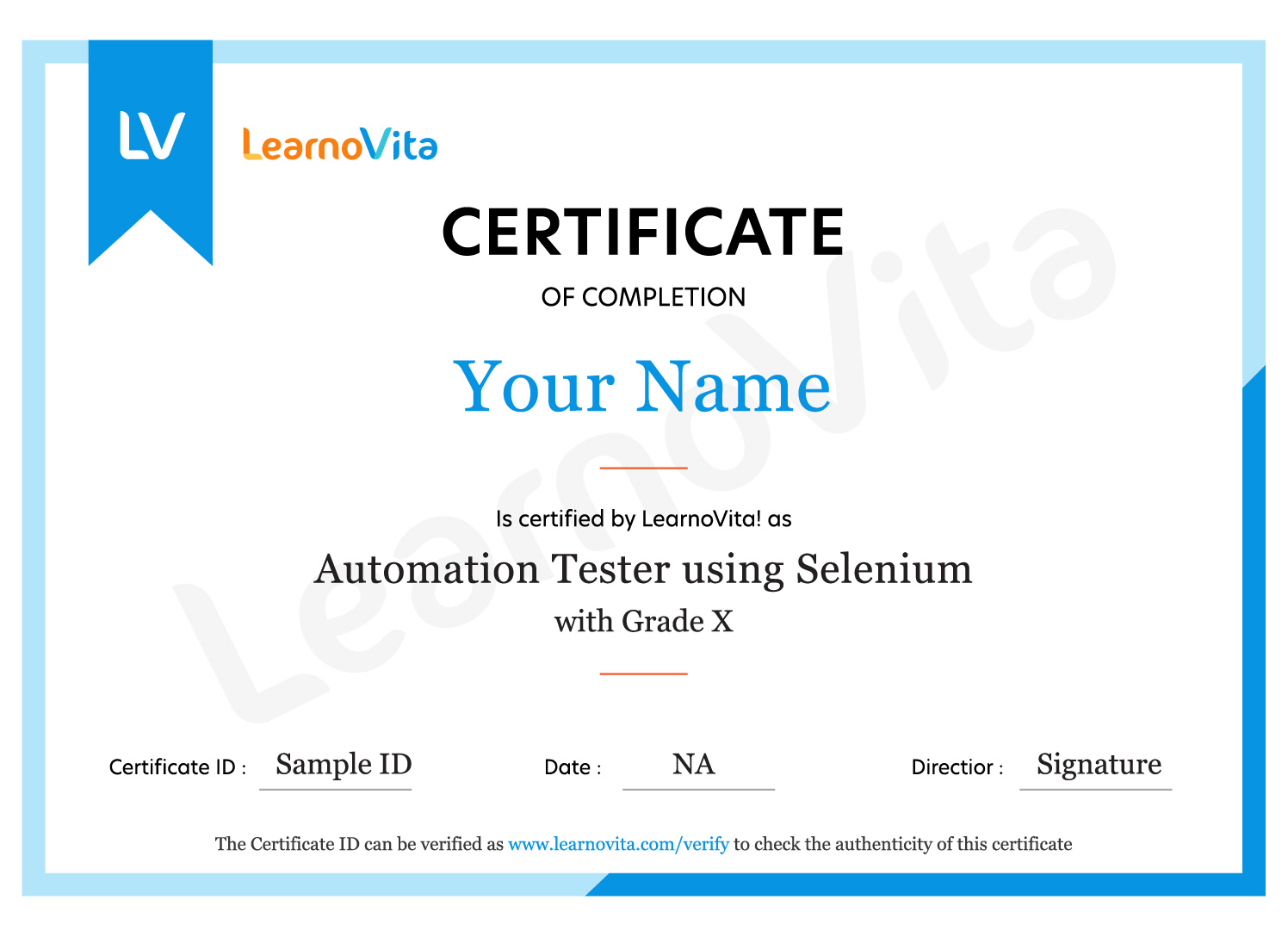
MNC Recognized course
complete certification
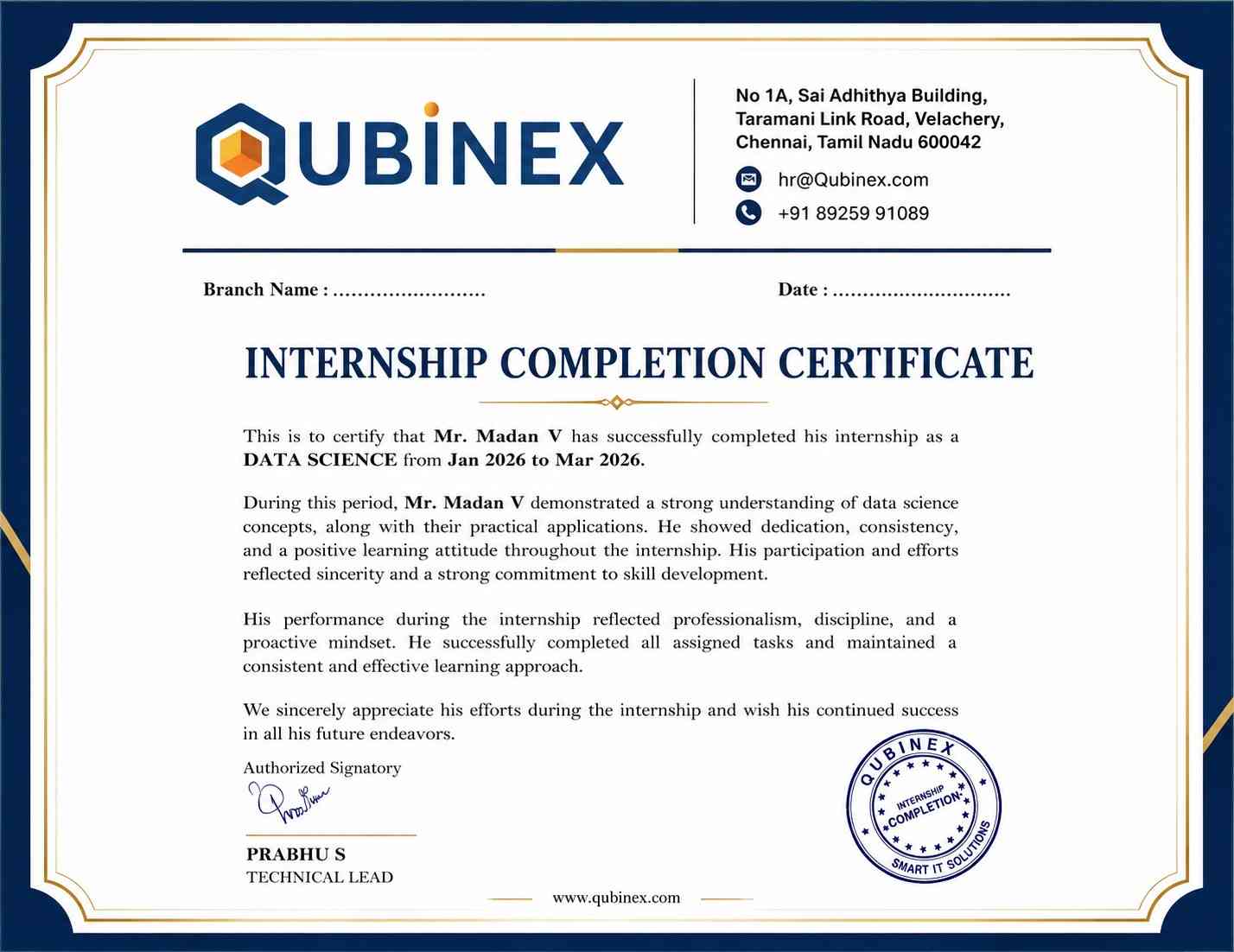
Intership
complete certification

Placement
complete certification

Our learners
transformed their careers

35 Laks
Highest Salary Offered
50%
Average Salary Hike
30K+
Placed in MNC's
15+
Year's in Training
Our Alumni
Alumni

A majority of our alumni

fast-tracked into managerial careers.

Get inspired by their progress in the Career Growth Report.

Our Student Successful Story

checkimage Regular 1:1 Mentorship From Industry Experts checkimage Live Classes checkimage Career Support

How are the ETL Testing Course with LearnoVita Different?

Feature

LearnoVita

Other Institutes

Affordable Fees

Competitive Pricing With Flexible Payment Options.

Higher ETL Testing Fees With Limited Payment Options.

Live Class From ( Industry Expert)

Well Experienced Trainer From a Relevant Field With Practical ETL Testing Training

Theoretical Class With Limited Practical

Updated Syllabus

Updated and Industry-relevant ETL Testing Course Curriculum With Hands-on Learning.

Outdated Curriculum With Limited Practical Training.

Hands-on projects

Real-world ETL Testing Projects With Live Case Studies and Collaboration With Companies.

Basic Projects With Limited Real-world Application.

Certification

Industry-recognized ETL Testing Certifications With Global Validity.

Basic ETL Testing Certifications With Limited Recognition.

Placement Support

Strong Placement Support With Tie-ups With Top Companies and Mock Interviews.

Basic Placement Support

Industry Partnerships

Strong Ties With Top Tech Companies for Internships and Placements

No Partnerships, Limited Opportunities

Batch Size

Small Batch Sizes for Personalized Attention.

Large Batch Sizes With Limited Individual Focus.

Additional Features

Lifetime Access to ETL Testing Course Materials, Alumni Network, and Hackathons.

No Additional Features or Perks.

Training Support

Dedicated Mentors, 24/7 Doubt Resolution, and Personalized Guidance.

Limited Mentor Support and No After-hours Assistance.

ETL Testing Course FAQ's

Yes, prospective learners can attend a demo class to understand the ETL Testing Course before registration. Live demo sessions may have limited seats to ensure effective interaction. If you are unable to join the live session, you may request a recorded demo session to explore the course syllabus, teaching methodology, trainer expertise, practical approach, and learning experience.
The training is conducted by experienced professionals with industry knowledge of ETL processes, SQL, database management, data warehousing, data integration, and quality assurance. Trainers explain technical concepts using practical demonstrations, industry-based examples, testing scenarios, and project-oriented activities to help learners develop applicable data testing skills.
  • Placement guidance helps learners identify suitable openings in ETL testing, data validation, database testing, and data quality assurance.
  • Eligible candidates may receive assistance with resume development, job applications, interview scheduling, and career planning after course completion.
  • The Placement Cell provides career guidance for opportunities in ETL testing, data warehouse testing, SQL testing, and software quality assurance.
  • Placement assistance considers individual technical knowledge, practical project exposure, communication skills, and specific employer expectations.
  • Career development sessions include mock interviews, resume optimization, presentation skills, and technical interview preparation to improve job readiness.
  • Learners may access job updates, learning materials, recorded classes, practical project resources, training videos, and interview preparation guides through the student portal.
Learners who successfully complete the ETL Testing Course may receive a course completion certificate. The program develops practical knowledge of SQL queries, ETL workflows, data transformation, source-to-target validation, database testing, and data quality management. Participants can also receive guidance on relevant certification preparation and examination concepts, where applicable.
Yes, learners participate in practical ETL Testing assignments and industry-oriented projects designed around real-world data integration requirements. Project activities may involve SQL validation, source-to-target mapping, transformation verification, data reconciliation, defect tracking, and database quality checks. These exercises help participants understand practical testing procedures and develop confidence in handling data-related challenges.
Participants can select from several learning options, including live instructor-led online classes, classroom training, self-paced courses, personalized one-to-one sessions, weekend batches, fast-track programs, and customized corporate training. These learning formats provide flexibility for students and working professionals based on their availability, technical background, and career goals in data testing.
Learners who miss a scheduled session can use available learning resources to understand the missed topics. Depending on the batch schedule and training policies, participants may receive recorded lectures, classroom notes, and presentation materials. They can also coordinate with the training team to explore attending the same topic in another available batch.
For further information regarding ETL Testing course fees, syllabus, class timings, certification guidance, project assignments, or enrollment procedures, learners can reach out to the training support team. The team can provide the necessary details and help clarify questions related to the training program.
Interested candidates can enroll through the training institute's official website or contact the admission team directly. The enrollment team can assist with registration procedures, upcoming batch dates, course fees, training schedules, available learning formats, and other admission-related information.
Yes, registered participants may access digital learning resources through the student portal. Available materials can include ETL Testing notes, SQL practice exercises, recorded training sessions, instructional videos, project assignments, and interview preparation resources. Access is provided according to the training program's applicable student access policies.
ETL Testing classes are organized with manageable batch sizes to encourage better communication and trainer interaction. Smaller groups provide opportunities for learners to discuss SQL queries, clarify database testing concepts, practice validation techniques, work on assignments, and receive individual guidance during practical sessions.
The salary of an ETL Testing professional in India depends on experience, SQL proficiency, database knowledge, testing expertise, automation skills, project exposure, and employer requirements. Career opportunities are available in ETL testing, data quality analysis, database validation, data warehouse testing, and software quality assurance across various industries.
view More view Less
Career Assistance
  • Build a Powerful Resume for Career Success
  • Get Trainer Tips to Clear Interviews
  • Practice with Experts: Mock Interviews for Success
  • Crack Interviews & Land Your Dream Job
100% JOB GUARANTEE

Global Quality Training
At The Lowest Fees & Expert Trainer

AVAILABLE IN:
India Canada USA Singapore UAE Australia EU Germany

Need custom pricing?

4.9/5 from 50k+ students
Acte Technologies WhatsApp
Call Us! Chat With Us