Home » Others Courses » Gen AI and Agentic AI Training

Gen AI and Agentic AI Training

(4.5) 18475 Ratings
  • Enroll in the Gen AI and Agentic AI Training to gain practical knowledge in AI-driven content creation and model building.
  • Master essential components such as neural networks, and Gen AI and Agentic.
  • Gain hands-on experience through real-time projects, testing, and deployment activities.
  • Ideal for Developers, Data Scientists, and IT Professionals exploring Gen AI and Agentic solutions.
  • Choose from flexible batch timings: Weekday, Weekend, or Fast-Track learning schedules.
  • Benefit from placement support, interview guidance, and certification assistance to boost your career.

Course Duration

50+ Hrs

Live Project

3 Project

Certification Pass

Guaranteed

Training Format

Live Online (Expert Trainers)
Quality Training With Affordable Fee

⭐ Fees Starts From

INR 38,000
INR 18,500

11325+

Professionals Trained

10+

Batches every month

2685+

Placed Students

265+

Corporate Served

What You'll Learn

Gen AI and Agentic AI Training helps learners build practical expertise in generative models, autonomous agents and intelligent automation.

Understand Gen AI fundamentals, large language models, prompt engineering and Agentic AI workflows for solving real-world business challenges.

Learn to develop AI-powered solutions that automate repetitive tasks, streamline business processes and support faster, data-driven decisions.

Gain hands-on experience with Gen AI tools, AI agent development, model integration and workflow orchestration for practical applications.

Explore advanced Gen AI and Agentic AI techniques, including tool calling, retrieval-augmented generation, multi-agent collaboration and task automation.

Earn a Gen AI and Agentic AI Training completion certificate to demonstrate your practical skills and strengthen your career opportunities in AI-driven roles.

An Complete Overview of Gen AI Course

The Gen AI and Agentic AI Training program provides comprehensive knowledge of generative AI concepts, large language models, natural language processing, and autonomous AI agent development. Participants gain practical experience through real-world datasets, hands-on projects, and expert-led guidance to understand how Gen AI and Agentic AI are applied across industries. The course offers flexible learning options, including instructor-led sessions and self-paced learning, to suit different learning preferences. Enrolling in the Gen AI and Agentic AI Certification Course strengthens technical expertise, improves job readiness, and prepares learners for emerging opportunities in AI-driven industries. The training includes practical projects and real-world scenarios that help participants develop intelligent applications, automate workflows, and address complex business challenges. Completing the program equips learners with industry-relevant skills.

Additional Info

Future Trends for Gen AI and Agentic AI Course

  • Autonomous AI Agents: Agentic AI is transforming business operations through intelligent agents that plan tasks, make decisions and execute workflows with minimal human intervention. Learners explore agent reasoning, goal-oriented execution and dynamic task handling. Practical training covers building agents that interact with tools, evaluate outcomes and adapt to changing requirements across customer support, research and enterprise automation.
  • Advanced Language Models: Large language models are evolving to support complex reasoning, contextual understanding and multimodal interactions. Learners examine model prompting, fine-tuning, response evaluation and integration with business applications. Training introduces practical methods for developing intelligent assistants that generate relevant content, summarize information and support decision-making. These capabilities help professionals create scalable AI solutions for communication, knowledge discovery and automated business processes.
  • Multi-Agent Collaboration: Multi-agent systems enable specialized AI agents to collaborate on complex tasks by sharing information and coordinating responsibilities. Learners explore agent communication, task delegation, workflow orchestration and result validation. Practical exercises demonstrate how multiple agents can support research, software development and business analysis. Understanding these approaches prepares professionals to design coordinated AI systems that improve productivity, handle complex workflows and deliver consistent outcomes.
  • Retrieval-Augmented Generation: Retrieval-Augmented Generation combines language models with relevant external information to improve response accuracy and contextual relevance. Learners explore document processing, embedding generation, vector databases and semantic search. Practical exercises cover connecting AI applications to organizational knowledge sources and validating generated answers. These techniques support reliable chatbots, enterprise search assistants and knowledge management solutions while helping reduce unsupported responses and improve information accessibility.
  • AI-Powered Workflow Automation: Generative AI and Agentic AI are increasingly automating repetitive business activities across departments. Learners discover how AI agents can interpret requests, use connected tools, process information and coordinate multi-step workflows. Training covers task planning, API integration, approval checkpoints and execution monitoring. These capabilities help organizations reduce manual effort, improve operational efficiency and develop adaptable automation solutions for customer service, finance and enterprise operations.
  • Multimodal AI Applications: Multimodal AI combines text, images, audio and video to support richer interactions and intelligent content generation. Learners explore models that interpret multiple data formats and produce context-aware outputs. Practical activities include document understanding, image analysis, voice assistants and multimedia content creation. Training also addresses evaluation, responsible usage and integration requirements, preparing professionals to develop versatile AI applications for education, healthcare, marketing and digital services.
  • AI Security and Governance: Responsible AI development is becoming essential as generative models and autonomous agents gain wider adoption. Learners study data privacy, access controls, output validation, bias detection and human oversight. Training introduces methods for identifying prompt injection risks, monitoring agent actions and protecting sensitive information. These practices help professionals build dependable AI systems that follow organizational policies, support regulatory requirements and maintain accountability throughout deployment and operation.
  • Enterprise AI Integration: Organizations are integrating Gen AI and Agentic AI into existing applications to improve productivity and decision-making. Learners explore API connectivity, enterprise data access, workflow orchestration and application deployment. Practical exercises demonstrate how AI assistants and autonomous agents interact with business systems while following access permissions. These skills help professionals develop scalable solutions that streamline operations, enhance customer experiences and connect intelligent automation with organizational objectives.

Tools and Technologies of Gen AI and Agentic AI Course

  • Python: Python is widely used to develop generative AI applications, intelligent agents and machine learning workflows. Learners practise data processing, API integration, model interaction and automation scripting through practical exercises. Training covers essential libraries, structured programming and error handling for reliable application development. Python skills help professionals connect AI models with external tools, build agent workflows and create maintainable solutions for research, content generation and enterprise automation.
  • PyTorch: PyTorch is a deep learning framework used to build, train and evaluate neural network models. Learners explore tensor operations, model architectures, training loops and performance evaluation. Practical exercises introduce experimentation with language models and generative learning techniques. The framework supports flexible development and debugging of AI applications. Understanding PyTorch helps professionals work with model development, research experimentation and customized generative AI solutions across different technical environments.
  • OpenAI APIs: OpenAI APIs enable developers to integrate language models and other AI capabilities into applications. Learners practise prompt design, structured outputs, tool calling and conversational workflow development. Training demonstrates how AI systems can retrieve information, invoke connected functions and support automated tasks. Practical projects focus on building assistants and agent-based applications with appropriate validation and error handling. These skills prepare learners to connect model capabilities with real-world business requirements.
  • Hugging Face Transformers: Hugging Face Transformers provides access to pretrained models and tools for natural language processing and generative AI development. Learners explore model selection, inference, tokenization and fine-tuning workflows. Practical exercises cover text generation, summarization and application integration. The ecosystem supports experimentation with different model architectures and deployment options. Familiarity with Transformers helps professionals evaluate suitable models, develop AI prototypes and adapt language technologies to specific business needs.
  • LangChain: LangChain supports the development of applications that connect language models with external data, APIs and tools. Learners explore prompt templates, retrieval workflows, tool calling and structured application components. Practical exercises demonstrate how to build assistants that retrieve information and perform connected tasks. Training also introduces output validation and workflow control. Understanding LangChain helps professionals develop context-aware AI applications and organize model interactions for practical business and automation scenarios.
  • LangGraph: LangGraph enables developers to build stateful, multi-step AI agent workflows with defined transitions and execution controls. Learners explore graph structures, shared state, conditional routing and task coordination. Practical exercises demonstrate how agents can collaborate, preserve context and manage complex processes. Training also covers checkpoints, human approval and recovery from execution errors. These capabilities help professionals develop controlled agentic applications for research, customer support and enterprise workflow automation.
  • Vector Databases: Vector databases store and retrieve numerical representations of information to support semantic search and retrieval-augmented generation. Learners explore embeddings, similarity matching, document indexing and metadata filtering. Practical exercises connect knowledge sources to AI assistants for context-aware responses. Training covers retrieval quality, data organization and access considerations. These skills help professionals create knowledge assistants, enterprise search applications and AI solutions that use relevant information from organizational documents.
  • Google Colab: Google Colab provides a cloud-based notebook environment for running Python code and experimenting with AI models. Learners practise installing libraries, processing datasets and testing model workflows without extensive local configuration. Practical activities include prompt experimentation, model inference and prototype development. Notebook sharing supports collaborative learning and reproducibility. Familiarity with Colab helps professionals quickly validate ideas, explore generative AI techniques and develop demonstrations before moving applications into production environments.
  • MLflow and Weights & Biases: MLflow and Weights & Biases support experiment tracking, model evaluation and performance monitoring across AI development workflows. Learners explore logging metrics, comparing model versions and documenting experiments. Practical exercises demonstrate how to assess output quality and maintain reproducible development records. These tools help teams identify performance issues, organize experimentation and improve model reliability. Understanding their capabilities supports structured development and evaluation of generative AI and agent-based applications.

Roles and Responsibilities of Gen AI and Agentic AI Course

  • Generative AI Engineer: Generative AI Engineers develop applications that use language models and other generative technologies to produce useful outputs. Their responsibilities include prompt design, model integration, retrieval workflows and output evaluation. They collaborate with software developers and data teams to improve application performance and reliability. Practical expertise in APIs, Python and model deployment helps engineers deliver scalable solutions for content generation, intelligent assistants and automated business processes.
  • Agentic AI Engineer: Agentic AI Engineers design intelligent agents capable of planning tasks, using tools and executing multi-step workflows. They configure agent objectives, define decision paths and integrate external services through APIs. Responsibilities also include monitoring execution, handling failures and introducing human approval where necessary. Knowledge of orchestration frameworks, state management and evaluation techniques helps these professionals build reliable autonomous systems for enterprise automation, research assistance and complex operational activities.
  • Machine Learning Engineer: Machine Learning Engineers develop, evaluate and deploy models that support predictive analytics and generative applications. Their work includes preparing datasets, selecting suitable algorithms, optimizing performance and maintaining production pipelines. They collaborate with data scientists and software teams to translate requirements into reliable AI solutions. Understanding model evaluation, version control and deployment practices helps professionals maintain efficient systems and support continuous improvement across machine learning and generative AI projects.
  • AI Research Scientist: AI Research Scientists investigate new algorithms, model architectures and reasoning techniques to improve artificial intelligence capabilities. They design experiments, analyze model behavior and evaluate approaches for accuracy, efficiency and safety. Their responsibilities may include developing prototypes, documenting findings and collaborating with engineering teams. Strong knowledge of machine learning, mathematics and experimental methods helps researchers contribute to innovations in generative models, autonomous agents and emerging intelligent systems.
  • Prompt Engineer: Prompt Engineers design and refine instructions that guide language models toward relevant, accurate and consistent outputs. They test prompt variations, structure contextual information and evaluate responses across different tasks. Responsibilities include identifying failure patterns, improving output formats and documenting reusable prompt templates. Understanding model limitations, task requirements and evaluation methods helps professionals optimize AI-assisted content creation, conversational systems and agent workflows for practical business applications.
  • AI Solution Consultant: AI Solution Consultants identify business opportunities where generative models and autonomous agents can improve existing processes. They gather requirements, evaluate suitable technologies and recommend solutions that align with operational goals. Their responsibilities include assessing integration needs, estimating implementation challenges and explaining potential risks to stakeholders. Knowledge of AI capabilities, workflow design and responsible deployment helps consultants connect technical teams with business priorities and guide organizations toward effective AI adoption.
  • AI Application Developer: AI Application Developers build software that incorporates generative models, intelligent assistants and external tool integrations. Their work involves developing application interfaces, connecting APIs, managing data flows and validating AI-generated outputs. They collaborate with designers, engineers and business teams to deliver useful user experiences. Practical knowledge of Python, software development and AI frameworks helps developers create applications for document processing, customer assistance, content generation and automated task execution.
  • AI Product Manager: AI Product Managers guide the planning, development and delivery of products powered by generative models and intelligent agents. They define product requirements, prioritize features and coordinate engineering, design and business teams. Responsibilities include measuring product performance, gathering user feedback and evaluating implementation risks. Understanding AI capabilities, user expectations and responsible development helps product managers establish practical roadmaps and deliver solutions that address customer needs while supporting organizational objectives.
  • AI Governance Specialist: AI Governance Specialists help organizations establish policies for the responsible development and use of artificial intelligence. They assess privacy concerns, model risks, data handling procedures and compliance requirements. Responsibilities include reviewing safeguards, documenting controls and coordinating with technical and legal teams. Knowledge of bias evaluation, access management, transparency and human oversight helps professionals reduce potential harm and support accountable deployment of generative AI systems and autonomous agents across business environments.
  • AI Deployment Engineer: AI Deployment Engineers prepare generative models and agent-based applications for reliable operation in production environments. Their responsibilities include configuring infrastructure, managing APIs, monitoring performance and troubleshooting deployment issues. They collaborate with software, cloud and DevOps teams to improve scalability, security and availability. Knowledge of containers, cloud services, logging and version control helps professionals maintain AI applications and support continuous delivery, performance optimization and operational reliability.

Companies Hiring Gen AI and Agentic AI Professionals

  • Google: Google develops generative AI technologies and intelligent services across search, productivity, cloud computing and digital applications. AI professionals may contribute to language models, multimodal systems, agent-based experiences and enterprise automation. Responsibilities can involve model evaluation, software integration, infrastructure optimization and responsible AI development. Opportunities vary by team and location, while relevant expertise in machine learning, distributed systems and generative AI helps candidates prepare for specialized technology roles.
  • Microsoft: Microsoft integrates generative AI and intelligent assistants into productivity software, developer tools and cloud services. Professionals may work on AI-powered applications, enterprise agents, model integration and workflow automation. Responsibilities can include developing software features, evaluating outputs and improving application reliability. Knowledge of Azure AI services, APIs, security and enterprise architecture is useful for relevant roles. Candidates with practical AI development experience can explore opportunities across product engineering, cloud platforms and applied research teams.
  • OpenAI: OpenAI develops advanced AI models and tools for language understanding, reasoning, content generation and application integration. Professionals may contribute to model research, evaluation systems, product development and AI safety initiatives. Responsibilities depend on the role and can include improving model performance, building developer tools and assessing system reliability. Expertise in machine learning, software engineering, evaluation methods and responsible AI development can help candidates prepare for relevant opportunities in generative AI research and applications.
  • Adobe: Adobe applies generative AI across creative software, digital content production and marketing workflows. AI professionals may develop tools for image generation, video editing, design assistance and content personalization. Their work can involve integrating models into creative applications, evaluating generated results and improving user experiences. Knowledge of machine learning, computer vision, generative models and application development is valuable for relevant positions. These opportunities connect technical innovation with creative tools used by designers, marketers and media professionals.
  • NVIDIA: NVIDIA provides computing platforms, accelerated hardware and software technologies used to develop and deploy generative AI systems. Professionals may work on model optimization, inference performance, AI infrastructure and agent-enabled applications. Responsibilities can include improving computational efficiency, building developer tools and supporting large-scale AI workloads. Knowledge of deep learning, GPU computing, Python and deployment technologies is beneficial for suitable roles. Candidates with practical experience in model performance and AI infrastructure can explore relevant engineering opportunities.
  • Meta: Meta develops artificial intelligence technologies for social platforms, digital communication and immersive experiences. AI professionals may contribute to language models, recommendation systems, multimodal applications and AI assistants. Responsibilities can include model training, application development, performance evaluation and safety improvements. Expertise in machine learning, natural language processing, distributed systems and responsible AI is useful for relevant positions. Candidates can explore opportunities across research, product engineering and infrastructure teams according to their skills and experience.
  • Amazon: Amazon uses generative AI across cloud computing, shopping experiences, customer support and productivity applications. Professionals may work on AI assistants, automated workflows, product discovery and enterprise model deployment. Responsibilities include integrating AI services, evaluating response quality and improving system scalability. Knowledge of AWS AI services, Python, APIs and cloud architecture supports preparation for relevant roles. Practical experience building reliable generative AI applications can help candidates explore opportunities in cloud engineering, applied science and software development.
  • IBM: IBM develops enterprise AI solutions that support business automation, data analysis and organizational decision-making. Professionals may work on generative AI assistants, retrieval systems, AI governance and integration with existing business applications. Responsibilities can include developing prototypes, connecting enterprise data and evaluating solution reliability. Knowledge of language models, cloud platforms, APIs and responsible AI practices is useful for relevant positions. Candidates with practical experience in enterprise AI development can explore roles across consulting, software engineering and applied research.
  • Apple: Apple incorporates artificial intelligence into consumer software, developer tools and user-focused digital experiences. Relevant AI roles may involve language technologies, machine learning, multimodal interaction and privacy-conscious application development. Responsibilities vary across teams and can include model evaluation, software integration and performance optimization. Knowledge of machine learning, mobile development, efficient inference and data privacy can support preparation for suitable positions. Professionals interested in consumer-facing AI products can explore opportunities in engineering, research and platform development.
  • Salesforce: Salesforce integrates generative AI and intelligent automation into customer relationship management and enterprise business applications. Professionals may develop AI assistants, customer service workflows, data-grounded responses and productivity features. Responsibilities can include connecting models with business data, configuring integrations and evaluating generated outputs. Knowledge of APIs, CRM platforms, enterprise security and AI workflow design is valuable for relevant roles. Practical experience creating business-focused AI applications can help candidates pursue opportunities in software engineering, consulting and enterprise automation.
View more

Gen AI and Agentic AI Training Objectives

Learners should have a basic understanding of programming concepts, preferably Python, along with introductory knowledge of artificial intelligence and machine learning. Familiarity with APIs, data handling and logical problem-solving is beneficial for understanding generative models and autonomous agents. Knowledge of statistics and linear algebra can provide additional support, although beginners can develop these foundational skills throughout the training program.
The Gen AI and Agentic AI training develops practical skills in generative models, prompt engineering, AI application development and autonomous workflow automation. Participants gain experience building intelligent assistants, integrating APIs, connecting knowledge sources and coordinating AI agents through hands-on projects. The program strengthens technical problem-solving abilities, introduces responsible AI practices and prepares learners to explore career opportunities in AI engineering, application development and intelligent automation.
Gen AI and Agentic AI are becoming important technologies for content generation, software development, customer support and business process automation. Organizations are exploring AI systems that understand information, use connected tools and complete multi-step tasks with appropriate supervision. Learning these technologies helps candidates develop relevant technical capabilities, understand emerging enterprise applications and prepare for opportunities across software engineering, data science, consulting and AI-focused business solutions.
Yes, learners can gain practical experience through projects based on real-world business requirements and AI applications. Activities may include developing conversational assistants, building retrieval-augmented generation systems, creating AI agents that interact with external tools and automating multi-step workflows. Participants also practise evaluating generated responses, managing errors and integrating APIs. These exercises help learners understand implementation challenges and apply their technical knowledge to practical AI development scenarios.
  • Expansion of autonomous AI agents for business operations and task execution.
  • Greater use of generative AI for personalized content and intelligent assistants.
  • Growth of multi-agent systems that coordinate complex workflows.
  • Integration of AI models with enterprise applications, APIs and knowledge databases.
  • Advancement of multimodal AI systems that process text, images, audio and video.
  • Generative AI fundamentals, large language models and prompt engineering.
  • Neural networks, deep learning and transformer architectures.
  • Retrieval-augmented generation, embeddings and vector databases.
  • AI agents, tool calling, workflow orchestration and multi-agent collaboration.
  • Information technology, software engineering and cloud computing.
  • Banking, financial services, insurance and business operations.
  • Healthcare, pharmaceuticals and scientific research.
  • E-commerce, retail, marketing and customer experience.
  • Education, consulting, telecommunications and digital media.
Completing Gen AI and Agentic AI training does not guarantee employment, as job outcomes depend on individual skills, practical experience, interview performance and market requirements. The program helps learners develop relevant AI capabilities through practical assignments, project experience and exposure to industry tools. Placement assistance and career preparation, where provided, can further support job searches and help candidates prepare for suitable AI engineering, development and automation positions.
  • Practical knowledge of generative models, AI agents and modern development frameworks.
  • Hands-on experience building intelligent assistants and automated workflows.
  • Improved problem-solving, prompt design and AI application development skills.
  • Preparation for emerging opportunities in AI engineering and intelligent automation.
Participants gain practical exposure to Python, OpenAI APIs, Hugging Face Transformers, LangChain, LangGraph, PyTorch, TensorFlow, Google Colab, Jupyter Notebook, vector databases and embedding tools. Training activities may also introduce retrieval-augmented generation pipelines, API integration, agent orchestration and model evaluation techniques. These technologies help learners develop generative AI applications, connect intelligent agents with external tools and build workflow automation solutions for real-world business requirements.
view More view Less

Gen AI Course Benefits

The Gen AI and Agentic AI Certification Course provides practical experience in generative model development, intelligent content creation and AI application deployment. Learners participate in hands-on labs, real-world projects and internship-oriented exercises to strengthen their technical abilities. The program covers neural networks, large language models, multimodal AI, prompt engineering and autonomous agent workflows under expert guidance. Enrolling in Gen AI and Agentic AI Training With Placement support helps learners prepare for emerging career opportunities in leading IT companies and innovative startups, while building confidence through practical industry-focused learning experiences.

  • Designation
  • Annual Salary
    Hiring Companies
  • 3.24L
    Min
  • 6.5L
    Average
  • 13.5L
    Max
  • 4.50L
    Min
  • 8.5L
    Average
  • 16.5L
    Max
  • 4.0L
    Min
  • 6.5L
    Average
  • 13.5L
    Max
  • 3.24L
    Min
  • 6.5L
    Average
  • 12.5L
    Max

About Gen AI Certification Training

Our Gen AI and Agentic AI Training provides comprehensive knowledge of developing, integrating and deploying intelligent AI applications. Through practical exercises and real-world Gen AI and Agentic AI projects, learners gain experience in building AI assistants, automating workflows and creating text, image and audio-based solutions. The curriculum covers neural networks, large language models, prompt engineering, multimodal AI and autonomous agent development. With industry-oriented training, career guidance and placement assistance, participants can strengthen their technical skills and prepare for emerging opportunities in artificial intelligence across diverse industry sectors with greater accuracy and confidence in implementation.

Top Skills You Will Gain
  • Generative AI Fundamentals
  • Large Language Models
  • Prompt Engineering
  • AI Agent Development
  • Retrieval-Augmented Generation
  • AI Workflow Automation
  • Multi-Agent Orchestration
  • AI Model Integration

12+ Gen AI and Agentic AI Tools

Online Classroom Batches Preferred

Weekdays (Mon - Fri)
19 - Oct - 2026
08:00 AM (IST)
Weekdays (Mon - Fri)
21 - Oct - 2026
08:00 AM (IST)
Weekend (Sat)
24 - Oct - 2026
11:00 AM (IST)
Weekend (Sun)
25 - Oct - 2026
11:00 AM (IST)
Can't find a batch you were looking for?
₹38,000 ₹18,500 10% OFF Expires in

No Interest Financing start at ₹ 5000 / month

Corporate Training

  • Customized Learning
  • Enterprise Grade Learning Management System (LMS)
  • 24x7 Support
  • Enterprise Grade Reporting

Not Just Studying
We’re Doing Much More!

Empowering Learning Through Real Experiences and Innovation
Hiring
Hiring
Hiring
Hiring
Hiring
Hiring
Hiring
User
User
User
User
User
User

Gen AI Course Curriculam

Trainers Profile

Our Gen AI and Agentic AI Training is delivered by industry experts with experience in advanced AI model development, intelligent automation, and autonomous agent implementation. The program focuses on practical learning, helping participants understand core concepts while developing solutions through real-world projects. Comprehensive Gen AI and Agentic AI training materials support learners throughout the course, providing guidance on essential tools, frameworks, and techniques. These resources help participants design, test, and deploy intelligent AI applications, automate workflows, and apply their skills to practical industry scenarios, preparing them for evolving roles in artificial intelligence.

Syllabus for Gen AI Online Training Download syllabus

  • Types of Generative AI: Text, Image, Audio, Video
  • History and Evolution of Generative AI
  • Applications of Generative AI in Industry
  • Ethical and Technical Considerations
  • Supervised, Unsupervised and Reinforcement Learning
  • Feature Selection and Engineering
  • Training and Validation Datasets
  • Model Evaluation Metrics
  • Overfitting and Underfitting
  • Introduction to Artificial Neural Networks
  • Activation Functions and Layers
  • Forward and Backward Propagation
  • Optimization Techniques
  • Loss Functions and Gradient Descent
  • Convolutional Neural Networks (CNNs)
  • Recurrent Neural Networks (RNNs)
  • Long Short-Term Memory Networks (LSTMs)
  • Autoencoders and Variational Autoencoders
  • Generative Adversarial Networks (GANs)
  • Text Preprocessing and Tokenization
  • Word Embeddings and Vector Representations
  • Language Models and Transformers
  • Sequence-to-Sequence Models
  • Text Generation Techniques
  • Image Representation and Preprocessing
  • GAN Architectures for Image Generation
  • Diffusion Models for Image Synthesis
  • Style Transfer and Super-Resolution
  • Image Augmentation Techniques
  • Fundamentals of Sound and Audio Signals
  • Audio Feature Extraction
  • Sequence Modeling for Audio Generation
  • WaveNet and Transformer-based Audio Models
  • Voice Synthesis and Music Generation
  • Video Data Preprocessing
  • Frame Prediction and Sequence Modeling
  • Video GANs and Autoencoders
  • Motion and Scene Generation
  • Applications in Animation and Media
  • Data Preparation and Cleaning Techniques
  • Training Deep Learning Models Efficiently
  • Hyperparameter Tuning
  • Regularization Techniques
  • Model Evaluation and Validation
  • TensorFlow and PyTorch Basics
  • Hugging Face Transformers
  • OpenAI API Integration
  • DALL·E, Stable Diffusion and Other Generative Models
  • Deployment Pipelines and Runtime Optimization
(15) view More view Less
Need customized curriculum?

REAL

start
STORIES SUCCESS INSPIRATION
CAREER
UPGRADE
sowmiya

sowmiya

CAREER
UPGRADE
Rajkumar

Rajkumar

CAREER
UPGRADE
Thon

Thon

CAREER
UPGRADE
lavanya

Lavanya

Industry Projects

Project 1
AI-Powered Art Generator

Develop an AI application that transforms text prompts into original digital artwork using generative models, image synthesis techniques, and style customization to create visually engaging images for different creative.

Project 2
Autonomous AI Music Composer

Build an intelligent music generation system that creates original compositions from user prompts, using generative AI models and audio processing techniques to produce customized melodies, and rhythms.

Project 3
Agentic AI Storytelling Assistant

Create an AI storytelling assistant that converts narrative prompts into illustrated stories by combining language models, image generation, and agentic workflows to organize plot details.

Our Hiring Partner

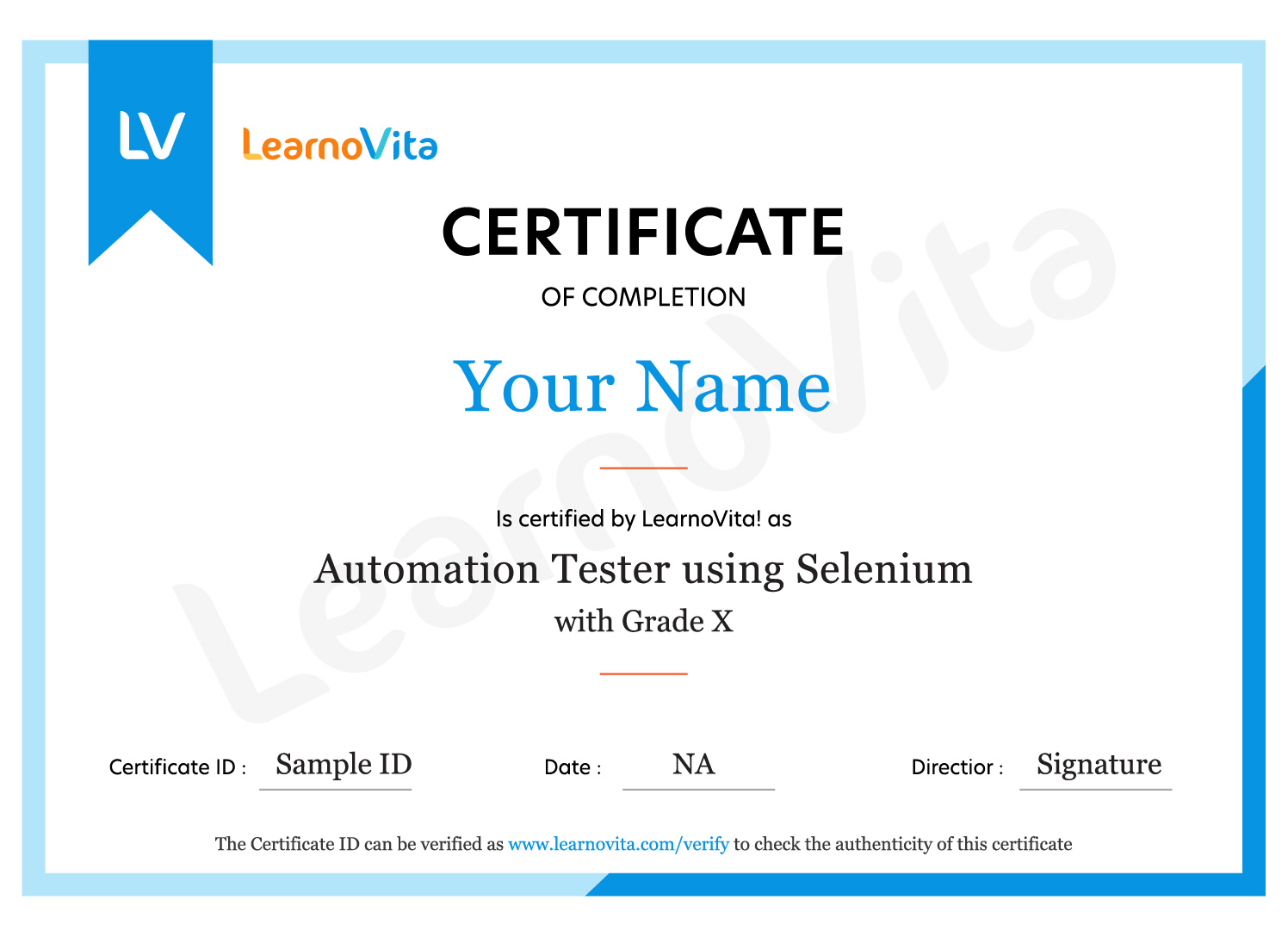
Exam & Gen AI and Agentic AI Certification

  • Basic understanding of Python programming concepts
  • Familiarity with machine learning fundamentals
  • Basic knowledge of deep learning and neural networks
  • Understanding of probability, statistics, and data handling
  • Interest in generative AI, automation, and intelligent agents
Earning a Gen AI and Agentic AI certification demonstrates your knowledge of generative models, large language models, prompt engineering, and autonomous AI agents. It helps strengthen your technical credibility and prepares you to develop intelligent applications, automate workflows, and integrate AI solutions into business processes. The certification can support career opportunities across technology, healthcare, finance, education, and other industries adopting AI-driven solutions.
Gen AI and Agentic AI certification can strengthen your employment prospects by demonstrating relevant knowledge and practical project experience. It helps you prepare for roles involving AI application development, intelligent workflow automation, prompt engineering, and autonomous agent implementation. However, employment depends on your skills, experience, interview performance, and the requirements of individual employers.
  • Generative AI Engineer
  • Agentic AI Engineer
  • Prompt Engineer
  • AI Application Developer
  • Machine Learning Engineer
  • AI Research Scientist
  • AI Solutions Consultant
  • AI Automation Specialist
This certification helps you develop practical skills in large language models, generative content creation, AI agent workflows, and intelligent automation. By applying these concepts through hands-on projects, you can strengthen your technical portfolio and prepare for evolving AI-related responsibilities. These capabilities may help you pursue specialized roles, contribute to AI-powered product development, and progress in organizations adopting advanced artificial intelligence technologies.

MNC Recognized course
complete certification
Intership
complete certification
Placement
complete certification

Our learners
transformed their careers

35 Laks
Highest Salary Offered
50%
Average Salary Hike
30K+
Placed in MNC's
15+
Year's in Training
Our Alumni
Alumni

A majority of our alumni

fast-tracked into managerial careers.

Get inspired by their progress in the Career Growth Report.

Our Student Successful Story

checkimage Regular 1:1 Mentorship From Industry Experts checkimage Live Classes checkimage Career Support

What Makes the Gen AI and Agentic AI Training at LearnoVita Different?

Feature

LearnoVita

Other Institutes

Affordable Fees

Cost-effective Gen AI and Agentic AI Training With Flexible Payment Plans.

Higher Training Fees With Fewer Payment Alternatives.

Live Classes From Industry Experts

Learn From Experienced Professionals Through Practical Gen AI and Agentic AI Training Sessions.

Theory-focused Classes With Limited Hands-on Learning Opportunities.

Updated Syllabus

Industry-aligned Curriculum Covering Generative AI, Agentic Workflows, LLMs, and AI Automation.

Outdated Learning Modules With Insufficient Practical Exposure.

Hands-on Projects

Build Practical Gen AI and Agentic AI Projects Using Realistic Scenarios, AI Agents, and Automation Tasks.

Simple Exercises With Limited Industry-oriented Project Experience.

Certification

Prepare for Relevant Gen AI and Agentic AI Certifications Through Structured Learning and Practical Exercises.

Basic Course Certificates With Limited Preparation for Industry Credentials.

Placement Support

Access Placement Assistance With Resume Guidance, Mock Interviews, and Career Preparation.

Basic Career Guidance With Limited Interview Preparation.

Industry Partnerships

Industry-focused Learning Designed to Help Learners Explore AI Internships and Relevant Career Opportunities.

Limited Industry Exposure and Fewer Practical Career Connections.

Batch Size

Small Learning Groups That Encourage Individual Attention and Interactive AI Practice.

Larger Classes With Fewer Opportunities for Personalized Guidance.

Additional Features

Access to Gen AI and Agentic AI Learning Resources, Project Exercises, and Collaborative Learning Activities.

Limited Supplementary Materials and Fewer Additional Learning Activities.

Training Support

Trainer Guidance, Doubt-clearing Sessions, and Personalized Support Throughout the Learning Journey.

Restricted Trainer Availability and Limited Follow-up Assistance.

Gen AI and Agentic AI Course FAQ's

Gen AI and Agentic AI Training teaches learners to develop generative AI applications, work with large language models, design effective prompts, and build autonomous AI agents. The course combines theoretical concepts with practical exercises and industry-oriented projects.
Students, fresh graduates, software developers, data analysts, machine learning professionals, and working professionals interested in artificial intelligence can enroll. Basic Python programming and familiarity with machine learning concepts are helpful for understanding advanced topics.
The curriculum covers generative AI fundamentals, large language models, prompt engineering, retrieval-augmented generation, vector databases, multimodal AI, AI agents, tool integration, workflow automation, and application deployment through practical exercises.
Basic programming knowledge, particularly Python, is beneficial for developing AI applications and implementing agent workflows. Beginners can start by learning programming fundamentals before progressing to model integration, prompt engineering, and autonomous AI systems.
Yes, practical projects help learners apply their knowledge to real-world scenarios. Participants can practise building AI assistants, developing content generation applications, creating retrieval-based question-answering systems, and designing AI agents that automate multi-step tasks.
Learners may work with Python, OpenAI APIs, Hugging Face Transformers, LangChain, LangGraph, LlamaIndex, vector databases, Google Colab, and agent development frameworks. The tools covered depend on the course modules and practical project requirements.
After completing the course, learners can explore opportunities such as Generative AI Engineer, Agentic AI Engineer, Prompt Engineer, AI Application Developer, Machine Learning Engineer, AI Automation Specialist, and AI Solutions Consultant, depending on their skills and experience.
The training program can include placement assistance such as resume preparation, mock interviews, technical interview practice, and career guidance. These services help learners prepare for relevant job opportunities, but placement depends on individual performance and employer requirements.
Generative AI focuses on creating content such as text, images, audio, and code based on user inputs. Agentic AI focuses on systems that can plan tasks, use tools, make context-based decisions, and execute multi-step workflows toward defined goals, often using generative AI models as part of the process.
Learners who meet the course completion requirements can receive a course completion certificate. It can help demonstrate their training experience and familiarity with generative AI concepts, autonomous AI agents, and practical application development.
view More view Less
Career Assistance
  • Build a Powerful Resume for Career Success
  • Get Trainer Tips to Clear Interviews
  • Practice with Experts: Mock Interviews for Success
  • Crack Interviews & Land Your Dream Job
100% JOB GUARANTEE

Global Quality Training
At The Lowest Fees & Expert Trainer

AVAILABLE IN:
India Canada USA Singapore UAE Australia EU Germany

Need custom pricing?

4.9/5 from 50k+ students
Acte Technologies WhatsApp
Call Us! Chat With Us