
MongoDB Course in London
 19564
19564 Ratings


- Enroll in the MongoDB Training in London to master NoSQL database concepts and data management techniques.
- Learn core topics such as collections, indexing, aggregation framework, replication, and sharding.
- Work on real-time projects, database design, query optimization, and deployment tasks.
- Ideal for Database Administrators, Architects, and IT Professionals working with large-scale data systems.
- Choose from flexible batch timings: Weekday, Weekend, or Fast-Track learning options.
- Get placement support, interview preparation, and certification assistance to boost your career opportunities.
Course Duration
50+ HrsLive Project
3 ProjectCertification Pass
GuaranteedTraining Format
Live Online (Expert Trainers)Quality Training With Affordable Fee
 Fees Starts From

11068+
Professionals Trained
10+
Batches every month
2694+
Placed Students
215+
Corporate ServedWhat You'll Learn
MongoDB Course in London delivers in-depth knowledge of NoSQL architecture, data modeling strategies, and scalable database management for modern applications.
Build a strong foundation in document-oriented databases, schema design, indexing techniques, and performance tuning to manage high-volume data efficiently.
Work on practical assignments covering CRUD operations, aggregation pipelines, replication setup, and sharding configuration for real-world deployment.
Strengthen your expertise through MongoDB training in London, guided by experienced mentors who focus on hands-on implementation and industry best practices.
Discover advanced concepts including database security, backup strategies, cloud integration, and high-availability configurations for enterprise environments.
Enhance your professional profile with job-focused learning that prepares you for database administration, backend development, and big data roles across leading organizations.
MongoDB Training Objectives
- Growing demand for NoSQL databases in cloud-native applications
- Increased adoption in big data and real-time analytics projects
- Expansion of roles in database administration and backend development
- Strong relevance in AI-driven and IoT-based systems
- Rising need for scalable data solutions in startups and enterprises
- Global recognition through vendor-backed credentials
- Introduction to NoSQL and document databases
- Installation and configuration of MongoDB
- CRUD operations and query building
- Indexing and performance tuning
- Aggregation framework and data processing
- E-commerce and Online Retail
- Banking and Financial Services
- Healthcare and Health-Tech
- IT Services and Consulting
- Media and Entertainment
- Strong understanding of NoSQL database systems
- Ability to design scalable data models
- Improved query optimization skills
- Confidence in handling real-time datasets
Request more informations
WhatsApp (For Call & Chat):
+91 72003 88604
MongoDB Course Benefits
The MongoDB course in London delivers practical learning through live database environments, guided labs, and deployment-focused workshops that mirror real industry workflows. Students gain valuable exposure through a structured MongoDB internship, allowing them to apply data modeling, query optimization, and cloud deployment skills in real business scenarios. The curriculum also explores automation practices, container-based setups, and continuous delivery concepts under the mentorship of experienced database professionals. With a dedicated MongoDB course with placement support system, learners receive career guidance, interview preparation, and direct pathways to opportunities in leading tech firms and growing startups.
- Designation
-
Annual SalaryHiring Companies








About MongoDB Certification Training
The MongoDB certification course in London equips you with in-depth knowledge of document database architecture, real-time data handling, and scalable application design. Through industry-aligned MongoDB projects, you gain hands-on experience in schema planning, query development, and cloud deployment strategies. Each module is delivered with practical case studies that reflect real business data challenges across modern enterprises. With dedicated career guidance and strong hiring partnerships, the program supports your journey toward professional certification and long-term success in data-driven roles.
Top Skills You Will Gain
- Data Modeling
- Query Optimization
- Schema Design
- Index Creation
- Aggregation Framework
- Performance Tuning
- Replication Setup
- Sharding Concepts
12+ MongoDB Tools
Online Classroom Batches Preferred
No Interest Financing start at ₹ 5000 / month
Corporate Training
- Customized Learning
- Enterprise Grade Learning Management System (LMS)
- 24x7 Support
- Enterprise Grade Reporting
Not Just Studying
We’re Doing Much More!
Empowering Learning Through Real Experiences and Innovation









MongoDB Course Curriculum
Trainers Profile
The MongoDB course in London is delivered by seasoned database professionals who bring real-world experience in designing scalable, high-performance data systems. The program blends instructor-led sessions with immersive lab practice so learners can confidently handle live database environments. We provide structured MongoDB training materials that simplify complex concepts such as indexing, replication, and cloud deployments. This hands-on approach prepares participants to take on practical database responsibilities across modern digital platforms.
Syllabus for MongoDB Course Download syllabus
- Overview of NoSQL databases
- Differences between SQL and NoSQL
- Document-oriented database concepts
- MongoDB architecture overview
- Installation and setup
- Database and collection structure
- Documents and BSON format
- CRUD operations
- Data types in MongoDB
- Query basics
- Query operators
- Logical conditions
- Projection techniques
- Sorting and limiting results
- Array queries
- Introduction to indexes
- Creating single-field indexes
- Compound indexes
- Multikey indexes
- Text indexes
- Aggregation pipeline stages
- Filtering and grouping data
- Data transformation
- Working with arrays
- Expression operators
- Embedding documents
- Referencing documents
- Schema design patterns
- Handling relationships
- Structuring large datasets
- Replica set architecture
- Primary and secondary nodes
- Failover process
- Configuration steps
- Monitoring replica sets
- Sharded cluster components
- Shard keys
- Data distribution process
- Balancing data
- Scaling horizontally
- Authentication methods
- Role-based access control
- Encryption concepts
- Auditing database activity
- Securing deployments
- Data backup methods
- Restore procedures
- Export and import tools
- Snapshot concepts
Request more informations
WhatsApp (For Call & Chat):
+91 72003 88604
REAL

UPGRADE

sowmiya

UPGRADE

Rajkumar

UPGRADE

Thon
UPGRADE

Lavanya

Industry Projects
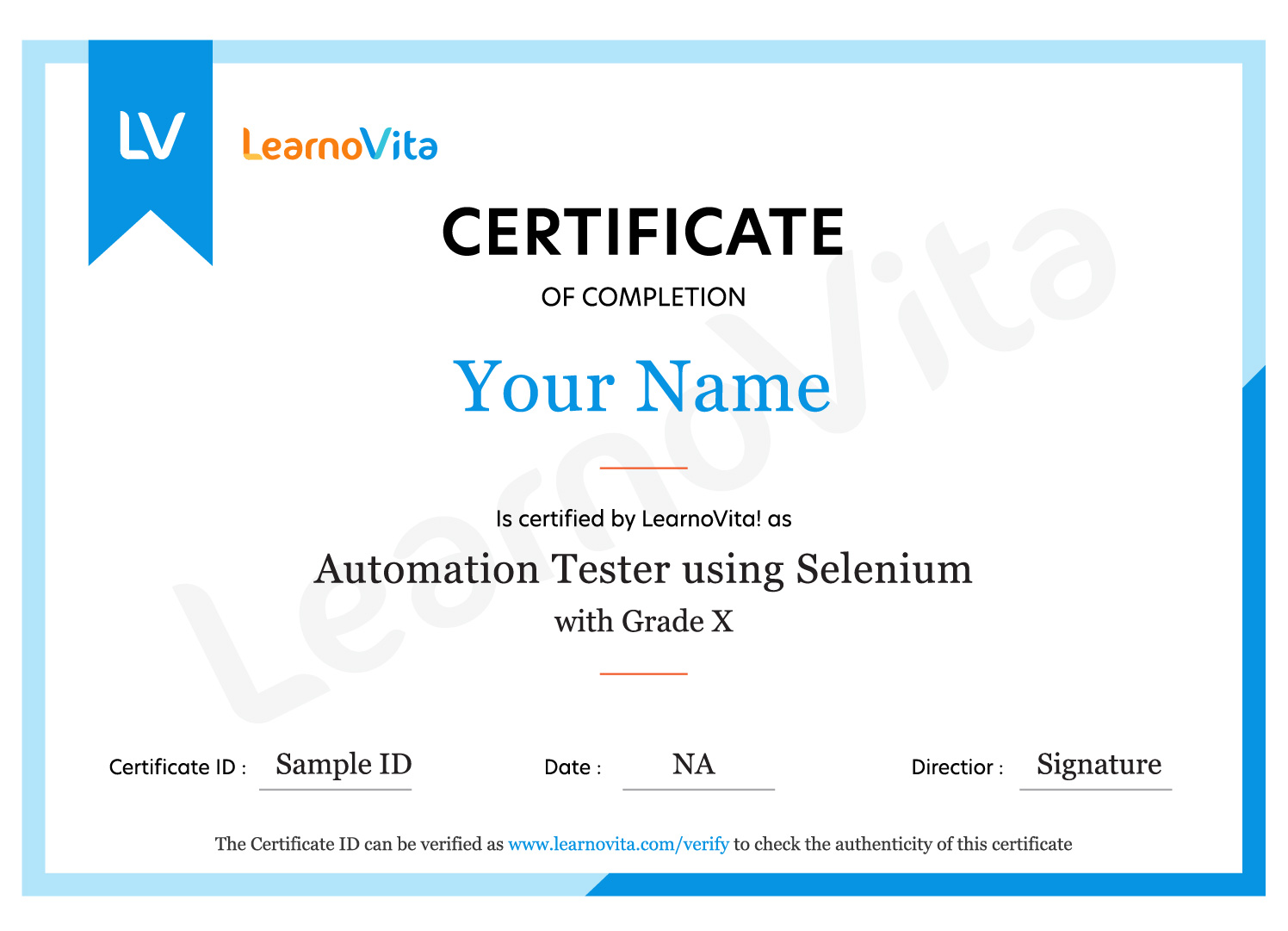
Exam & MongoDB Certification
- Basic understanding of database concepts
- Familiarity with programming fundamentals
- Knowledge of CRUD operations
- Awareness of indexing and querying
- Experience with application connectivity
- MongoDB Database Administrator
- NoSQL Developer
- Backend Developer
- Data Engineer
- Cloud Database Engineer
- Application Support Engineer
MNC Recognized course
complete certification
Intership
complete certification
Placement
complete certification
Our learners
transformed their careers

A majority of our alumni
fast-tracked into managerial careers.
Get inspired by their progress in the Career Growth Report.
Our Student Successful Story
 Regular 1:1 Mentorship From Industry Experts
Live Classes
Career Support
Regular 1:1 Mentorship From Industry Experts
Live Classes
Career Support

Sandeep Kumar D
Software Engineer, Cisco Systems )

Vinoth P
UI Developer, TCS
Vijeyalakshme kannan
QA Engineer, Amazon Development Center
Pranav Srinivas
Software Testing, Capgemini
Prasanna
SAP Admin, HCLHow are the MongoDB Course with LearnoVita Different?
Feature
LearnoVita
Other Institutes
Affordable Fees
Competitive Pricing With Flexible Payment Options.
Higher MongoDB Fees With Limited Payment Options.
Live Class From ( Industry Expert)
Well Experienced Trainer From a Relevant Field With Practical MongoDB Training
Theoretical Class With Limited Practical
Updated Syllabus
Updated and Industry-relevant MongoDB Course Curriculum With Hands-on Learning.
Outdated Curriculum With Limited Practical Training.
Hands-on projects
Real-world MongoDB Projects With Live Case Studies and Collaboration With Companies.
Basic Projects With Limited Real-world Application.
Certification
Industry-recognized MongoDB Certifications With Global Validity.
Basic MongoDB Certifications With Limited Recognition.
Placement Support
Strong Placement Support With Tie-ups With Top Companies and Mock Interviews.
Basic Placement Support
Industry Partnerships
Strong Ties With Top Tech Companies for Internships and Placements
No Partnerships, Limited Opportunities
Batch Size
Small Batch Sizes for Personalized Attention.
Large Batch Sizes With Limited Individual Focus.
Additional Features
Lifetime Access to MongoDB Course Materials, Alumni Network, and Hackathons.
No Additional Features or Perks.
Training Support
Dedicated Mentors, 24/7 Doubt Resolution, and Personalized Guidance.
Limited Mentor Support and No After-hours Assistance.
MongoDB Course FAQ's
- LearnoVita will assist the job seekers to Seek, Connect & Succeed and delight the employers with the perfect candidates.
- On Successfully Completing a Career Course with LearnoVita, you Could be Eligible for Job Placement Assistance.
- 100% Placement Assistance* - We have strong relationship with over 650+ Top MNCs, When a student completes his/ her course successfully, LearnoVita Placement Cell helps him/ her interview with Major Companies like Oracle, HP, Wipro, Accenture, Google, IBM, Tech Mahindra, Amazon, CTS, TCS, HCL, Infosys, MindTree and MPhasis etc...
- LearnoVita is the Legend in offering placement to the students. Please visit our Placed Students's List on our website.
- More than 5400+ students placed in last year in India & Globally.
- LearnoVita Conducts development sessions including mock interviews, presentation skills to prepare students to face a challenging interview situation with ease.
- 85% percent placement record
- Our Placement Cell support you till you get placed in better MNC
- Please Visit Your Student's Portal | Here FREE Lifetime Online Student Portal help you to access the Job Openings, Study Materials, Videos, Recorded Section & Top MNC interview Questions
- LearnoVita Certification is Accredited by all major Global Companies around the World.
- LearnoVita is the unique Authorized Oracle Partner, Authorized Microsoft Partner, Authorized Pearson Vue Exam Center, Authorized PSI Exam Center, Authorized Partner Of AWS.
- Also, LearnoVita Technical Experts Help's People Who Want to Clear the National Authorized Certificate in Specialized IT Domain.
- LearnoVita is offering you the most updated, relevant, and high-value real-world projects as part of the training program.
- All training comes with multiple projects that thoroughly test your skills, learning, and practical knowledge, making you completely industry-ready.
- You will work on highly exciting projects in the domains of high technology, ecommerce, marketing, sales, networking, banking, insurance, etc.
- After completing the projects successfully, your skills will be equal to 6 months of rigorous industry experience.
- We will reschedule the classes as per your convenience within the stipulated course duration with all such possibilities.
- View the class presentation and recordings that are available for online viewing.
- You can attend the missed session, in any other live batch.

- Build a Powerful Resume for Career Success
- Get Trainer Tips to Clear Interviews
- Practice with Experts: Mock Interviews for Success
- Crack Interviews & Land Your Dream Job
Global Quality Training
At The Lowest Fees & Expert Trainer








Need custom pricing?

