
REST APIs with Flask and Python Online Course
 8415
8415 Ratings


- Join the REST APIs with Flask and Python Online Training to master building scalable RESTful APIs.
- Learn core topics such as Flask Basics, REST Principles, API Routing, Authentication, Data Serialization, and Testing.
- Gain hands-on experience through real-world projects, API development, and integration with databases.
- Flexible Learning Options: Choose from Weekday, Weekend, or Fast-Track batches tailored to your schedule.
- Learn from experienced trainers with deep expertise in Flask and Python API development.
- Career Support including Resume Building, Certification Guidance, Interview Preparation, and Placement Assistance.
Course Duration
55+ HrsLive Project
3 ProjectCertification Pass
GuaranteedTraining Format
Live Online (Expert Trainers)Quality Training With Affordable Fee
 Fees Starts From

11258+
Professionals Trained
11+
Batches every month
3478+
Placed Students
251+
Corporate ServedWhat You'll Learn
Build REST APIs with Flask and Python Online Course with real-world CRUD operations.
Design API endpoints and route handling using Flask frameworks.
Master REST APIs with Flask and Python Online Training to learn Implement request handling with GET, POST, PUT, DELETE methods.
Use Flask extensions like Flask-RESTful and Flask-JWT for secure APIs.
Connect APIs with databases like SQLite or PostgreSQL using SQLAlchemy.
Deploy Flask APIs to cloud platforms and test with tools like Postman.
REST APIs with Flask and Python Training Objectives
- The two most popular frameworks for Python, Django and Flask, take incredibly different approaches to web development. Django, the older of the two frameworks, is often called a “batteries included” framework, meaning that it contains just about everything you need to launch a full featured application in no time flat. Flask, on the other hand, is a highly extensible “micro-framework” that launches with a bare minimum set of features, but has a thriving plugin ecosystem which allows developers to only include the functionality that they need to succeed.
- The goal of this article is to show you how to use Python 3, Flask, and Connexion to build useful REST APIs that can include input and output validation , and provide Swagger documentation as a bonus. Also included is a simple but useful single page web application that demonstrates using the API with JavaScript and updating the DOM with it.
- Certainly Yes. Even the recruiters know the knowledge we get in colleges is not enough to do a software job. They will see how confident you are. However they will train you according to their requirement once you get into the company.
- Beginner & Advanced level Classes.
- Hands-On Learning in REST APIs with Flask and Python .
- Best Practice for interview Preparation Techniques in REST APIs with Flask and Python .
- Lifetime Access for Student’s Portal, Study Materials, Videos & Top MNC Interview Question.
- LearnoVita first provides a candidate screening - potentially over the phone - to begin the process of narrowing down the applicants.
- Client-Server: There should be a separation between the server that offers a service, and the client that consumes it.
- Stateless: Each request from a client must contain all the information required by the server to carry out the request.
- The only knowledge explicitly assumed for this lesson is the ability to use a text editor, such as BBEdit on macOS or Notepad++ on Windows. However, knowledge of the command line, Python, and web concepts such as HTTP may make this tutorial easier to follow. If you’re new to Python, consider working through the Programming Historian series on dealing with online sources to familiarize yourself with fundamental concepts in Python programming.
- Create resource-based, production-ready RESTAPIs using Python, Flask, and popular Flask extensions; Handle secure user registration and authentication with Flask. Understand the complex intricacies of deployments and the performance of Flask RESTAPIs.
- Python Flask and Node JS Express have been the best frameworks and languages to developing a RESTful API for any web-based applications.
- REST API (Representational state transfer) is an API that uses HTTP requests for communication with web services. It must comply with certain constraints. Here are some of them: Client-server architecture – the client is responsible for the user interface, and the server is responsible for the backend and data storage.
Request more informations
WhatsApp (For Call & Chat):
+91 72003 88604
Benefits of REST APIs with Flask and Python Course
REST APIs with Flask and Python Certification Course provide developers with powerful tools to build scalable, secure, and efficient backend services. You'll improve your knowledge of HTTP, REST principles, and cloud deployment while mastering real-world backend workflows.
- Designation
-
Annual SalaryHiring Companies








About Your REST APIs with Flask and Python Training
The REST APIs with Flask and Python Certification Course is designed to teach how to build web APIs from scratch using Python’s Flask framework. REST APIs with Flask and Python Placement Course includes REST concepts, API security, database connectivity, and deployment essentials, making it ideal for aspiring backend developers.
Top Skills You Will Gain
- RESTful API Design
- Flask Application Development
- HTTP Methods (GET, POST, etc.)
- JSON Serialization
- JWT Authentication
- SQLAlchemy ORM
- API Documentation (Swagger)
- API Testing with Postman
12+ REST APIs with Flask and Python Tools
Online Classroom Batches Preferred
No Interest Financing start at ₹ 5000 / month
Corporate Training
- Customized Learning
- Enterprise Grade Learning Management System (LMS)
- 24x7 Support
- Enterprise Grade Reporting
Not Just Studying
We’re Doing Much More!
Empowering Learning Through Real Experiences and Innovation
REST APIs with Flask and Python Course Curriculam
Trainers Profile
Our REST APIs with Flask and Python Online Course trainers are professional Python developers with 5–10 years of experience in API development using Flask. They’ve worked in fintech, e-commerce, and SaaS domains, bringing deep knowledge of REST design patterns, JWT authentication, ORM tools, and deployment pipelines. Real-time REST APIs with Flask and Python project support and personalized mentoring are provided throughout the course. Whether you’re aiming to enhance your skills or gain hands-on experience through a REST APIs with Flask and Python Internship, this training offers the expertise and practical exposure needed to advance your career.
Syllabus of REST APIs with Flask and Python Course Download syllabus
- 1. Access the code for this section
- 2. Variables in Python
- 3. Variables
- 4. Solution to coding exercise
- 5. Variable
- 6. String formatting in Python
- 7. Getting user input
- 8. Writing our first Python app
- 9. Lists, tuples, and sets
- 10. Advanced set operations
- 11. Lists, tuples, and sets
- 12. Solution to coding exercise: Lists, tuples, sets
- 13. Booleans in Python
- 14. If statements
- 15. The 'in' keyword in Python
- 16. If statements with the 'in' keyword
- 17. Loops in Python
- 18. Flow control—loops and ifs
- 19. Solution to coding exercise: Flow control
- 20. List comprehensions in Python
- 21. Dictionaries
- 22. Destructuring variables
- 23. Functions in Python
- 24. Function arguments and parameters
- 25. Default parameter values
- 26. Functions returning values
- 27. Functions
- 28. Solution to coding exercise: Functions
- 29. Lambda functions in Python
- 30. Dictionary comprehensions
- 31. Dictionaries and students
- 32. Solution to coding exercise: Dictionaries
- 33. Unpacking arguments
- 34. Unpacking keyword arguments
- 35. Object-Oriented Programming in Python
- 36. Magic methods: str and repr
- 37. Classes and objects
- 38. Solution to coding exercise: Classes and objects
- 39. classmethod and staticmethod
- 40. classmethod and staticmethod
- 41. Solution to coding exercise: classmethod and staticmethod
- 42. Class inheritance
- 43. Class composition
- 44. Type hinting in Python 3.5+
- 45. Imports in Python
- 46. Relative imports in Python
- 47. Errors in Python
- 48. Custom error classes
- 49. First-class functions
- 50. Simple decorators in Python
- 51. The 'at' syntax for decorators
- 52. Decorating functions with parameters
- 53. Decorators with parameters
- 54. Mutability in Python
- 1. Installing Flask
- 2. Access the code for this section here
- 3. Your first Flask application
- 4. HTTP Verbs
- 5. REST Principles
- 6. Creating our application endpoints
- 7. Returning a list of stores
- 8. Implementing other endpoints
- 9. Calling the API from JavaScript
- 10. Using Postman for API testing
- 1. Virtualenvs and setting up Flask-RESTful
- 2. Access the code for this section here
- 3. Test-first API design—what is that?
- 4. Creating our Item Resource
- 5. The ItemList and creating Items
- 6. Improving code and error control
- 7. Authentication and logging in part 1
- 8. Authentication and logging in part 2
- 9. DELETE to delete Items
- 10. PUT to create or update Items
- 11. Advanced request parsing with Flask-RESTful
- 12. Optimising our final code and request parsing
- 1. Setting up our project
- 2. Access the code for this section here
- 3. Running a SQLite database and interacting with it from Python
- 4.Logging in and retrieving Users from a database
- 5. Signing up and writing Users to a database
- 6. Preventing duplicate usernames when signing users up
- 7. Retrieving our Item resources from a database
- 8. Writing our Item resources to a database
- 9. Deleting our Item resources from the database
- 10. Refactoring insertion of items
- 11. The PUT method with database interaction
- 12. Retrieving many items from the database
- 13.Advanced Flask-JWT Configuration
- 1. Access the code for this section here
- 2. Setting up this section's project
- 3. Improving the project structure and maintainability
- 4. Creating User and Item models
- 5. Verifying the app works after our changes
- 6. Advanced Postman: environments and tests
- 7. Errata: small mistake in code in the next video
- 8. Telling SQLAlchemy about our tables and columns
- 9. Implementing the ItemModel using SQLAlchemy
- 10. Implementing the UserModel using SQLAlchemy
- 11. Easily displaying the ItemList resource with SQLAlchemy
- 12. No more creating tables manually—telling SQLAlchemy to create tables
- 13. Creating a new model: StoreModel
- 14. Creating the Store Resource
- 15. Final testing of this section's API
- 1. Installing Git on Mac and Windows
- 2. What is a Git repository?
- 3. The Git workflow—part 1
- 4. The Git workflow—part 2, including GitHub
- 5. Using SSH keys for security
- 6. The README file
- 1. What is Heroku?
- 2. Getting our code into GitHub
- 3. Setting up Heroku for Flask
- 4. Adding the required files to the project
- 5. Logs in Heroku and troubleshooting errors
- 6. Testing the deployed API with Postman
- 7. Adding PostgreSQL to our Heroku app
- 8. Working with Git and automatic deploys
- 1. Setting up a DigitalOcean server
- 2. Want to deploy to AWS?
- 3. Installing PostgreSQL in Ubuntu
- 4. Creating a UNIX user in Ubuntu
- 5. Setting up our new user with PostgreSQL permissions
- 6. Setting up nginx and our REST API
- 7. Setting up uWSGI to run our REST API
- 8. Testing our API to make sure everything works
- 1. Welcome to this section
- 2. Security in REST APIs e-book
- 3. Getting our domain name
- 4. Setting up Cloudflare
- 5. What is DNS?
- 6. Setting our DNS records
- 7. Verifying everything works—this is important!
- 8. Creating our SSL certificate in Cloudflare
- 9. Configuring nginx for SSL
- 10. Security in REST APIs
- 11. Extra technical SSL resources
- 12. Conclusion of this section
- 1. A recap of the code + a few changes!
- 2. Creating a User Resource for testing
- 3. Testing our new Resource with Postman
- 4. Logging in with Flask-JWT-Extended
- 5. Testing the login with Postman
- 6. Adding JWT Claims
- 7. Getting the JWT identity in and endpoint and @jwt_optional
- 8. What is a fresh token?
- 9. Performing token refresh in our REST API
- 10. Requiring a fresh token in an endpoint
- 11. Customizing Flask-JWT-Extended callbacks and responses
- 12. Blacklisting with Flask-JWT-Extended
- 13. Logging users out in our REST API
- 14. E-book: complete review of the API so far
- 15. Flask-JWT-Extended further reading
- 1. Introduction
- 2. Installation
- 3. DB Connection
- 4. Creating DB Table
- 5. INSERT, READ, UPDATE, DELETE operations
- 6. COMMIT & ROLLBACK operation
- 7. handling Errors
Request more informations
WhatsApp (For Call & Chat):
+91 72003 88604
REAL

UPGRADE

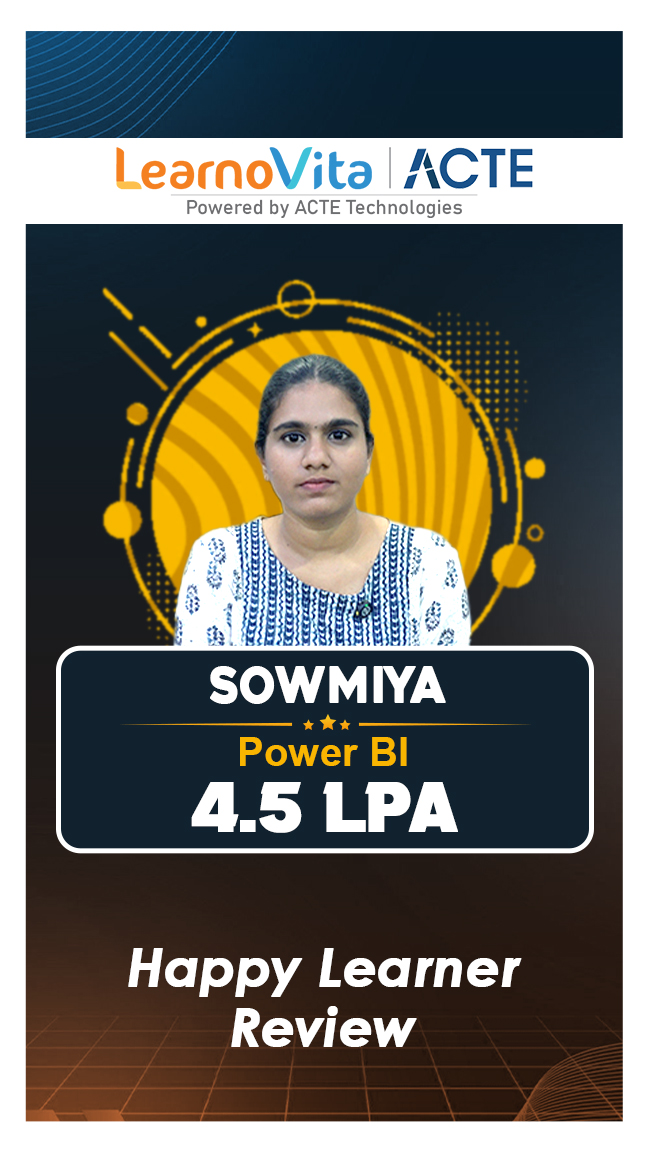
sowmiya

UPGRADE

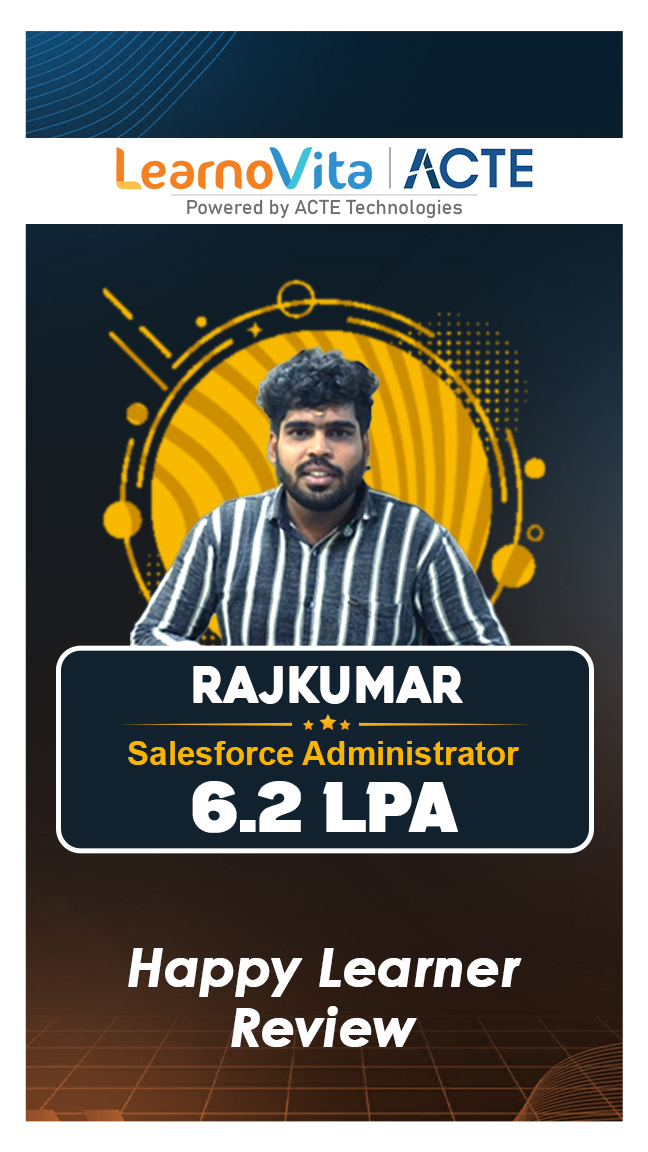
Rajkumar

UPGRADE

Thon
UPGRADE

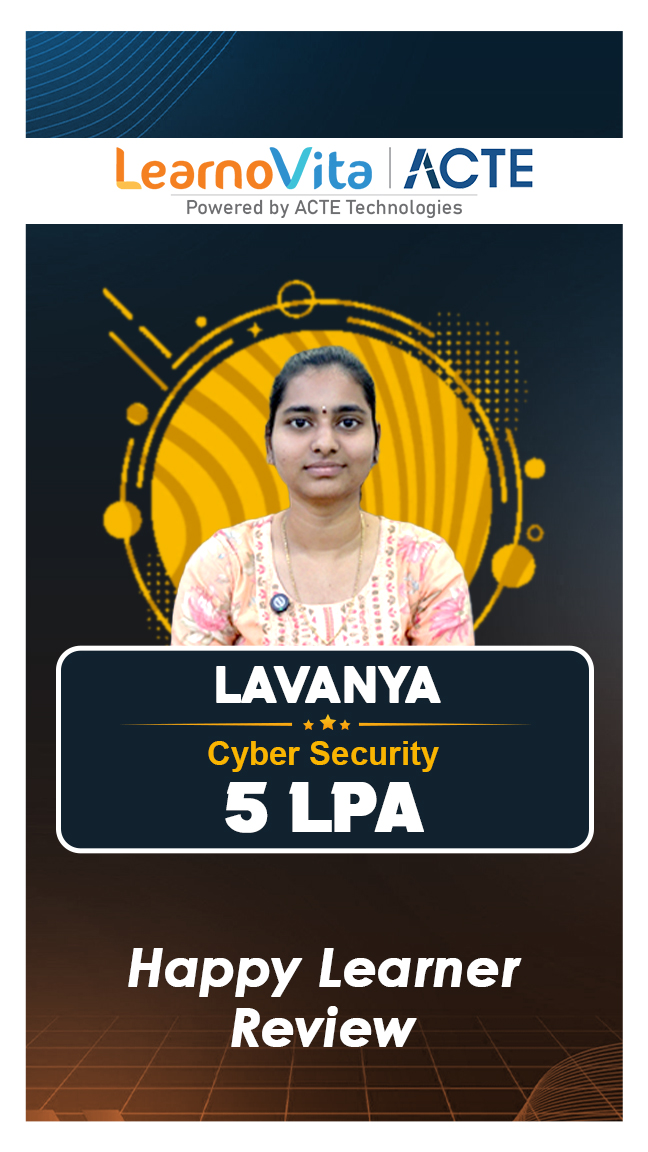
Lavanya

Industry Projects
Exam & Certification
- Participate and Complete One batch of REST APIs with Flask and Python Training Course
- Successful completion and evaluation of any one of the given projects
- Complete 85% of the REST APIs with Flask and Python Certification course
- Successful completion and evaluation of any one of the given projects
- Oracle Certified Associate (OCA)
- Oracle Certified Professional (OCP)
- Oracle Certified Expert (OCE)
- Oracle Certified Master (OCM)
- Learn About the Certification Paths.
- Write Code Daily This will help you develop Coding Reading and Writing ability.
- Refer and Read Recommended Books Depending on Which Exam you are Going to Take up.
- Join LearnoVita Online Training Course That Gives you a High Chance to interact with your Subject Expert Instructors and fellow Aspirants Preparing for Certifications.
- Solve Sample Tests that would help you to Increase the Speed needed for attempting the exam and also helps for Agile Thinking.
MNC Recognized course
complete certification
Intership
complete certification
Placement
complete certification
Our learners
transformed their careers

A majority of our alumni
fast-tracked into managerial careers.
Get inspired by their progress in the Career Growth Report.
Our Student Successful Story
 Regular 1:1 Mentorship From Industry Experts
Live Classes
Career Support
Regular 1:1 Mentorship From Industry Experts
Live Classes
Career Support

Sandeep Kumar D
Software Engineer, Cisco Systems )

Vinoth P
UI Developer, TCS
Vijeyalakshme kannan
QA Engineer, Amazon Development Center
Pranav Srinivas
Software Testing, Capgemini
Prasanna
SAP Admin, HCLHow are the REST APIs with Flask and Python Course with LearnoVita Different?
Feature
LearnoVita
Other Institutes
Affordable Fees
Competitive Pricing With Flexible Payment Options.
Higher REST APIs with Flask and Python Fees With Limited Payment Options.
Live Class From ( Industry Expert)
Well Experienced Trainer From a Relevant Field With Practical REST APIs with Flask and Python Training
Theoretical Class With Limited Practical
Updated Syllabus
Updated and Industry-relevant REST APIs with Flask and Python Course Curriculum With Hands-on Learning.
Outdated Curriculum With Limited Practical Training.
Hands-on projects
Real-world REST APIs with Flask and Python Projects With Live Case Studies and Collaboration With Companies.
Basic Projects With Limited Real-world Application.
Certification
Industry-recognized REST APIs with Flask and Python Certifications With Global Validity.
Basic REST APIs with Flask and Python Certifications With Limited Recognition.
Placement Support
Strong Placement Support With Tie-ups With Top Companies and Strong Mock Interviews.
Basic Placement Support
Industry Partnerships
Strong Ties With Top Tech Companies for Internships and Placements
No Partnerships, Limited Opportunities
Batch Size
Small Batch Sizes for Personalized Attention.
Large Batch Sizes With Limited Individual Focus.
Additional Features
Lifetime Access to REST APIs with Flask and PythonCourse Materials, Alumni Network, and Hackathons.
No Additional Features or Perks.
Training Support
Dedicated Mentors, 24/7 Doubt Resolution, and Personalized Guidance.
Limited Mentor Support and No After-hours Assistance.
REST APIs with Flask and Python Course FAQ's
- LearnoVita is dedicated to assisting job seekers in seeking, connecting, and achieving success, while also ensuring employers are delighted with the ideal candidates.
- Upon successful completion of a career course with LearnoVita, you may qualify for job placement assistance. We offer 100% placement assistance and maintain strong relationships with over 650 top MNCs.
- Our Placement Cell aids students in securing interviews with major companies such as Oracle, HP, Wipro, Accenture, Google, IBM, Tech Mahindra, Amazon, CTS, TCS, Sports One , Infosys, MindTree, and MPhasis, among others.
- LearnoVita has a legendary reputation for placing students, as evidenced by our Placed Students' List on our website. Last year alone, over 5400 students were placed in India and globally.
- We conduct development sessions, including mock interviews and presentation skills training, to prepare students for challenging interview situations with confidence. With an 85% placement record, our Placement Cell continues to support you until you secure a position with a better MNC.
- Please visit your student's portal for free access to job openings, study materials, videos, recorded sections, and top MNC interview questions.

- Build a Powerful Resume for Career Success
- Get Trainer Tips to Clear Interviews
- Practice with Experts: Mock Interviews for Success
- Crack Interviews & Land Your Dream Job
Global Quality Training
At The Lowest Fees & Expert Trainer








Need custom pricing?

