Home » Software Testing » Software Testing Course in India

Software Testing Course in India

(4.6) 19548 Ratings
  • Enroll in the Software Testing Training in India to learn manual and automation testing concepts with applications.
  • Master core testing areas such as Manual Testing, Automation Testing, SDLC, and STLC.
  • Gain practical exposure through real-time projects, test case design, execution, and defect tracking.
  • Ideal for freshers, QA professionals, developers, and IT aspirants aiming for testing roles.
  • Choose flexible batch options including Weekday, Weekend, and Fast-Track schedules.
  • Get support with placement assistance, interview preparation, and certification guidance.

Course Duration

45+ Hrs

Live Project

3 Project

Certification Pass

Guaranteed

Training Format

Live Online (Expert Trainers)
Quality Training With Affordable Fee

⭐ Fees Starts From

INR 38,000
INR 18,500

10998+

Professionals Trained

10+

Batches every month

2650+

Placed Students

258+

Corporate Served

What You'll Learn

Software Testing training in India equips learners with in-depth knowledge of quality assurance processes, defect prevention techniques, and real-world application testing practices.

Understand the complete testing lifecycle, from requirement analysis and test planning to execution and reporting, using industry-standard methodologies and workflows.

Build strong analytical skills by identifying software gaps, validating functionality, and ensuring performance, usability, and reliability across applications.

Gain practical exposure by working on live testing scenarios, documenting test cases, tracking defects, and collaborating within agile development environments.

Explore advanced testing concepts including automation basics, regression testing, integration testing, and tool-based quality validation techniques.

Enroll in a career-focused Software Testing course in India to enhance employability with job-oriented skills, hands-on experience, and industry relevance.

An Comprehensive Overview of Software Testing Training

The Software Testing course in India is designed to build strong foundations in quality assurance by covering essential testing methodologies, industry-standard tools, and real-world validation techniques applied in modern software projects. Through Software Testing training in India, learners gain hands-on exposure by working on practical assignments, live testing scenarios, and guided lab sessions conducted by experienced industry professionals. The Software Testing Certification Course in India focuses on developing job-ready skills such as test case design, defect tracking, automation fundamentals, and quality control across diverse application environments. This Software Testing training course also offers flexible learning modes, including instructor-led online classes and fast-track options, allowing students and working professionals to learn at their own pace while enhancing career prospects in QA and software testing roles.

Additional Info

Future Trends for Software Testing Course

  • Shift from Manual Testing to Intelligent Automation: Software testing training is rapidly moving beyond basic manual execution toward intelligent automation frameworks. Future testers are expected to understand how automation improves accuracy, speed, and repeatability. Training programs now emphasize decision-making on what to automate and what to test manually. Learners gain exposure to scripting, framework design, and maintenance strategies. This shift helps reduce regression effort in large applications. Organizations value testers who can balance logic with automation efficiency. As products scale faster, intelligent automation skills become essential.
  • Increased Focus on AI-Driven Testing Tools: Modern software testing training increasingly includes artificial intelligence-based testing tools. These tools help predict defect-prone areas and optimize test coverage. Learners are trained to analyze patterns rather than execute repetitive tasks. AI assists in self-healing test scripts and dynamic test case generation. Training now covers how testers collaborate with AI rather than fear replacement. Understanding AI outputs becomes as important as writing test cases. This trend reshapes the tester’s role into a quality strategist.
  • Integration of Testing within DevOps Pipelines: Future-oriented software testing training strongly aligns with DevOps practices. Testing is no longer a separate phase but embedded throughout the development lifecycle. Learners are trained to validate builds continuously using CI/CD pipelines. Emphasis is placed on early defect detection and faster feedback loops. Training programs introduce tools that support continuous testing environments. Testers learn collaboration skills with developers and operations teams. This integration improves release speed without compromising quality.
  • Growing Demand for Security Testing Skills: Security awareness has become a core part of software testing training. Future testers are expected to identify vulnerabilities before deployment. Training now includes basics of penetration testing and secure coding validation. Learners understand how small security gaps can cause major business risks. Testing courses emphasize data protection, authentication checks, and access control testing. Organizations prefer testers who think like attackers. This trend strengthens application reliability and trust.
  • Emphasis on Performance and Scalability Testing: Software testing training is expanding beyond functional validation to performance assurance. Learners are trained to assess system behavior under real-world load conditions. Courses now focus on response time analysis and bottleneck identification. Understanding user experience during peak traffic is a priority. Testers learn how scalability impacts business growth. Performance testing skills help organizations avoid costly downtime. This trend prepares testers for enterprise-level applications.
  • Adoption of Agile-First Testing Mindsets: Future software testing training prioritizes agile methodologies over rigid testing models. Testers are trained to work in short iterations with continuous feedback. Emphasis is placed on collaboration, adaptability, and fast decision-making. Training teaches how to write test cases alongside user stories. Testers learn to respond quickly to requirement changes. Agile-first testing supports faster delivery cycles. This mindset makes testers active contributors rather than final validators.
  • Expansion of Mobile and Cross-Platform Testing: With mobile usage dominating digital access, software testing training now focuses heavily on mobile and cross-platform validation. Learners are trained to test applications across devices, operating systems, and screen sizes. Understanding user behavior on mobile platforms becomes essential. Training includes usability and compatibility testing techniques. Testers learn how performance varies across environments. This trend ensures consistent user experience everywhere. Cross-platform skills increase tester employability.
  • Data-Driven Testing and Analytics Usage: Future testing training emphasizes data-driven decision making. Testers learn to analyze test results using metrics and analytics tools. Training programs teach how data improves coverage and risk assessment. Learners understand defect trends and release stability patterns. Data insights help prioritize critical test scenarios. This approach reduces guesswork in testing strategies. Organizations value testers who justify quality decisions with data.
  • Demand for Domain-Specific Testing Expertise: Software testing training is becoming more domain-oriented rather than generic. Learners focus on testing applications specific to banking, healthcare, retail, or telecom. Understanding business workflows improves test accuracy. Training connects technical validation with business impact. Domain expertise helps testers identify real-world failures. This specialization increases career growth opportunities. Employers seek testers who understand both technology and industry needs.
  • Career-Oriented Certification and Practical Learning: Future software testing training emphasizes practical learning over theory-only courses. Certifications now focus on real project exposure and applied skills. Learners work on live scenarios that mirror workplace challenges. Training programs highlight job readiness and interview preparation. Testers gain confidence through hands-on validation experience. This approach reduces the gap between training and employment. Career-focused learning ensures long-term professional relevance.

Tools and Technologies for Software Testing Course

  • Selenium: Selenium is widely used in software testing training for automating web-based applications. It allows testers to simulate real user interactions across browsers. Learners understand how automation reduces repetitive testing effort. Training focuses on writing maintainable scripts and handling dynamic elements. Selenium skills help testers validate applications faster and more accurately. It also supports integration with testing frameworks and CI tools. Mastering Selenium improves long-term automation scalability.
  • JIRA: JIRA plays a key role in managing test activities and tracking defects. Software testing training teaches how testers collaborate with developers using JIRA workflows. Learners gain experience logging bugs with clear reproduction steps. The tool helps prioritize issues based on severity and impact. JIRA improves transparency throughout the testing lifecycle. It enables better sprint planning and release tracking. Effective JIRA usage enhances cross-team communication.
  • TestNG: TestNG is introduced in software testing training to manage automated test execution. It helps structure test cases using annotations and configurations. Learners understand how to group, prioritize, and run tests efficiently. TestNG supports parallel execution to save time. This tool enhances automation reliability and reporting clarity. It also simplifies dependency management between test cases. TestNG improves execution control in large automation suites.
  • Postman: Postman is commonly used for API testing in modern software projects. Training covers sending requests and validating responses without a user interface. Learners gain insight into backend data flow and service behavior. Postman helps testers identify integration issues early. API testing skills are essential for service-driven applications. It supports automation of API collections and test scripts. Strong API validation improves system stability.
  • Appium: Appium is used in software testing training for mobile application automation. It supports testing across Android and iOS platforms. Learners understand how mobile environments differ from web testing. Training focuses on handling gestures, device configurations, and real-user scenarios. Appium ensures mobile apps perform consistently across devices. It allows reuse of automation logic across platforms. Mobile testing expertise is critical for modern digital products.
  • LoadRunner: LoadRunner is taught to help testers evaluate system performance under stress. Software testing training explains how applications behave during peak usage. Learners simulate multiple users accessing the system simultaneously. This tool identifies performance bottlenecks before production. Load testing skills prevent downtime and user dissatisfaction. It helps teams plan infrastructure capacity effectively. Performance insights support business continuity.
  • QTest: QTest supports test case management and reporting in enterprise projects. Training introduces structured test planning and execution tracking. Learners manage test cycles and analyze results efficiently. QTest improves visibility into testing progress. It helps teams maintain organized quality documentation. The tool supports audit readiness and compliance needs. Clear reporting improves decision-making for releases.
  • Jenkins: Jenkins is introduced in software testing training for continuous testing integration. It automates test execution during build cycles. Learners understand how testing fits into CI pipelines. Jenkins helps detect defects early in development. This tool supports faster and more reliable releases. It reduces manual intervention in test execution. Continuous testing improves software delivery speed.
  • Cucumber: Cucumber is used to bridge communication between technical and non-technical teams. Training teaches writing test scenarios in simple language. Learners convert business requirements into executable tests. Cucumber supports behavior-driven testing practices. It ensures application behavior aligns with user expectations. Shared understanding reduces requirement gaps. This approach improves collaboration and quality outcomes.
  • Git: Git is essential for version control in software testing environments. Training explains how testers manage test scripts and changes efficiently. Learners collaborate without overwriting work. Git supports traceability and rollback when needed. Version control skills are crucial in team-based testing projects. It helps manage automation code evolution smoothly. Git knowledge supports professional testing workflows.

Roles and Responsibilities for Software Testing Course

  • Software Test Analyst: A Software Test Analyst focuses on understanding requirements and translating them into effective test scenarios. During training, learners develop strong analytical thinking to identify functional gaps. They validate application behavior against business expectations. This role involves preparing test cases and reviewing specifications. Test Analysts ensure clarity before execution begins. Their work reduces misunderstandings early in development.
  • Manual Testing Engineer: A Manual Testing Engineer validates software functionality through hands-on testing techniques. Training emphasizes exploratory testing and real-user behavior analysis. Engineers identify defects that automation may miss. They focus on usability, workflow accuracy, and visual consistency. Manual testers play a critical role during early development stages. Their feedback improves overall product quality.
  • Automation Test Engineer: An Automation Test Engineer designs scripts to execute repetitive test cases efficiently. Software testing training teaches framework development and script maintenance. This role requires logical thinking and coding fundamentals. Automation engineers reduce testing time and increase coverage. They support continuous testing environments. Their contribution accelerates release cycles.
  • Quality Assurance Engineer: A Quality Assurance Engineer ensures quality standards are followed throughout the project lifecycle. Training focuses on process improvement and defect prevention strategies. QA engineers monitor testing activities and outcomes. They collaborate with teams to maintain consistency. This role emphasizes quality ownership beyond testing. QA engineers safeguard customer satisfaction.
  • Test Lead: A Test Lead manages testing teams and oversees test execution planning. Training prepares learners to assign tasks and track progress. Test Leads coordinate with development and business teams. They analyze risk areas and prioritize testing efforts. Leadership and communication are key responsibilities. Their role ensures timely and effective testing delivery.
  • Performance Testing Engineer: A Performance Testing Engineer evaluates system stability under heavy usage. Training focuses on load, stress, and scalability testing techniques. Engineers simulate real-world traffic conditions. They identify bottlenecks affecting response time. Performance testers help avoid system failures. Their work ensures reliable user experiences.
  • Security Testing Consultant: A Security Testing Consultant focuses on identifying vulnerabilities within applications. Software testing training introduces security fundamentals and risk assessment. Consultants analyze authentication and data protection mechanisms. They simulate threat scenarios to expose weaknesses. This role supports secure software deployment. Security testing protects organizational assets.
  • API Testing Specialist: An API Testing Specialist validates backend services and data exchanges. Training emphasizes request-response validation and integration accuracy. Specialists test services without relying on UI layers. They ensure system components communicate correctly. API testing reduces integration failures. This role is critical in service-based architectures.
  • Test Automation Architect: A Test Automation Architect designs scalable automation frameworks. Training prepares learners to select tools and define standards. Architects guide teams on best automation practices. They focus on long-term maintainability and performance. This role requires strong technical vision. Automation architects shape testing strategy.
  • Software Testing Consultant: A Software Testing Consultant advises organizations on testing strategy and quality improvement. Training develops problem-solving and assessment skills. Consultants evaluate existing testing processes. They recommend tools, workflows, and best practices. This role bridges business and technical teams. Consultants enhance testing maturity across projects.

Companies Hiring Software Testing Professionals

  • Tata Consultancy Services (TCS): TCS regularly seeks Software Testing Training professionals to strengthen their global quality assurance teams. Test specialists here support diverse client projects across banking, healthcare, and retail domains. Professionals trained in both manual and automation testing add value to TCS delivery cycles. They contribute to building test strategies, executing plans, and driving defect resolution. With a strong focus on quality and on-time releases, TCS values hands-on learners.
  • Infosys: Infosys looks for Software Testing Training experts who can uphold stringent testing standards for enterprise-level applications. These professionals participate in automation framework design and cross-platform testing efforts. They engage with development teams to improve test coverage and reduce time-to-market. Infosys emphasizes continuous learning, making training experience a key asset. Testers here are part of digital transformation initiatives worldwide.
  • Wipro: Wipro hires Software Testing Training professionals to enhance its QA capabilities across software portfolios. These experts contribute to performance testing, security validation, and regression automation suites. Wipro encourages testers to innovate with new tools and methodologies. They work in agile teams, driving quality from inception through deployment. Hands-on testers help Wipro deliver reliable solutions to global clients.
  • Accenture: Accenture seeks Software Testing Training professionals to support complex applications in cloud, mobile, and data analytics spaces. These testers work with cross-disciplinary teams to ensure quality at every sprint. Training background helps professionals adapt to advanced testing platforms quickly. They also help mentor juniors on best practices and tool usage. Accenture values adaptable testers who thrive in fast-moving environments.
  • Cognizant: Cognizant looks for Software Testing Training professionals to strengthen its quality assurance divisions. Testers contribute to automation and API testing, focusing on reducing defect leakage. They partner with product owners to align testing goals with business outcomes. Cognizant encourages training-driven thinkers who bring fresh approaches to testing. Their work ensures robust delivery in digital and cloud projects.
  • HCL Technologies: HCL Technologies regularly recruits Software Testing Training professionals for client projects spanning healthcare, finance, and telecom. These experts support regression automation, test data management, and end-to-end validation. Training experience allows them to quickly onboard modern testing tools and frameworks. They play a key role in quality gate decision-making. HCL values testers who combine analytical insight with practical skills.
  • Tech Mahindra: Tech Mahindra seeks Software Testing Training professionals to enhance quality outcomes in software and network solutions. These testers are involved in test planning, defect prioritization, and automation scripting. Training knowledge enables them to adapt to new frameworks like BDD and CI/CD integrations. They coordinate closely with developers to ensure seamless delivery. Tech Mahindra prioritizes testers with strong problem-solving abilities.
  • Capgemini: Capgemini actively hires Software Testing Training professionals to support global digital services. Testers here focus on performance, security, and user experience validation across platforms. Training helps them implement test strategies that align with business goals. They work in agile squads, contributing to early defect detection and quality reporting. Capgemini values testers who can innovate and optimize workflows.
  • IBM India: IBM India values Software Testing Training professionals who can support quality assurance across AI, cloud, and enterprise systems. These testers participate in test automation design and continuous testing practices. Training experience equips them to work with advanced tooling and cross-platform scenarios. They collaborate with architects to integrate testing into delivery pipelines. IBM looks for testers with strategic thinking and deep domain knowledge.
  • Mindtree: Mindtree seeks Software Testing Training professionals to deliver high-quality solutions in digital transformation engagements. Testers contribute to both manual validation and automation across web and mobile platforms. Training background enables them to build test cases that reflect real user journeys. They help reduce cycle times through effective defect tracking and reporting. Mindtree values professionals who learn quickly and add measurable quality impact.
View more

Software Testing Training Objectives

Software Testing training does not demand a strict technical background, making it suitable for fresh graduates and career switchers. Basic computer knowledge, logical thinking, and an interest in understanding how software works are helpful. Familiarity with software usage or documentation adds value but is not mandatory. Anyone willing to learn quality processes and problem-solving can start confidently.
Software Testing training equips learners with practical skills to identify defects, ensure product reliability, and improve application quality. It enhances analytical ability and attention to detail, which are valuable across IT roles. Learners gain industry-relevant exposure that increases employability. The training also builds confidence to work in real development environments.
  • Growing demand due to continuous software releases
  • Increased adoption of automation and agile testing
  • Rising focus on application quality and user experience
  • Expansion of testing roles across digital platforms
  • Long-term career stability with global opportunities
Software Testing plays a crucial role in today’s technology-driven job market, as businesses rely on stable and secure applications. Skilled testers help prevent costly production failures and protect brand reputation. Organizations value trained testing professionals who can ensure quality without delaying releases. This makes testing a highly relevant and in-demand career path.
  • Fundamentals of software testing concepts
  • Manual testing techniques and methodologies
  • Test case design and defect management
  • Basics of automation testing
  • Agile and real-world testing practices
Yes, Software Testing training includes hands-on exposure through practical assignments and real-time project simulations. Learners work on scenarios that mirror actual industry challenges. This approach helps bridge the gap between theory and workplace expectations. Practical experience strengthens confidence and job readiness.
  • Information Technology and Software Services
  • Banking and Financial Services
  • Healthcare and Life Sciences
  • E-commerce and Retail
  • Telecommunications and Media
Software Testing training significantly improves employability. It provides practical skills, project exposure, and industry-relevant knowledge. Job opportunities depend on individual performance, interview readiness, and market demand. Training acts as a strong foundation for securing testing roles.
  • Strong understanding of quality assurance processes
  • Improved problem-solving and analytical skills
  • Increased career opportunities in IT
  • Ability to work across multiple domains
  • Long-term relevance in the software industry
Participants gain hands-on familiarity with commonly used testing and defect-tracking tools during Software Testing training. The focus is on understanding tool usage in real testing scenarios rather than just theoretical knowledge. This practical exposure helps learners adapt quickly to workplace environments and testing workflows.
view More view Less

Software Testing Course Benefits

The Software Testing certification course delivers hands-on learning through practical testing scenarios, automation exposure, and quality validation workflows used in real projects. Learners gain industry-ready experience through a guided Software Testing internship, working on live applications and real defect-handling situations. The program emphasizes core and advanced testing concepts, helping participants understand how quality assurance supports reliable software delivery. This Software Testing course with placement support prepares candidates for in-demand QA roles across IT companies and growing technology startups.

  • Designation
  • Annual Salary
    Hiring Companies
  • 4.54L
    Min
  • 7.05L
    Average
  • 13.15L
    Max
  • 4.70L
    Min
  • 7.35L
    Average
  • 13.95L
    Max
  • 4.98L
    Min
  • 7.54L
    Average
  • 14.0L
    Max
  • 5.24L
    Min
  • 7.79L
    Average
  • 16.5L
    Max

About Software Testing Certification Training

Our Software Testing Course in India offers in-depth training through practical Software Testing projects that simulate real-world software challenges. Learners gain hands-on experience with core testing techniques, automation frameworks, and quality validation processes. The program covers essential tools and methodologies to ensure readiness for live project environments. With dedicated support and industry tie-ups, this course enhances employability and prepares participants for high-demand QA roles.

Top Skills You Will Gain
  • Manual Testing
  • Automation Testing
  • Test Planning
  • Defect Analysis
  • API Testing
  • Mobile Testing
  • Performance Testing
  • SQL Queries

12+ Software Testing Tools

Online Classroom Batches Preferred

Weekdays (Mon - Fri)
02 - Mar - 2026
08:00 AM (IST)
Weekdays (Mon - Fri)
04 - Mar - 2026
08:00 AM (IST)
Weekend (Sat)
07 - Mar - 2026
11:00 AM (IST)
Weekend (Sun)
08 - Mar - 2026
11:00 AM (IST)
Can't find a batch you were looking for?
₹38,000 ₹18,500 10% OFF Expires in

No Interest Financing start at ₹ 5000 / month

Corporate Training

  • Customized Learning
  • Enterprise Grade Learning Management System (LMS)
  • 24x7 Support
  • Enterprise Grade Reporting

Not Just Studying
We’re Doing Much More!

Empowering Learning Through Real Experiences and Innovation

Hiring
Hiring
Hiring
Hiring
Hiring
Hiring
Hiring
User
User
User
User
User
User

Software Testing Course Curriculum

Trainers Profile

Our Software Testing Course in India is designed to provide learners with hands-on expertise through practical Software Testing training materials. Participants engage with real testing scenarios, automation exercises, and validation workflows to strengthen their skills. The program emphasizes applied learning, helping learners master defect detection, test execution, and reporting. These training materials prepare students to confidently tackle live projects and excel in software quality assurance roles.

Syllabus for Software Testing Course Download syllabus

  • Fundamentals of software testing
  • Software development lifecycle (SDLC)
  • Testing lifecycle (STLC)
  • Types of testing: Functional & Non-functional
  • Roles and responsibilities of testers
  • Testing terminology
  • Test case design and execution
  • Defect identification and reporting
  • Exploratory testing
  • Boundary value analysis
  • Equivalence partitioning
  • Ad-hoc testing
  • Test plan preparation
  • Test scenario creation
  • Requirement analysis for testing
  • Test data preparation
  • Traceability matrix
  • Test summary reports
  • Introduction to automation tools
  • Test script creation
  • Automation framework concepts
  • Data-driven testing
  • Keyword-driven testing
  • Execution of automated scripts
  • Selenium architecture
  • Locators and element handling
  • Browser and navigation commands
  • Synchronization techniques
  • TestNG integration
  • Parallel execution
  • Basics of API testing
  • GET, POST, PUT, DELETE requests
  • Response validation and status codes
  • Environment setup in Postman
  • Collection and script execution
  • Data-driven API tests
  • Mobile testing concepts
  • Android and iOS automation
  • Handling gestures and device inputs
  • Cross-platform testing
  • Appium server setup
  • Script execution and debugging
  • Performance testing overview
  • Load simulation concepts
  • Vuser scripting
  • Scenario creation and execution
  • Result analysis and reporting
  • Bottleneck identification
  • CI/CD pipeline overview
  • Integrating automated tests
  • Triggering builds
  • Reporting and notifications
  • Version control integration
  • Pipeline optimization
  • Bug lifecycle and workflow
  • Logging defects with details
  • Severity and priority assignment
  • Defect tracking and reporting
  • Integration with test execution
(15) view More view Less
Need customized curriculum?

REAL

start
STORIES SUCCESS INSPIRATION
CAREER
UPGRADE
sowmiya

sowmiya

CAREER
UPGRADE
Rajkumar

Rajkumar

CAREER
UPGRADE
Thon

Thon

CAREER
UPGRADE
lavanya

Lavanya

Industry Projects

Project 1
E-commerce Website Testing

Test an e-commerce platform for functional and performance issues, covering shopping cart workflows, payment gateway validation, and responsiveness across browsers. Real-time testing ensures a seamless user experience and accurate transaction handling.

Project 2
Mobile Banking Application Testing

Validate mobile banking app functionalities such as login authentication, fund transfers, and account management. Test automation and manual verification ensure security and reliability under high load conditions.

Project 3
API and Integration Testing for SaaS Platform

Perform API testing to validate service endpoints, response accuracy, and integration between microservices. Identify defects, verify data consistency, and ensure the system performs reliably under simulated real-world conditions.

Our Hiring Partner

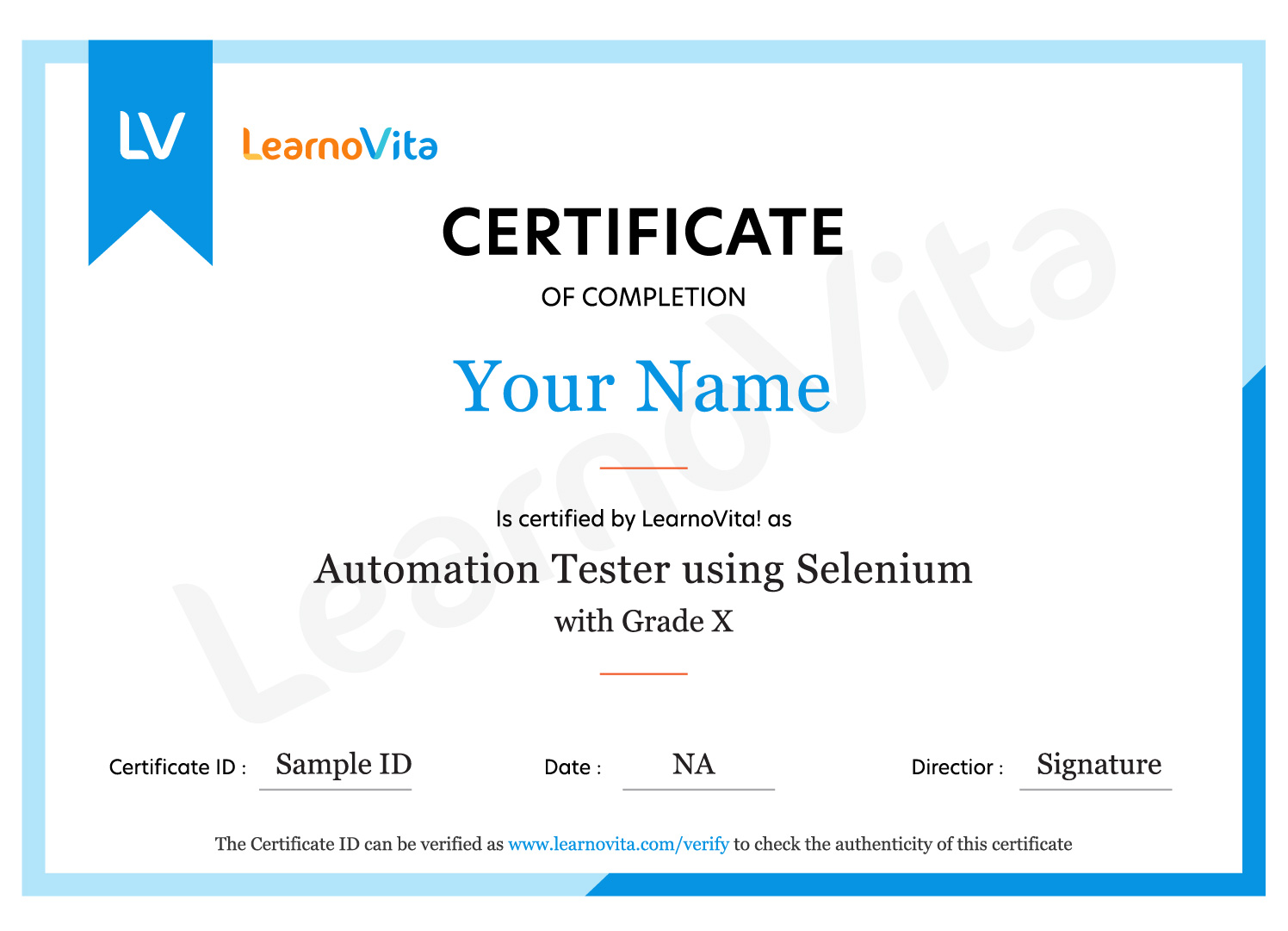
Exam & Software Testing Certification

  • Basic computer literacy
  • Logical thinking and problem-solving skills
  • Familiarity with software applications
  • Understanding of SDLC and testing lifecycle
  • Willingness to learn automation tools
A Software Testing certification validates your expertise in both manual and automated testing processes. It enhances professional credibility and signals to employers that you possess practical, job-ready skills. Certification improves career opportunities and opens doors to advanced QA and testing roles. It also equips you to contribute effectively to real-world testing environments. Overall, it strengthens your profile in the competitive IT job market.
No certification can directly guarantee a job. However, a Software Testing certification significantly improves your employment prospects by showcasing validated skills to potential employers. When combined with hands-on project experience, it prepares learners for roles in QA and testing teams at IT companies and startups.
  • Manual Test Engineer
  • Automation Test Engineer
  • QA Analyst
  • Test Lead
  • API Tester
  • Mobile Application Tester
  • Performance Test Engineer
  • Software Test Consultant
Earning a Software Testing certification boosts your credibility and employability in the IT industry. It provides advanced testing knowledge and practical experience, helping you confidently handle complex projects. Certification enables access to higher-level QA roles, accelerates career progression, and can lead to better salary prospects.

Our learners
transformed their careers

35 Laks
Highest Salary Offered
50%
Average Salary Hike
30K+
Placed in MNC's
15+
Year's in Training
Our Alumni
Alumni

A majority of our alumni

fast-tracked into managerial careers.

Get inspired by their progress in the Career Growth Report.

Our Student Successful Story

checkimage Regular 1:1 Mentorship From Industry Experts checkimage Live Classes checkimage Career Support

How are the Software Testing Course with LearnoVita Different?

Feature

LearnoVita

Other Institutes

Affordable Fees

Competitive Pricing With Flexible Payment Options.

Higher Software Testing Fees With Limited Payment Options.

Live Class From ( Industry Expert)

Well Experienced Trainer From a Relevant Field With Practical Software Testing Training

Theoretical Class With Limited Practical

Updated Syllabus

Updated and Industry-relevant Software Testing Course Curriculum With Hands-on Learning.

Outdated Curriculum With Limited Practical Training.

Hands-on projects

Real-world Software Testing Project With Live Case Studies and Collaboration With Companies.

Basic Projects With Limited Real-world Application.

Certification

Industry-recognized Software Testing Certifications With Global Validity.

Basic Software Testing Certifications With Limited Recognition.

Placement Support

Strong Placement Support With Tie-ups With Top Companies and Mock Interviews.

Basic Placement Support

Industry Partnerships

Strong Ties With Top Tech Companies for Internships and Placements

No Partnerships, Limited Opportunities

Batch Size

Small Batch Sizes for Personalized Attention.

Large Batch Sizes With Limited Individual Focus.

Additional Features

Lifetime Access to Software Testing Course Materials, Alumni Network, and Hackathons.

No Additional Features or Perks.

Training Support

Dedicated Mentors, 24/7 Doubt Resolution, and Personalized Guidance.

Limited Mentor Support and No After-hours Assistance.

Software Testing Course FAQ's

Certainly, you are welcome to join the demo session. However, due to our commitment to maintaining high-quality standards, we limit the number of participants in live sessions. Therefore, participation in a live class without enrollment is not feasible. If you're unable to attend, you can review our pre-recorded session featuring the same trainer. This will provide you with a comprehensive understanding of our class structure, instructor quality, and level of interaction.
All of our instructors are employed professionals in the industry who work for prestigious companies and have a minimum of 9 to 12 years of significant IT field experience. A great learning experience is provided by all of these knowledgeable people at LearnoVita.
  • LearnoVita is dedicated to assisting job seekers in seeking, connecting, and achieving success, while also ensuring employers are delighted with the ideal candidates.
  • Upon successful completion of a career course with LearnoVita, you may qualify for job placement assistance. We offer 100% placement assistance and maintain strong relationships with over 650 top MNCs.
  • Our Placement Cell aids students in securing interviews with major companies such as Oracle, HP, Wipro, Accenture, Google, IBM, Tech Mahindra, Amazon, CTS, TCS, HCL, Infosys, MindTree, and MPhasis, among others.
  • LearnoVita has a legendary reputation for placing students, as evidenced by our Placed Students' List on our website. Last year alone, over 5400 students were placed in India and globally.
  • We conduct development sessions, including mock interviews and presentation skills training, to prepare students for challenging interview situations with confidence. With an 85% placement record, our Placement Cell continues to support you until you secure a position with a better MNC.
  • Please visit your student's portal for free access to job openings, study materials, videos, recorded sections, and top MNC interview questions.
LearnoVita awards certifications upon course completion, recognized by leading global corporations. As an exclusive authorized exam center for Oracle, Microsoft, Pearson Vue, and PSI, and an authorized SAP CRM partner, LearnoVita provides a credible certification pathway. Additionally, LearnoVita’s technical experts assist individuals aiming for National Authorized Certificates in specialized IT domains.
As part of the training program, LearnoVita provides you with the most recent, pertinent, and valuable real-world projects. Every program includes several projects that rigorously assess your knowledge, abilities, and real-world experience to ensure you are fully prepared for the workforce. Your abilities will be equivalent to six months of demanding industry experience once the tasks are completed.
At LearnoVita, participants can choose from instructor-led online training, self-paced training, classroom sessions, one-to-one training, fast-track programs, customized training, and online training options. Each mode is designed to provide flexibility and convenience to learners, allowing them to select the format that best suits their needs. With a range of training options available, participants can select the mode that aligns with their learning style, schedule, and career goals to excel in Software Testing .
LearnoVita guarantees that you won't miss any topics or modules. You have three options to catch up: we'll reschedule classes to suit your schedule within the course duration, provide access to online class presentations and recordings, or allow you to attend the missed session in another live batch.
Please don't hesitate to reach out to us at contact@learnovita.com if you have any questions or need further clarification.
To enroll in the Software Testing Course at LearnoVita, you can conveniently register through our website or visit any of our branches in India for direct assistance.
Yes, after you've enrolled, you will have lifetime access to the student portal's study materials, videos, and top MNC interview questions.
At LearnoVita, we prioritize individual attention for students, ensuring they can clarify doubts on complex topics and gain a richer understanding through interactions with instructors and peers. To facilitate this, we limit the size of each Software Testing batch to 5 or 6 members.
The average annual salary for Software Testing Professionals in India is 4 LPA to 6 LPA.
view More view Less
Career Assistance
  • Build a Powerful Resume for Career Success
  • Get Trainer Tips to Clear Interviews
  • Practice with Experts: Mock Interviews for Success
  • Crack Interviews & Land Your Dream Job

Find Software Testing Training in Other Cities

Acte Technologies WhatsApp