
- What is Lean?| Everything You Need to Know
- What is SAP Workflow? : A Complete Guide
- Difference between Tableau and Power BI | Benefits and Special Features
- Data Warehouse in Tableau | Everything You Need to Know
- What is Tableau Server?| Everything You Need to Know | A Definitive Guide
- What is Dax in Power BI? | A Comprehensive Guide
- Upgrade in Tableau Desktop and Web Authoring | A Complete Guide with Best Practices
- What is SAP HANA | SAP HANA Database Connection | All you need to know [ OverView ]
- SAP BPC – What is Business Planning and Consolidation? : All you need to know [ OverView ]
- Root Cause Analysis: Definition, Examples & Methods | All you need to know [ OverView ]
- Seven Basic Quality Improvement Ishikawa Tools | Important asset to control quality in your project [OverView]
- What is Power BI | Its Use Cases and Applications | All you need to know [ OverView ]
- How and why to measure and analyze employee productivity | Everything You Need to Know
- Top 10 Employee Retention Strategies | Everything You Need to Know
- What are LookML Projects and the Developer Mode | How to Create LookML Projects?
- What are Slowly Changing Dimension | SCD Types and Implementations | Step-By-Step Process
- What is Pareto Chart and How to Create Pareto Chart | A Complete Guide For Beginners
- What does an Agile Business Analyst do | Required Skills, Roles and Responsibilities [ Job & Future ]
- What is Lean Management? | Role and Concepts of Lean Management | Expert’s Top Picks
- A Definitive Guide of Working Capital Management with Best Practices & REAL-TIME Examples
- Business Analytics with Excel Fundamentals | A Complete Guide For Beginners
- Business Analyst : Job Description | All you need to know [ Job & Future ]
- How to create a Splunk Dashboard | A Complete Guide For Beginners [ OverView ]
- What is Splunk Logging ? | The Ultimate Guide with Expert’s Top Picks
- Alteryx vs Tableau | Know Their Differences and Which Should You Learn?
- What is Predictive Analytics? : Step-By-Step Process with REAL-TIME Examples
- An Overview of SAS Stored Processes | The Ultimate Guide with Expert’s Top Picks
- How to Create Conditional Formatting in Cognos Report Studio | A Complete Guide
- Difference between OLTP vs OLAP | Know Their Differences and Which Should You Learn?
- ECBA vs CCBA vs CBAP | A Complete Guide For Beginners | Know Their Differences and Which Should You Learn?
- Import Custom Geocode Data in Tableau | Everything You Need to Know [ OverView ]
- Data Warehouse Tools : Features , Concepts and Architecture
- PGDM vs MBA | Know Their Differences and Which Should You Learn?
- Most Popular Data Visualization Tools | A Complete Beginners Guide | REAL-TIME Examples
- Tableau vs Looker : Comparision and Differences | Which Should You Learn?
- Benefits of Employee Satisfaction for the Organization [ Explained ]
- DAX In Power BI – Learn Power BI DAX Basics [ For Freshers and Experience ]
- Power Bi vs Tableau : Comparision and Differences | Which Should You Learn?
- What is Alteryx Tools | Alteryx ETL Tools | Comprehensive Guide
- What is Tableau Prep? : Comprehensive Guide | Free Guide Tutorial & REAL-TIME Examples
- What are Business Intelligence Tools ? : All you need to know [ OverView ]
- Tableau Aggregate Functions | A Complete Guide with REAL-TIME Examples
- Intervalmatch Function in Qlikview | Everything You Need to Know [ OverView ]
- QlikView Circular Reference | Free Guide Tutorial & REAL-TIME Examples
- Data Blending in Tableau | A Complete Guide with Best Practices | Free Guide Tutorial [ OverView ]
- Splunk vs ELK | Differences and Which Should You Learn? [ OverView ]
- QlikSense vs QlikView | Differences and What to learn and Why?
- What Is Measurement System Analysis | Required Skills | Everything You Need to Know
- Splunk Timechart | Free Guide Tutorial & REAL-TIME Examples
- What Is Image Processing ? A Complete Guide with Best Practices
- What is a Business Analysis ? A Complete Guide with Best Practices
- Top Business Analytics Tools | Comprehensive Guide
- Business Analyst Career Path [ Job & Future ]
- Time Series Analysis Tactics | A Complete Guide with Best Practices
- What is Splunk ? Free Guide Tutorial & REAL-TIME Examples
- Which Certification is Right for You: Six Sigma or Lean Six Sigma?
- SAS Vs R
- Top Technology Trends for 2020
- Data Analyst vs. Data Scientist
- What are the Essential Skills That You Need to Master in Data Analyst?
- What is Six Sigma?
- Common Cause Variation Vs Special Cause Variation
- Reasons to Get a Six Sigma Certification
- What Is Strategic Enterprise Management and its Components?
- What Are The Benefits Measurement Constrained Optimization Methods?
- What Is the Benefit of Modern Data Warehousing?
- What Is Corporate Social Responsibility (CSR)?
- What Is The Purpose and Importance Of Financial Analysis?
- What is Insights-as-a-Service (IaaS)?
- Business Analytics With R Programming Languages
- Where Are The 8 Hidden Wastes?
- What Are Market Structures?
- What is Cost of Quality (COQ)?
- What is Build Verification Testing?
- Quality Improvement in Six Sigma
- What is Process Capability Analysis?
- How To Measure The Effectiveness Of Corporate Training
- SAP Financials And SAP Accounting Modules
- Tips to Learn Tableau
- Why Should I Become a CBAP?
- History And Evolution of Six Sigma
- How to use Control Chart Constants?
- Data Analytics Course For Beginners
- How to Build a Successful Data Analyst Career?
- Data Analytics Vs Business Analytics
- What is SAP Certification?
- Books To Read For a Six Sigma Certification
- Six Sigma Green Belt Salary
- What is the ASAP Methodology?
- Complete list of SAP modules
- What is Lean?| Everything You Need to Know
- What is SAP Workflow? : A Complete Guide
- Difference between Tableau and Power BI | Benefits and Special Features
- Data Warehouse in Tableau | Everything You Need to Know
- What is Tableau Server?| Everything You Need to Know | A Definitive Guide
- What is Dax in Power BI? | A Comprehensive Guide
- Upgrade in Tableau Desktop and Web Authoring | A Complete Guide with Best Practices
- What is SAP HANA | SAP HANA Database Connection | All you need to know [ OverView ]
- SAP BPC – What is Business Planning and Consolidation? : All you need to know [ OverView ]
- Root Cause Analysis: Definition, Examples & Methods | All you need to know [ OverView ]
- Seven Basic Quality Improvement Ishikawa Tools | Important asset to control quality in your project [OverView]
- What is Power BI | Its Use Cases and Applications | All you need to know [ OverView ]
- How and why to measure and analyze employee productivity | Everything You Need to Know
- Top 10 Employee Retention Strategies | Everything You Need to Know
- What are LookML Projects and the Developer Mode | How to Create LookML Projects?
- What are Slowly Changing Dimension | SCD Types and Implementations | Step-By-Step Process
- What is Pareto Chart and How to Create Pareto Chart | A Complete Guide For Beginners
- What does an Agile Business Analyst do | Required Skills, Roles and Responsibilities [ Job & Future ]
- What is Lean Management? | Role and Concepts of Lean Management | Expert’s Top Picks
- A Definitive Guide of Working Capital Management with Best Practices & REAL-TIME Examples
- Business Analytics with Excel Fundamentals | A Complete Guide For Beginners
- Business Analyst : Job Description | All you need to know [ Job & Future ]
- How to create a Splunk Dashboard | A Complete Guide For Beginners [ OverView ]
- What is Splunk Logging ? | The Ultimate Guide with Expert’s Top Picks
- Alteryx vs Tableau | Know Their Differences and Which Should You Learn?
- What is Predictive Analytics? : Step-By-Step Process with REAL-TIME Examples
- An Overview of SAS Stored Processes | The Ultimate Guide with Expert’s Top Picks
- How to Create Conditional Formatting in Cognos Report Studio | A Complete Guide
- Difference between OLTP vs OLAP | Know Their Differences and Which Should You Learn?
- ECBA vs CCBA vs CBAP | A Complete Guide For Beginners | Know Their Differences and Which Should You Learn?
- Import Custom Geocode Data in Tableau | Everything You Need to Know [ OverView ]
- Data Warehouse Tools : Features , Concepts and Architecture
- PGDM vs MBA | Know Their Differences and Which Should You Learn?
- Most Popular Data Visualization Tools | A Complete Beginners Guide | REAL-TIME Examples
- Tableau vs Looker : Comparision and Differences | Which Should You Learn?
- Benefits of Employee Satisfaction for the Organization [ Explained ]
- DAX In Power BI – Learn Power BI DAX Basics [ For Freshers and Experience ]
- Power Bi vs Tableau : Comparision and Differences | Which Should You Learn?
- What is Alteryx Tools | Alteryx ETL Tools | Comprehensive Guide
- What is Tableau Prep? : Comprehensive Guide | Free Guide Tutorial & REAL-TIME Examples
- What are Business Intelligence Tools ? : All you need to know [ OverView ]
- Tableau Aggregate Functions | A Complete Guide with REAL-TIME Examples
- Intervalmatch Function in Qlikview | Everything You Need to Know [ OverView ]
- QlikView Circular Reference | Free Guide Tutorial & REAL-TIME Examples
- Data Blending in Tableau | A Complete Guide with Best Practices | Free Guide Tutorial [ OverView ]
- Splunk vs ELK | Differences and Which Should You Learn? [ OverView ]
- QlikSense vs QlikView | Differences and What to learn and Why?
- What Is Measurement System Analysis | Required Skills | Everything You Need to Know
- Splunk Timechart | Free Guide Tutorial & REAL-TIME Examples
- What Is Image Processing ? A Complete Guide with Best Practices
- What is a Business Analysis ? A Complete Guide with Best Practices
- Top Business Analytics Tools | Comprehensive Guide
- Business Analyst Career Path [ Job & Future ]
- Time Series Analysis Tactics | A Complete Guide with Best Practices
- What is Splunk ? Free Guide Tutorial & REAL-TIME Examples
- Which Certification is Right for You: Six Sigma or Lean Six Sigma?
- SAS Vs R
- Top Technology Trends for 2020
- Data Analyst vs. Data Scientist
- What are the Essential Skills That You Need to Master in Data Analyst?
- What is Six Sigma?
- Common Cause Variation Vs Special Cause Variation
- Reasons to Get a Six Sigma Certification
- What Is Strategic Enterprise Management and its Components?
- What Are The Benefits Measurement Constrained Optimization Methods?
- What Is the Benefit of Modern Data Warehousing?
- What Is Corporate Social Responsibility (CSR)?
- What Is The Purpose and Importance Of Financial Analysis?
- What is Insights-as-a-Service (IaaS)?
- Business Analytics With R Programming Languages
- Where Are The 8 Hidden Wastes?
- What Are Market Structures?
- What is Cost of Quality (COQ)?
- What is Build Verification Testing?
- Quality Improvement in Six Sigma
- What is Process Capability Analysis?
- How To Measure The Effectiveness Of Corporate Training
- SAP Financials And SAP Accounting Modules
- Tips to Learn Tableau
- Why Should I Become a CBAP?
- History And Evolution of Six Sigma
- How to use Control Chart Constants?
- Data Analytics Course For Beginners
- How to Build a Successful Data Analyst Career?
- Data Analytics Vs Business Analytics
- What is SAP Certification?
- Books To Read For a Six Sigma Certification
- Six Sigma Green Belt Salary
- What is the ASAP Methodology?
- Complete list of SAP modules
SAP BPC – What is Business Planning and Consolidation? : All you need to know [ OverView ]
Last updated on 05th Nov 2022, Artciles, Blog, Business Analytics
 (5.0) | 19678 Ratings
3862
(5.0) | 19678 Ratings
3862
- In this article you will get
- Preface to SAP Business Planning and connection
- SAP BPC Overview
- What’s EPM in SAP?
- SAP BPC Architecture
- Core Capabilities
- Conclusion
Preface to SAP Business Planning and connection
SAP BPC is a SAP module that provides planning, budgeting, soothsaying and fiscal connection capabilities. SAP BPC stands for Business Planning and connection. It provides a single view of fiscal and functional data and an intertwined result that supports performance operation processes similar as conforming plans and vaticinations or accelerating budgeting and ending cycles.
It provides erected-in functionality for:
- Strategic plan
- Budget
- Reporting
- Forecast
SAP BPC Finance has two platforms. It’s nearly 80% the same functionality except for the difference in the reverse- end. Each platform has two performances.
SAP BPC MS( Microsoft Platform) – SAP BPC7.5 MS and SAP EPM 10.
SAP BPC NW( NetWeaver Platform) – SAP BPC7.5 NW and SAP BPC 10 NW.
Like any other module, the SAP BPC module also contains master and sale data. BPC in SAP is divided into two factors called “ Administration ” and “ Reporting ”.
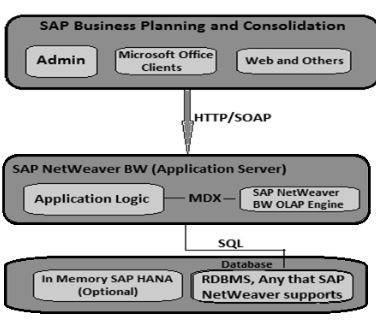
SAP BPC Overview
Fiscal planning, budgeting and soothsaying are important rates for any organization to run a business successfully. Integrated – planning and connection into one product. Single operation reduces conservation, increases data integrity, and simplifies deployment. It also enables flexible planning and connection functions.
Strategic plan:
It helps the operation platoon to formulate its vision, charge, core values and objects. The platoon develops strategic plans to maintain its competitive advantage in the business.
Budget:
It isn’t simply a vaccination of unborn issues. It’s also a plan of the organization’s conduct and anticipated operations in the coming time. The budget is prepared for active operation and dimension of commercial performance.
Reporting:
This ensures that performance progress is covered, problems are anticipated, and nonstop enhancement sweats are promoted.
Forecast:
It’s the act of prognosticating the results. This is done to show the changes in the internal and external terrain throughout the time. What determines how the internal or external terrain affects the original plans and budget? The main ideal is to give lower threat operation planning and more accurate information for decision timber.
What’s EPM in SAP?
The use of EPM results is getting wider in the fiscal divisions. It’s analogous to CPM( Corporate Performance Management), BPM( Business Performance operation) and FPM( Finance Performance Management). EPM is being used as a unique depository for managing applicable information.
Business needs benefits and features:
- Process Control Business Process Flow( BPF) ways for environment- Driven Workflow and Process effectiveness.
- Centralized data and operation operation.
- Status monitoring and workflow operation.
- Part- grounded security and stoner authentication.
- Dimensional inspection trail for budget, cast and factual.
- Interpretation control supports any number of performances.
- Data lockdown as per dimension or specified period.
- Compliance and auditability inspection follows the history of the entire planning, reporting and vaticinating.
- “ A Single interpretation of the verity ” at reported figures.
- Data- grounded translucency – and data change – visibility.
- Ensures responsibility as belief in figures increases power responsibility.
SAP BPC Architecture
SAP BPC Architecture. It uses colorful business rules and script sense for planning.
BPC Administration:
BPC Administration allows directors to perform conservation and setup tasks for BPC customer operations.BPC fiscal administration has two interfaces; A customer operation and a web interface. The Administration conduct pane lists the conduct available for both interfaces.
To start BPC administration:
Any of the following will work.
- Open a cybersurfer and type http://<' garçon name>/ osoft, where<' garçon name> is the name of your BPC garçon.
- From the Windows Start menu, choose SAP> BPC
- From your Windows desktop, click on the BPC icon
- From the Launch runner, elect BPC Administration
- From the Administration conduct pane, elect the task you want
The press customer is a Microsoft Explorer- suchlike window. Where we manage particulars similar as operation sets, operations, business rules, confines and business process flows. The cybersurfer allows customer operations to set and control operation parcels, as well as to maintain BPC web parameters.
Creating a new dimension:
Confines represent the realities of a business( eg, accounts, company canons, and orders). They represent master, textbook, and scale data for each business reality.It’s possible to produce new confines in a BPC operation set. There’s no restriction to produce multiple confines in SAP BPC. These confines also come with participating confines that are available for use in any operation within the app set.Some confines are needed. It must be present in all operations within the operation set. Whereas the dimension type determines the dereliction parcels to be included in the dimension. It’s possible to add fresh parcels as demanded.
BPC Reporting:
With BPC for Office, we’ve all the functionality of Microsoft that we’re used to. BPC for Office allows to collect data, induce reports, perform real time analysis and publish reports in colorful formats.You can take reports fully offline and distribute them grounded on stoner access rights.
BPC Security:
Druggies This is used to add druggies to the terrain and manage their access rights.Brigades You can define a group of druggies with the same access rights.Data Access Profile It enables setting up biographies for the tasks to be performed.Task Profile This is used to set up biographies and enable access to data in models.
SAP BPC client Profile:
There are over,000 BPC guests around the world. While they all partake in an introductory common set of capabilities, due to the flexible nature of the platform, each client has a unique BPC perpetration. They can configure results with their “ secret sauce ” and other stylish practices to give them a competitive edge in their assiduity. guests range from small and medium- sized businesses to the top ten members of the Fortune 500.
SAP bpc moment:
BPC also includes Business Process Flow( BPF) which can be used as a formal workflow for both fiscal and functional processes, or as a menu to organize colorful means including input forms, reports, books and dashboards. can be used as
BPC attracts druggies with its innovative stoner experience including native Excel integration. The authors of BPC at Outlook Soft understood that Excel was important for fiscal druggies to carry out their diurnal tasks. Copying and pasting information into a personal tool or using a web interface can not match the inflexibility, power, variety, and convenience of Excel. They successfully turned Excel into a “ window for databases ” and they removed numerous of the traditional pain points associated with Excel.
Core Capabilities
Plan:
Planning is generally defined as a long- range plan gauging several times, which can be entered into any combination of periodicity( weeks, months, quarter times). Some companies use models with strategic or long- range planning that run times or indeed decades into the future. These plans are generally at a advanced position than calculated or read. The planning cycle also combines colorful types of fiscal and non-financial information to form a complete view. BPC provides a platform to integrate business planning, strategy, operations and fiscal processes.
Budget:
A budget cycle is a complete outlook for the forthcoming time grounded on your business timetable. Some budgets begin with predefined hypotheticals or pretensions( top- down), while others begin with a set of detailed inputs from colorful actors in the organization( bottom- up). It’s relatively common for organizations to develop a budget that contains a combination of both top-down and nethermost-up hypotheticals, with multiple performances being developed during an iterative and cooperative process.
Forecast:
numerous companies have abandoned the traditional 12- month budget in favor of a rolling cast, which looks at the remaining months of the time and a full 12- 18 months( or further) into the future. BPC simply combines factual ages with cast ages into an order or interpretation. It facilitates more effective reporting and analysis. For illustration, the May cast interpretation( order) will have four ages( January – April) of factual data, and at least eight ages of cast data. It allows druggies to fluently compare the current cast with the former cast ages.
Conclusion
BPC has erected- in fiscal intelligence, including strong legal and operation connection capabilities. These capabilities include the capability to import data from colorful data sources. SAP BPC guests can enjoy a variety of integration options including real- time integration with SAP’s leading ERP result, S/ 4HANA. BPC also completely supports non-SAP ERP systems.
Numerous BPC druggies have multiple ERPs – One of our guests had so numerous accessions that they consolidated over 90 different GLs with different COA’s. fresh connection features include currency restatement, intercompany elimination, allocation, fractional power, equity pick- up, journal, and reporting and analysis. Reporting and analysis features include P&L, balance distance, cash inflow statement to accommodate internal and external fiscal reporting requirements.

