Home » Others Courses » Web Designing Course in Coimbatore

Web Designing Course in Coimbatore

(4.8) 17463 Ratings
  • Join the Web Designing Training in Coimbatore to build creative and responsive websites with expert guidance.
  • Learn essential tools such as HTML, CSS, JavaScript and modern design frameworks.
  • Work on real-time projects, website design, testing and deployment tasks.
  • Perfect for Students, Developers, Designers and IT professionals aspiring for web careers.
  • Choose from flexible batch schedules: Weekday, Weekend or Fast-Track classes.
  • Get placement support and career-focused guidance at our Web Designing training institute in Coimbatore.

Course Duration

50+ Hrs

Live Project

3 Project

Certification Pass

Guaranteed

Training Format

Live Online (Expert Trainers)
WatchLive Classes
Course fee at
₹14500

₹18000

11352+

Professionals Trained

10+

Batches every month

2658+

Placed Students

203+

Corporate Served

What You'll Learn

The Web Designing Course in Coimbatore helps learners to learn how to make websites that are both visually appealing and responsive.

Understand the core principles of web design including HTML, CSS and JavaScript for modern website development.

Develop creative and functional websites through hands-on training that emphasizes real-world applications.

Gain valuable exposure to design tools, frameworks and UI/UX concepts at a top Web Designing training in Coimbatore.

Learn advanced techniques such as responsive layouts, animations and cross-platform compatibility for better user experience.

Completing the program enhances your career prospects with skills needed to excel in the fast-growing digital design industry.

An Overview of Web Designing Course

The Web Designing Course in Coimbatore is structured to provide learners with complete knowledge of modern web design concepts, including responsive design, UI/UX principles and front-end technologies. Students who take web designing Training in Coimbatore gain practical experience working on real-world projects, participate in interactive exercises, and get guidance from experts in the field. The program offers flexible learning formats, such as self-paced modules and instructor-led sessions, catering to diverse learning preferences. Enrolling in this Web Designing Certification Course in Coimbatore enhances your design skills, making you highly attractive to employers seeking creative and technically skilled web designers. Completing the Web Designing course strengthens your career opportunities, opening doors to roles in digital agencies, IT firms and startups. This Web Designing training course also exposes learners to hands-on website creation, improving their confidence and efficiency in functional websites.

Additional Info

Exploring Future Trends for Web Designing Course

  • Responsive Design: Responsive design ensures websites adapt seamlessly across devices. Learners explore flexible grids, media queries and adaptive layouts. To improve user experience, training places a strong emphasis on mobile-first design techniques. Developing websites that work well on desktops, tablets, and smartphones is a hands-on project. Students who master responsive design are better equipped to meet the needs of modern web development. Students also learn to optimize images and media for faster loading. With the help of this technology, websites are guaranteed to remain functional across all screen sizes.
  • Progressive Web Apps (PWA): Participants gain knowledge of push alerts, fast-loading interfaces and offline functionality. Implementing service workers and caching methods is part of the training. Students acquire useful abilities to create user experiences that resemble apps. For contemporary web solutions, PWAs increase engagement, retention and conversion. In order to ensure smooth operation, learners also investigate app manifest files and background sync. PWAs are becoming more and more important for companies looking to increase mobile engagement.
  • AI-Powered Web Design: AI-powered web design uses automation to enhance creativity and functionality. Learners explore AI tools for layout generation, color schemes and content suggestions. Training focuses on integrating AI for personalized user experiences. Projects include testing AI-driven elements to improve interface efficiency. The future of web design is being shaped by this trend innovation. Students also practice AI-assisted image optimization and user behavior prediction. AI enables designers to produce websites more quickly, intelligently and uniquely.
  • Voice User Interfaces (VUI): In online interactions, voice-enabled interfaces are becoming more and more common. Students gain knowledge about how to use interactive dialogues, speech recognition, and voice commands. Training places a strong emphasis on hands-free navigation and accessibility. Creating websites that work with virtual assistants is one of the projects. VUI proficiency improves user engagement and expands the audience reach. This trend guarantees that websites accommodate people who want to browse without using their hands.
  • Motion UI & Micro-Interactions: Projects include developing virtual assistant-compatible websites. VUI expertise increases audience reach and enhances user engagement. Students also learn about the integration of natural language processing. This trend guarantees that websites accommodate people who want to browse without using their hands. Hands-on tasks involve designing micro-interactions for buttons, forms and menus. Motion UI skills create memorable, interactive user experiences. Students also explore animation libraries and performance tuning. These interactions make sites feel alive, increasing user satisfaction and engagement.
  • Minimalist & Clean Design: Three essential elements of minimalist design are clarity, white space and simplicity. Students learn effective color palettes, typography and layout structure. Creating clutter-free, aesthetically pleasing websites is part of the training. Projects concentrate on developing user-friendly interfaces with seamless navigation. This method successfully guides users toward desired tasks while improving readability.
  • Dark Mode & Theme Options: These days, dark mode is regarded as standard for modern web design. For accessibility, students experiment with color shifts and theme switching. Visual comfort and user preferences are included in training. Students design vibrant websites with themes of light and dark. Understanding theme design increases customer pleasure and retention. They also study theme-switching logic and CSS variables. In addition to making websites more aesthetically pleasing for prolonged use, dark mode lessens eye strain.
  • Motion Graphics & 3D Elements: Motion graphics and 3D elements captivate users both visually and emotionally. Students gain expertise in interactive animation, WebGL and three-dimensional design. Training places a strong emphasis on responsive integration and performance improvement. Projects involve adding dynamic elements to real websites. This trend enhances visual storytelling and engagement. Students also explore interactive 3D product displays for e-commerce. 3D design increases user immersion and sets websites apart visually.
  • No-Code & Low-Code Tools: Web development for non-programmers is accelerated by low-code and no-code platforms. Students investigate methods that use little coding to produce useful webpages. Automation and drag-and-drop builders are the main topics of instruction. Using these platforms to create actual websites is one of the projects. These abilities preserve originality while cutting down on development time. For further functionality, learners also use simple scripts and APIs. Designers may easily create prototypes and completely functional websites with the help of no-code solutions.
  • Accessibility & Inclusive Design: Inclusive design ensures websites are usable by all, including those with disabilities. Learners study ARIA roles, color contrast and keyboard navigation. Training emphasizes legal compliance and ethical design. Projects involve testing websites for accessibility standards. Mastering this trend increases reach and creates socially responsible web solutions. Students also learn screen reader testing and alternative content design. Accessible websites enhance usability, user satisfaction and brand reputation.

Tools and Technologies of Web Designing Course

  • Adobe Photoshop: Adobe Photoshop is a fundamental tool for web designers to create and edit graphics. Learners use it to design website layouts, banners and UI elements. Training covers photo editing, color correction and layer management. Students practice exporting optimized images for web use. Mastery of Photoshop ensures visually appealing and professional web graphics.
  • Adobe Illustrator: Adobe Illustrator is essential for creating scalable vector graphics. Participants learn to design logos, icons and illustrations for websites. Training includes working with shapes, paths and typography. Students gain skills in producing high-resolution graphics suitable for any screen size. Illustrator proficiency helps designers maintain quality across responsive designs.
  • Figma: Figma is a cloud-based application for prototyping and collaboration in UI/UX design. Students design systems and produce interactive mockups and wireframes. Training places a strong emphasis on feedback integration, version control and teamwork. Pupils work on creating layouts that mimic actual user interactions. Designers and developers can communicate easily when they know how to use Figma.
  • Adobe XD: Web interfaces can be efficiently designed and prototyped with Adobe XD. Participants gain knowledge about how to make clickable prototypes and interactive wireframes. Artboards, components and transitions are covered in training. Prior to development, students get practical experience testing user flows. Mastering XD accelerates the design-to-development workflow.
  • Sketch: Sketch is a macOS-based tool for web and mobile UI design. Learners use it for vector editing, symbols and reusable components. Training includes responsive design, typography and plugin integration. Students practice producing pixel-perfect layouts for web interfaces. Sketch proficiency ensures modern and efficient interface design.
  • WordPress: One of the top content management platforms for creating websites. Learners explore themes, plugins and page builders to design functional sites. Training includes customization, responsive layouts and SEO optimization. Students gain hands-on experience publishing live websites. WordPress skills are crucial for building versatile and dynamic web projects.
  • HTML5 & CSS3: The foundation of web structure and design is HTML5 and CSS3. Students produce aesthetically pleasing layouts and meaningful markup. Flexbox, grid systems, and responsive design methods are covered throughout the training. Students work on creating websites that work across browsers. Mastery of HTML5 and CSS3 ensures a strong foundation for web development.
  • JavaScript: JavaScript adds interactivity and dynamic behavior to websites. Learners implement features like sliders, pop-ups and animations. Training covers DOM manipulation, events and basic ES6 syntax. Students practice integrating scripts with HTML and CSS. JavaScript proficiency allows designers to enhance user engagement on web pages.
  • Bootstrap: Bootstrap is a framework for building responsive and mobile-first websites. Learners use pre-designed components, grids and utilities for faster development. Training emphasizes customization, layout structuring and consistency. Students gain skills creating polished, professional interfaces quickly. Bootstrap knowledge simplifies responsive design for modern web projects.
  • Git & GitHub: Git and GitHub are vital for version control and collaboration. Learners track changes, manage repositories and collaborate on web projects. Training covers commits, branches and pull requests. Students practice maintaining clean project histories and team collaboration. Mastery of Git ensures smooth development workflows and project integrity.

Roles and Responsibilities of Web Designing Course

  • UI Designer: Creating aesthetically beautiful and functional online interfaces is the aim of a UI designer. Students practice graphic elements, color palettes, typography and layout design. Training focuses on striking a balance between usability. Students gain skills in crafting responsive interfaces for different devices. This position makes sure that the website's appearance successfully draws in and holds on to users. Proficiency with UI design tools facilitates the creation of polished digital experiences.
  • UX Designer: UX designers increase user satisfaction by improving website navigation and interaction. Participants learn how to create wireframes, optimize flows and conduct user research. Prototyping, accessibility and usability testing are all covered in the training. Students have practical experience creating user-friendly experiences. This function connects technical design limitations with user wants. Proficiency guarantees that websites are useful and interesting.
  • Front-End Developer: Front-End Developers implement website designs into functional code. Learners work with HTML, CSS, JavaScript and responsive frameworks. Performance improvement and cross-browser compatibility are the main training objectives. Students work on creating dynamic web sites using mockups. This position guarantees users a smooth visual experience. Proficiency in front-end development is essential for contemporary online apps.
  • Graphic Designer: For web content, graphic designers produce unique images and graphics. Students become proficient with digital asset applications such as Photoshop, Illustrator and Figma. Training covers picture optimization, banner design and logo creation. Students get expertise in creating visuals that complement brand identity. This role enhances visual storytelling on websites. Proficiency ensures consistent and attractive visual communication.
  • Web Analyst: Web Analysts monitor user behavior, website traffic and engagement metrics. Learners work with analytics tools to gather actionable insights. Training includes data interpretation, A/B testing and conversion optimization. Students practice making data-driven recommendations to improve site performance. This role supports strategic decision-making for web success. Mastery in analytics helps optimize design and content strategies effectively.
  • Content Strategist: Content Strategists plan and manage website content to maximize engagement. Learners develop skills in SEO writing, content planning and information architecture. Training emphasizes relevance, readability and user experience. Students work on matching brand messaging to content. This position guarantees that the website's audience is efficiently communicated with. Proficiency increases site value, traffic and retention.
  • Interaction Designer: The primary focus of interaction designers is on a website's dynamic elements. Students investigate user feedback systems, micro-interactions and animations. Prototyping, testing and enhancement of interactive features are covered in training. Students learn how to create user-friendly and captivating websites. User pleasure and engagement are increased by this position. Mastery guarantees responsive and seamless cross-platform interactions.
  • Web Consultant: Web Consultants advise clients on website strategy, design and functionality. Learners develop skills in requirement gathering, design evaluation and problem-solving. Training includes assessing user experience and recommending improvements. Students practice aligning technical solutions with business goals. This role bridges client needs with effective web solutions. Expertise in consulting ensures successful and goal-oriented web projects.
  • SEO Specialist: SEO experts make websites more search friendly engines. Learners study keyword research, on-page optimization and technical SEO. Training includes content strategies, meta tags and backlink analysis. Students work on increasing organic traffic and website presence. This role ensures websites reach the right audience effectively. Proficiency in SEO increases engagement, conversions and online presence.
  • Web Project Coordinator: Web Project Coordinators manage design and development timelines efficiently. Learners focus on planning, task assignment and team communication. Training covers progress tracking, quality assurance and delivery management. Students practice ensuring projects meet deadlines and requirements. This role ensures smooth execution of web projects from start to finish. Mastery ensures effective collaboration and successful project outcomes.

Companies Hiring Web Designing Professionals

  • Infosys: Infosys hires web designers to enhance digital experiences for global clients. Professionals work on responsive design, UI/UX improvements and website optimization. Employees ensure device operation while putting imaginative layouts into practice. Proficiency in front-end development and analytics is highly valued. The design and innovation standards of Infosys are better met by those who have received web design training.
  • Wipro: For client-focused web solutions and digital marketing initiatives, Wipro hires web designers. To create excellent websites, designers work in tandem with developers and strategists. Practical knowledge of design tools, HTML, CSS and JavaScript is crucial. Experts help to enhance interface aesthetics and user engagement. Candidates who receive web design training are more equipped to succeed in Wipro's fast-paced projects.
  • TCS (Tata Consultancy Services): TCS employs web design experts for enterprise-level applications and interactive websites. Professionals enhance visual appeal, usability and website performance. Designers work collaboratively with product managers and engineers to align business goals with user experience. Knowledge of responsive and adaptive design is crucial. Web designing training equips learners to contribute effectively to TCS projects.
  • HCL Technologies: HCL Technologies seeks web designers for client websites, e-commerce platforms and internal portals. Professionals focus on creating visually appealing, user-friendly and efficient web interfaces. Designers use modern frameworks and tools to implement creative solutions. Collaboration with UI/UX teams ensures seamless digital experiences. Web designing training develops the practical skills required by HCL’s projects.
  • Cognizant: Cognizant hires web designers to produce eye-catching websites and offers online tools for a range of businesses. Professionals guarantee platform accessibility, usability and consistency. Designers combine strong front-end coding with imaginative graphics. Priority is given to user-focused solutions and real-world problem-solving. Web design training increases a candidate's chances of success in Cognizant's creative projects.
  • Accenture: Accenture recruits web design professionals to enhance client websites and internal digital tools. Designers implement modern layouts, interactive elements and performance optimizations. Professionals work on cross-platform compatibility and responsive designs. Creativity, coding skills and design thinking are highly valued. Web designing training prepares learners to meet Accenture’s standards for digital excellence.
  • Tech Mahindra: For mobile-friendly websites, online apps and user experience enhancements, Tech Mahindra is looking for web designers. Experts concentrate on accessibility, animations and user interface improvements. To provide efficient solutions, designers work in tandem with development and business teams. It is essential to comprehend the HTML, CSS and JavaScript frameworks. Training in web design gives applicants practical experience for Tech Mahindra projects.
  • IBM India: IBM hires web design professionals for enterprise platforms, digital marketing campaigns and interactive portals. Designers ensure visually consistent, responsive and user-friendly interfaces. Professionals integrate creative design with technical functionality. Collaboration with cross-functional teams is emphasized for efficient project delivery. Web designing training prepares candidates to excel in IBM’s innovative digital initiatives.
  • Capgemini: To create client-focused websites and digital solutions, Capgemini hires web designers. Professionals focus on UI/UX improvements, responsive designs and interactive elements. Designers work with analytics and content teams to optimize user engagement. Coding skills, design tools and creative problem-solving are essential. Web designing training enables candidates to meet Capgemini’s high standards for digital projects.
  • Mindtree: Mindtree recruits web designers to enhance corporate websites, applications and digital campaigns. Professionals create visually appealing, functional and interactive web experiences. Designers collaborate with developers and strategists to deliver innovative solutions. Practical skills in design software and front-end technologies are key. Web designing training equips learners to handle real-time projects in Mindtree’s dynamic environment.
View more

Web Designing Training Objectives

Participants should have a basic understanding of computers, familiarity with the internet and fundamental knowledge of HTML and graphics tools. No prior professional experience is required, but logical thinking and creativity will help learners grasp web design concepts faster.
The course equips learners with practical skills in HTML, CSS, JavaScript and responsive design. You will gain expertise in UI/UX principles, design software and project deployment. Completing this training enhances your portfolio and prepares you to work confidently on professional web projects.
Web designing is crucial as businesses move online and prioritize user experience. Skilled designers help create visually appealing, interactive and responsive websites, which are essential for brand presence. This makes web designers highly sought-after in both startups and established firms.
Yes, students will engage in live projects such as portfolio websites, e-commerce layouts and interactive landing pages. These projects allow learners to apply design principles, implement coding skills and understand user experience, giving them hands-on experience equivalent to professional environments.
  • UI/UX Designer
  • Front-End Developer
  • Web Developer
  • Interaction Designer
  • Digital Experience Specialist
  • HTML & CSS fundamentals
  • JavaScript & jQuery basics
  • Responsive Web Design principles
  • UI/UX Design concepts
  • Adobe Photoshop & Illustrator
  • IT & Software Development
  • Digital Marketing Agencies
  • E-commerce Companies
  • Media & Entertainment
  • Startups & Tech Firm
While the course enhances skills and portfolio readiness, actual job placement depends on individual performance, practical experience and interview preparation. However, most training institutes provide placement guidance, mock interviews and industry contacts to improve employability.
  • Hands-on web development skills
  • Proficiency in design software
  • Strong portfolio for job applications
  • Understanding of UI/UX principles
  • Knowledge of responsive design
Participants will become proficient with tools such Adobe Photoshop, Illustrator, Figma, Sketch, Dreamweaver, VS Code, Sublime Text, Bootstrap, WordPress, Chrome DevTools, Git/GitHub and Canva, enabling comprehensive design and development capabilities.
view More view Less

Web Designing Course Benefits

The Web Designing Certification Course in Coimbatore offers hands-on experience in HTML, CSS, JavaScript and UI/UX principles. Learners work on live projects and gain practical exposure through Web Designing internship in Coimbatore. The program emphasizes creating responsive, interactive and visually appealing websites under expert guidance. Completing this Web Designing course with placement support opens doors to top IT firms, startups and freelance opportunities.

  • Designation
  • Annual Salary
    Hiring Companies
  • 4.54L
    Min
  • 6.95L
    Average
  • 13.1L
    Max
  • 4.70L
    Min
  • 7.25L
    Average
  • 13.95L
    Max
  • 4.90L
    Min
  • 7.95L
    Average
  • 14.5L
    Max
  • 5.24L
    Min
  • 8.5L
    Average
  • 16.5L
    Max

About Web Designing Certification Training

Our Web Designing Course in Coimbatore offers in-depth knowledge in designing visually appealing and responsive websites. Through hands-on Web Designing projects, learners gain practical experience in HTML, CSS, JavaScript and UI/UX design. With 100% placement support, this course ensures excellent career opportunities in top IT companies and startups.

Top Skills You Will Gain
  • HTML Coding
  • CSS Styling
  • JavaScript Programming
  • Responsive Design
  • UI Development
  • UX Design
  • Graphic Designing
  • SEO Basics

12+ Web Designing Tools

Online Classroom Batches Preferred

Weekdays (Mon - Fri)
15 - Dec - 2025
08:00 AM (IST)
Weekdays (Mon - Fri)
17 - Dec - 2025
08:00 AM (IST)
Weekend (Sat)
20 - Dec - 2025
11:00 AM (IST)
Weekend (Sun)
21 - Dec - 2025
11:00 AM (IST)
Can't find a batch you were looking for?
₹18000 ₹14500 10% OFF Expires in

No Interest Financing start at ₹ 5000 / month

Corporate Training

  • Customized Learning
  • Enterprise Grade Learning Management System (LMS)
  • 24x7 Support
  • Enterprise Grade Reporting

Why Web Designing Course From Learnovita? 100% Money Back Guarantee

Web Designing Course Curriculam

Trainers Profile

Our Web Designing Course in Coimbatore is guided by experienced professionals who bring in-depth expertise in creating modern, user-friendly websites. Emphasizing experiential learning, you will work on live projects to master real-world design skills. We provide detailed Web Designing training materials that support your learning journey effectively. These resources help you gain practical knowledge to build visually appealing, responsive websites and excel in web design careers.

Syllabus for Web Designing Training Download syllabus

  • Basics of web design and development
  • Understanding web technologies
  • Difference between static and dynamic websites
  • Client-side vs. server-side concepts
  • Role of HTML, CSS and JavaScript
  • Structure of an HTML document
  • Headings, paragraphs and text formatting
  • Lists, links and images
  • Tables and forms
  • Semantic HTML tags
  • Audio and video integration
  • HTML5 new form elements
  • Local storage and session storage
  • Geolocation API basics
  • Responsive HTML tags
  • Introduction to CSS and its types
  • Selectors, properties and values
  • Colors, backgrounds and borders
  • Margins, padding and box model
  • Fonts and text styling
  • CSS positioning and display
  • Pseudo-classes and pseudo-elements
  • Flexbox layout design
  • CSS grid system
  • Animations and transitions
  • Variables, operators and expressions
  • Functions and scope
  • Events and event handling
  • Arrays and objects
  • DOM manipulation
  • ES6 features (let, const, arrow functions)
  • Template literals and destructuring
  • Promises and async/await
  • Event bubbling and delegation
  • Error handling
  • Importance of responsive design
  • Introduction to media queries
  • Fluid layouts and flexible images
  • Mobile-first design approach
  • Framework overview (Bootstrap basics)
  • Bootstrap grid system
  • Navigation bars and menus
  • Forms, buttons and components
  • Modal windows and alerts
  • Building responsive pages with Bootstrap
  • Introduction to Adobe Photoshop for web
  • Image optimization for web
  • Color theory and typography basics
  • Designing banners and icons
(15) view More view Less
Need customized curriculum?

Industry Projects

Project 1
Portfolio Website Development

Design and build a responsive personal portfolio website featuring sections for profile, skills, projects and contact form. This project helps learners practice HTML, CSS, JavaScript and responsive design principles effectively.

Project 2
E-Commerce Landing Page

Create a visually appealing e-commerce landing page with product highlights, image galleries and call-to-action buttons. This project emphasizes UI/UX design, responsive layouts and the use of frameworks like Bootstrap for modern styling.

Project 3
Interactive Blogging Platform

Develop a user-friendly blogging interface with categories, comment features and navigation menus. This project enhances skills in front-end technologies, dynamic page layouts and content presentation for real-world applications.

Career Support

Our Hiring Partner

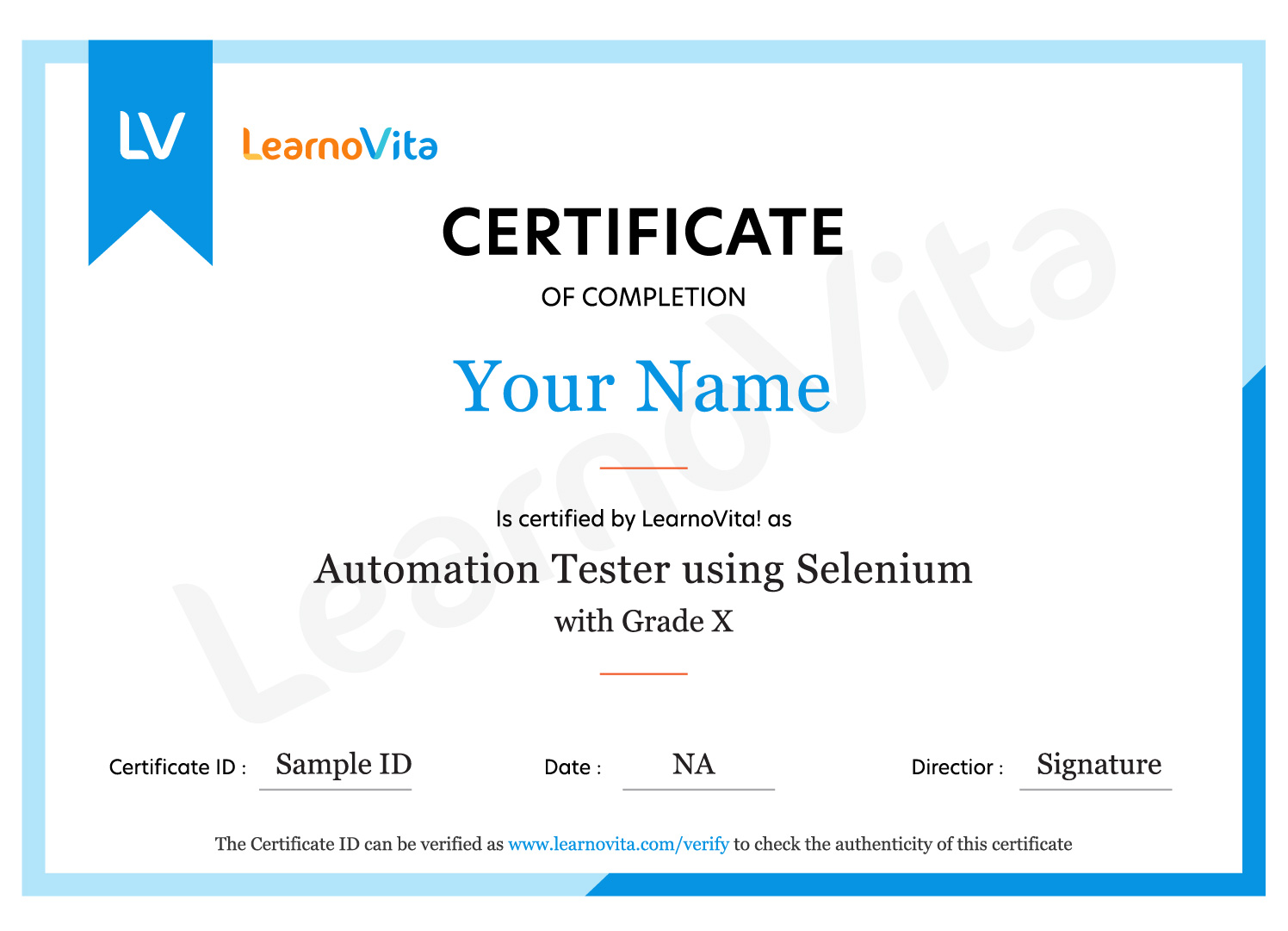
Exam & Web Designing Certification

  • Basic computer knowledge
  • Familiarity with the internet and browsers
  • Interest in design and creativity
  • Understanding of HTML and CSS basics (optional)
A Web Designing certification gives you industry-recognized validation of your skills in creating modern, user-friendly and responsive websites. It boosts your confidence, increases career opportunities and helps you stand out when applying for roles in design-focused industries.
Web Designing certification significantly improves your employability. It equips you with practical skills and a strong portfolio that attracts employers, increasing your chances of securing positions in leading companies or freelance opportunities.
  • Web Designer
  • UI/UX Designer
  • Front-End Developer
  • Graphic Web Specialist
With the help of the newest design techniques and resources, this certification equips you to design websites that are both aesthetically functional. It opens pathways to better-paying roles, freelancing opportunities and growth in creative industries, making you highly competitive in the job market.

Our Student Successful Story

checkimage Regular 1:1 Mentorship From Industry Experts checkimage Live Classes checkimage Career Support

How are the Web Designing Course with LearnoVita Different?

Feature

LearnoVita

Other Institutes

Affordable Fees

Competitive Pricing With Flexible Payment Options.

Higher Web Designing Fees With Limited Payment Options.

Live Class From ( Industry Expert)

Well Experienced Trainer From a Relevant Field With Practical Web Designing Training

Theoretical Class With Limited Practical

Updated Syllabus

Updated and Industry-relevant Web Designing Course Curriculum With Hands-on Learning.

Outdated Curriculum With Limited Practical Training.

Hands-on projects

Real-world Web Designing Projects With Live Case Studies and Collaboration With Companies.

Basic Projects With Limited Real-world Application.

Certification

Industry-recognized Web Designing Certifications With Global Validity.

Basic Web Designing Certifications With Limited Recognition.

Placement Support

Strong Placement Support With Tie-ups With Top Companies and Mock Interviews.

Basic Placement Support

Industry Partnerships

Strong Ties With Top Tech Companies for Internships and Placements

No Partnerships, Limited Opportunities

Batch Size

Small Batch Sizes for Personalized Attention.

Large Batch Sizes With Limited Individual Focus.

Additional Features

Lifetime Access to Web Designing Course Materials, Alumni Network, and Hackathons.

No Additional Features or Perks.

Training Support

Dedicated Mentors, 24/7 Doubt Resolution, and Personalized Guidance.

Limited Mentor Support and No After-hours Assistance.

Web Designing Course FAQ's

Certainly, you are welcome to join the demo session. However, due to our commitment to maintaining high-quality standards, we limit the number of participants in live sessions. Therefore, participation in a live class without enrollment is not feasible. If you're unable to attend, you can review our pre-recorded session featuring the same trainer. This will provide you with a comprehensive understanding of our class structure, instructor quality, and level of interaction.
All of our instructors are employed professionals in the industry who work for prestigious companies and have a minimum of 9 to 12 years of significant IT field experience. A great learning experience is provided by all of these knowledgeable people at LearnoVita.
  • LearnoVita is dedicated to assisting job seekers in seeking, connecting, and achieving success, while also ensuring employers are delighted with the ideal candidates.
  • Upon successful completion of a career course with LearnoVita, you may qualify for job placement assistance. We offer 100% placement assistance and maintain strong relationships with over 650 top MNCs.
  • Our Placement Cell aids students in securing interviews with major companies such as Oracle, HP, Wipro, Accenture, Google, IBM, Tech Mahindra, Amazon, CTS, TCS, Sports One , Infosys, MindTree, and MPhasis, among others.
  • LearnoVita has a legendary reputation for placing students, as evidenced by our Placed Students' List on our website. Last year alone, over 5400 students were placed in India and globally.
  • We conduct development sessions, including mock interviews and presentation skills training, to prepare students for challenging interview situations with confidence. With an 85% placement record, our Placement Cell continues to support you until you secure a position with a better MNC.
  • Please visit your student's portal for free access to job openings, study materials, videos, recorded sections, and top MNC interview questions.
LearnoVita Certification is awarded upon course completion and is recognized by all of the world's leading global corporations. LearnoVita are the exclusive authorized Oracle, Microsoft, Pearson Vue, and Web Designing exam centers, as well as an authorized partner of Web Designing . Additionally, those who want to pass the National Authorized Certificate in a specialized IT domain can get assistance from LearnoVita's technical experts.
As part of the training program, LearnoVita provides you with the most recent, pertinent, and valuable real-world projects. Every program includes several projects that rigorously assess your knowledge, abilities, and real-world experience to ensure you are fully prepared for the workforce. Your abilities will be equivalent to six months of demanding industry experience once the tasks are completed.
At LearnoVita, participants can choose from instructor-led online training, self-paced training, classroom sessions, one-to-one training, fast-track programs, customized training, and online training options. Each mode is designed to provide flexibility and convenience to learners, allowing them to select the format that best suits their needs. With a range of training options available, participants can select the mode that aligns with their learning style, schedule, and career goals to excel in Web Designing .
LearnoVita guarantees that you won't miss any topics or modules. You have three options to catch up: we'll reschedule classes to suit your schedule within the course duration, provide access to online class presentations and recordings, or allow you to attend the missed session in another live batch.
Please don't hesitate to reach out to us at contact@learnovita.com if you have any questions or need further clarification.
To enroll in the Web Designing at LearnoVita, you can conveniently register through our website or visit any of our branches in India for direct assistance.
Yes, after you've enrolled, you will have lifetime access to the student portal's study materials, videos, and top MNC interview questions.
At LearnoVita, we prioritize individual attention for students, ensuring they can clarify doubts on complex topics and gain a richer understanding through interactions with instructors and peers. To facilitate this, we limit the size of each Web Designing Service batch to 5 or 6 members.
The average annual salary for Web Designing Professionals in India is 3 LPA to 7 LPA.
view More view Less
Career Assistance
  • Build a Powerful Resume for Career Success
  • Get Trainer Tips to Clear Interviews
  • Practice with Experts: Mock Interviews for Success
  • Crack Interviews & Land Your Dream Job

Find Web Designing Online Course in Other Cities

Get Our App Now!