

- Understanding Agile Methodologies and Principles | A Complete Tutorial
- What is a Work Breakdown Structure (WBS)? | Learn Overview, Steps, Benefits
- Traditional Project Management Tutorial | A Comprehensive Guide
- Total Quality Management (TQM): Complete Guide [STEP-IN]
- Total Productive Maintenance Tutorial | Get an Overview
- Virtual Team Tutorial – Learn Origin, Definition and its Scope
- The Rule of Seven in Project Management – Tutorial
- Make or Buy Decision – A Derivative Tutorial for Beginners
- What is Halo Effect? | Learn More through Tutorial
- Balanced Score Card Tutorial | Learn with Definition & Examples
- What is Supply Chain Management? | Tutorial with Examples
- Succession Planning Tutorial | A Complete Guide with Definitions
- What is Structured Brainstorming? | Quickstart & Learn the Tutorial
- Stress Management Tutorial | A Comprehensive Guide for Beginners
- What is a Statement of Work? | Learn with Definition & Examples
- What is Stakeholder Management? – The Ultimate Guide for Beginners
- How to Create a Staffing Management Plan? | Learn from Tutorial
- What is Resource Leveling? | A Comprehensive Tutorial
- Requirements Collection Tutorial: Gather Project Needs
- What Is a RACI Chart? | Learn with Example & Definitions
- Quality Assurance vs Quality Control: Tutorial with Definitions & Differences
- Project Workforce Management Tutorial | A Definitive Guide
- Project Time Management Tutorial: Strategies, Tips & Tools
- Project Management Success Criteria Tutorial | Understand and Know More
- Identify Risk Categories in Project Management | A Comprehensive Tutorial
- Project Records Management Tutorial | Quickstart -MUST READ
- Project Quality Plan (PQP) Tutorial | Ultimate Guide to Learn [BEST & NEW]
- Project Portfolio Management | A Defined Tutorial for Beginners
- Goals of a Project Manager Tutorial | The Ultimate Guide
- Project Management Triangle Tutorial: What It Is and How to Use
- Project Management Tools Tutorial | Learn Tools & Techniques
- What is PMO (project management office)? | A Complete Tutorial from Scratch
- Project Management Lessons | Learn in 1 Day [ STEP-IN ]
- What is a Project Kickoff Meeting? | Learn Now – A Definitve Tutorial
- Project Cost Management Tutorial | Steps, Basics, and Benefits
- Types of Contracts in Project Management | Learn with Examples
- Project Activity Diagram | Ultimate Guide to Learn [BEST & NEW]
- What is Project Procurement Management? | Tutorial Explained
- Procurement Documents Tutorial | The Ultimate Guide
- Process-Based Project Management Tutorial: A Beginner’s Guide
- What Is PRINCE2 Project Management? | A Definitive Tutorial for Beginners
- Effective Presentation Skills – Learn More through Tutorial
- Powerful Leadership Skills Tutorial | The Ultimate Guide
- PERT Estimation Technique Tutorial | Explained with Examples
- Pareto Chart Tool Tutorial | Learn Analysis, Diagram
- Organizational Structure Tutorial: Definition and Types
- Negotiation Skills for Project Management | Learn from the Basics
- Monte Carlo Analysis in Project Management Tutorial | A Perfect Guide to Refer
- Effective Management Styles Tutorial | The Ultimate Guide
- Management by Objectives (MBO) Tutorial | Overview, Steps, Benefits
- Leads, Lags & Float – Understand the Difference through Tutorial
- What is Knowledge Management? – Tutorial Explained
- What is Just-in-Time Manufacturing (JIT)? | Know More through Tutorial
- Gantt Chart Tool Tutorial: The Ultimate Guide
- Extreme Project Management Tutorial – Methodology & Examples
- Introduction for Event Chain Methodology Tutorial | Guide For Beginners
- Enterprise Resource Planning (ERP) | A Complete Tutorial for Beginners
- What Is Design of Experiments (DOE)? | Learn Now – A Definitve Tutorial
- Decision Making Tutorial – Know about Meaning, Nature, Characteristics
- Critical Path Method Tutorial | How to use CPM for project management
- What is Critical Chain Project Management? | A Complete Tutorial
- What is Conflict Management? | Learn the Definition, styles, strategies through Tutorial
- Effective Communication Skills Tutorial – Definitions and Examples
- Communication Models Tutorial – Project Management
- Methods of Communication Tutorial | A Complete Learning Path
- Communication Management Tutorial | Know more about Plans & Process
- What are Communication Channels? | Learn Now Tutorial
- Communication Blocker Tutorial | Explained with Examples
- Cause and Effect Diagrams Tutorial | The Ultimate Guide
- What is Benchmarking? | Technical & Competitive Tutorial
- Seven Processes of Prince2 Tutorial | Everything you Need to Know
- Design Thinking Tutorial – Quick Guide For Beginners
- What is Performance Testing | A Complete Testing Guide With Real-Time Examples Tutorial
- What is Confluence? : Tutorial For Beginners | A Complete Guide
- Lean Six Sigma Tutorial
- Agile Scrum Tutorial
- PMI-RMP Plan Risk Management Tutorial
- Designing the Blueprint Delivery Tutorial
- What is Confluence? : Tutorial For Beginners | A Complete Guide
- Program Benefits Management Tutorial
- Continuous Improvement – Agile Value Stream Mapping
- Program Organization Tutorial
- Risk and Issue Management Tutorial
- Project Integration Management Tutorial
- Planning and Control Tutorial
- Program Management Principles Tutorial
- program strategy Alignment Tutorial
- PMP Tutorial
- Program Governance Tutorial
- Program Life Cycle Management Tutorial
- PMP Exam Preparation Tutorial
- PMI-PgMP Tutorial
- Agile Methodologies and Frameworks- Kanban and Lean Management Tutorial
- JIRA Tutorial
- Primavera P6 Tutorial
- Understanding Agile Methodologies and Principles | A Complete Tutorial
- What is a Work Breakdown Structure (WBS)? | Learn Overview, Steps, Benefits
- Traditional Project Management Tutorial | A Comprehensive Guide
- Total Quality Management (TQM): Complete Guide [STEP-IN]
- Total Productive Maintenance Tutorial | Get an Overview
- Virtual Team Tutorial – Learn Origin, Definition and its Scope
- The Rule of Seven in Project Management – Tutorial
- Make or Buy Decision – A Derivative Tutorial for Beginners
- What is Halo Effect? | Learn More through Tutorial
- Balanced Score Card Tutorial | Learn with Definition & Examples
- What is Supply Chain Management? | Tutorial with Examples
- Succession Planning Tutorial | A Complete Guide with Definitions
- What is Structured Brainstorming? | Quickstart & Learn the Tutorial
- Stress Management Tutorial | A Comprehensive Guide for Beginners
- What is a Statement of Work? | Learn with Definition & Examples
- What is Stakeholder Management? – The Ultimate Guide for Beginners
- How to Create a Staffing Management Plan? | Learn from Tutorial
- What is Resource Leveling? | A Comprehensive Tutorial
- Requirements Collection Tutorial: Gather Project Needs
- What Is a RACI Chart? | Learn with Example & Definitions
- Quality Assurance vs Quality Control: Tutorial with Definitions & Differences
- Project Workforce Management Tutorial | A Definitive Guide
- Project Time Management Tutorial: Strategies, Tips & Tools
- Project Management Success Criteria Tutorial | Understand and Know More
- Identify Risk Categories in Project Management | A Comprehensive Tutorial
- Project Records Management Tutorial | Quickstart -MUST READ
- Project Quality Plan (PQP) Tutorial | Ultimate Guide to Learn [BEST & NEW]
- Project Portfolio Management | A Defined Tutorial for Beginners
- Goals of a Project Manager Tutorial | The Ultimate Guide
- Project Management Triangle Tutorial: What It Is and How to Use
- Project Management Tools Tutorial | Learn Tools & Techniques
- What is PMO (project management office)? | A Complete Tutorial from Scratch
- Project Management Lessons | Learn in 1 Day [ STEP-IN ]
- What is a Project Kickoff Meeting? | Learn Now – A Definitve Tutorial
- Project Cost Management Tutorial | Steps, Basics, and Benefits
- Types of Contracts in Project Management | Learn with Examples
- Project Activity Diagram | Ultimate Guide to Learn [BEST & NEW]
- What is Project Procurement Management? | Tutorial Explained
- Procurement Documents Tutorial | The Ultimate Guide
- Process-Based Project Management Tutorial: A Beginner’s Guide
- What Is PRINCE2 Project Management? | A Definitive Tutorial for Beginners
- Effective Presentation Skills – Learn More through Tutorial
- Powerful Leadership Skills Tutorial | The Ultimate Guide
- PERT Estimation Technique Tutorial | Explained with Examples
- Pareto Chart Tool Tutorial | Learn Analysis, Diagram
- Organizational Structure Tutorial: Definition and Types
- Negotiation Skills for Project Management | Learn from the Basics
- Monte Carlo Analysis in Project Management Tutorial | A Perfect Guide to Refer
- Effective Management Styles Tutorial | The Ultimate Guide
- Management by Objectives (MBO) Tutorial | Overview, Steps, Benefits
- Leads, Lags & Float – Understand the Difference through Tutorial
- What is Knowledge Management? – Tutorial Explained
- What is Just-in-Time Manufacturing (JIT)? | Know More through Tutorial
- Gantt Chart Tool Tutorial: The Ultimate Guide
- Extreme Project Management Tutorial – Methodology & Examples
- Introduction for Event Chain Methodology Tutorial | Guide For Beginners
- Enterprise Resource Planning (ERP) | A Complete Tutorial for Beginners
- What Is Design of Experiments (DOE)? | Learn Now – A Definitve Tutorial
- Decision Making Tutorial – Know about Meaning, Nature, Characteristics
- Critical Path Method Tutorial | How to use CPM for project management
- What is Critical Chain Project Management? | A Complete Tutorial
- What is Conflict Management? | Learn the Definition, styles, strategies through Tutorial
- Effective Communication Skills Tutorial – Definitions and Examples
- Communication Models Tutorial – Project Management
- Methods of Communication Tutorial | A Complete Learning Path
- Communication Management Tutorial | Know more about Plans & Process
- What are Communication Channels? | Learn Now Tutorial
- Communication Blocker Tutorial | Explained with Examples
- Cause and Effect Diagrams Tutorial | The Ultimate Guide
- What is Benchmarking? | Technical & Competitive Tutorial
- Seven Processes of Prince2 Tutorial | Everything you Need to Know
- Design Thinking Tutorial – Quick Guide For Beginners
- What is Performance Testing | A Complete Testing Guide With Real-Time Examples Tutorial
- What is Confluence? : Tutorial For Beginners | A Complete Guide
- Lean Six Sigma Tutorial
- Agile Scrum Tutorial
- PMI-RMP Plan Risk Management Tutorial
- Designing the Blueprint Delivery Tutorial
- What is Confluence? : Tutorial For Beginners | A Complete Guide
- Program Benefits Management Tutorial
- Continuous Improvement – Agile Value Stream Mapping
- Program Organization Tutorial
- Risk and Issue Management Tutorial
- Project Integration Management Tutorial
- Planning and Control Tutorial
- Program Management Principles Tutorial
- program strategy Alignment Tutorial
- PMP Tutorial
- Program Governance Tutorial
- Program Life Cycle Management Tutorial
- PMP Exam Preparation Tutorial
- PMI-PgMP Tutorial
- Agile Methodologies and Frameworks- Kanban and Lean Management Tutorial
- JIRA Tutorial
- Primavera P6 Tutorial
Extreme Project Management Tutorial – Methodology & Examples
Last updated on 24th Aug 2022, Blog, Project Management, Tutorials
 (5.0) | 18714 Ratings 3006
 Introduction
There are many methodologies and techniques used when it comes to project management.
Some of the methodologies have been there in practice for decades and some of them are brand new.
The latter methodologies have been introduced to the world of project management in order to address some of the complex faced by the old methodologies when it comes to addressing modern needs and challenges of project management.
Extreme project management is one of the modern approaches to project management in the software industry.
The software industry is a rapidly growing and fast changing domain.
Most of the software development projects do have changing needs from the inception to the end of the project.
Adding new requirements or changing the needs during the project execution period is one of the main challenges faced by the traditional project management approach.
The new approach, Extreme Project Management, mainly addresses the aspect of the changing requirements.
The Definition
Let’s do some visual comparison between the traditional project management approach and extreme project management approach in order to understand the nature of extreme project management clearly.
In this traditional approach, the project phases look like below
By comparing the two visual representations now understand the dynamics of an extreme approach.
In extreme project management methodology, there are no fixed project phases and fixed set of rules on how to execute the
project activities.
Rather, extreme methodology adapts to the situation and executes the project activity as best way possible.
By nature, extreme project management methodology does not have length deadlines or delivery dates.
The delivery cycles are short and usually they are two weeks.
Therefore, the entire project team is focused on delivering the scope of the delivery in a small term.
This allows the team to welcome any scope or need changes for the next delivery cycle.
Extreme project management characteristics

There is a rough idea about a goal but a small idea about how to achieve that goal.
The typical tools, templates, and methods that engineers have traditionally utilized don’t contribute much to the administration of extreme projects.
Extreme management project managers experiment, learn from the results, and apply their expertise to the next project cycle rather than taking the safe route. They debate the best alternative with the customer.
Extreme Vs Conventional Project Management
The team members are given a lot of freedom to add the difference to the project team.
Whenever a team member feels making a decision that will add value to the overall project, it is permitted by the project management.
In addition, every individual of the project team is responsible for the management of their own assignment and the quality of the same.
In contrast, the traditional approach is a more streamlined, well-defined approach where the project manager rules the entire team towards project goals.
In extreme project management, team members collectively share the project management responsibilities.
The Mindset
Mindset is the most risk factor when it comes to extreme project management.
The team should undergo comprehensive training on extreme approaches in order to understand the basics and core principles of the approach.
The individuals also get to gauge themselves and see whether they are a suit or not.
In an extreme approach, things are done totally a different way, when compared to the traditional approaches.
Therefore, changing the mindset of the project team is one of the major requirements and responsibilities of the management team.
When it comes to changing the mindset, consider the below rules as the ground rules for extreme approach for project management.
- Requirements and project activities being chaotic is a normal
- Uncertainty is the most certain characteristic of the extreme project
- This type of projects are not fully a controllable
- Change is the king and need to welcome it every possible way
- The feeling of security is improved by relaxing the project controls
Self-Management
One of the crucial components of extreme project management is self-management.
There is no central project management authority in projects.
The project manager is just a facilitator and also a mentor.
The project management responsibilities are distributed among project team members.
Every member of the project should execute the management responsibilities and indirectly contribute to the management function of the project.
The Extreme Project Management Life Cycle model consists of five phases
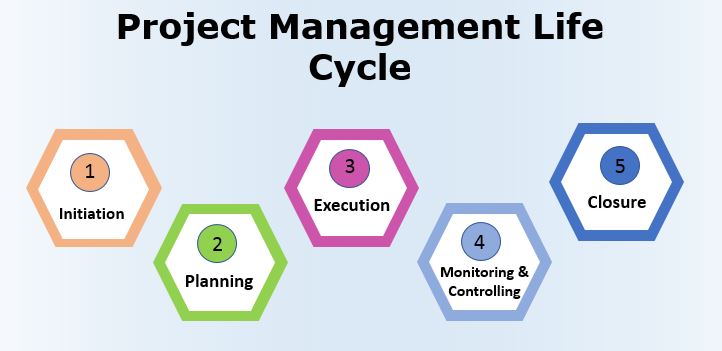
Envision- Describe the vision in detail before beginning an extreme project management strategy.
Speculate – Encourage the team to engage in a process of creative thinking and brainstorm concepts that will help realize the vision.
Innovate – Challenge the group to put their hypotheses to the test by developing original solutions.
Re-evaluate – As the cycle nears completion, the team must review its progress.
Disseminate – After a learning process, it is important to share the information and put it to use in both subsequent project stages and future projects in general.
How Extreme Project Management (XPM) is different from Traditional Project Management (TPM) :
Traditional Project Management is a solution made for construction and engineering projects as they have specific goals and a well-defined path. But today, most have no specific paths and also needs are frequently changing.
Unlike traditional management, where process is more predictable, in extreme project management can grow and develop in the chaotic environment where the level of certainty is low.
Generally the traditional approach is more streamlined and extreme and one is more flexible.
Now, few of the differences between the two approaches are :
| EXTREME PROJECT MANAGEMENT | TRADITIONAL PROJECT MANAGEMENT |
|---|---|
| XPM is future oriented | TPM is past oriented |
| It is more about the leading. | It is more about managing. |
| It is about changing approach to the world | It tried to change the world. |
| It made the process a servant of people. | It made people the servants of process | It is about distributing the control. | It is about centralizing control. |
When to use extreme project management
Whether eam will employ a direct and well-structured traditional project management or the radical extreme project management approach depends on the project they are involved in.
Should use extreme project management when the projects need:
Fast-paced work
- Frequent changes the project progresses due to the dynamic environment
- A trial-and-error approach to see what that works
- Self-correcting processes when things go to wrong
- People-driven processes instead of process-driven
- Extreme project management examples
- Let us look at an example of extreme project management :
- XPM example 1:
- Software development
- The project is to develop a new app, like a game.
- The idea is to make it fun and addictive.
- Otherwise there are no rules.
- From the brainstorming phase to trying out various game rules and objectives, XPM is a great method.
- XPM example 2:
- Marketing campaign
- The project is to come up with a campaign to reach as more new eyeballs as possible, and to get click-throughs to a website and users to fill out the webform.
- Again, the style, text, art and the advertising techniques can be anything.///////
- And the team can also use a lot of A/B testing and other systems for getting feedback and rapidly adapting with XPM.
Advantages of extreme project management

Unlike other methodologies that rely on software tools and templates, extreme approach is more people-centric:
It’s holistic
Although it contains methods, tools, and templates, they only make sense if they refer to the project as the whole. In other words, it allows to see the project as a single system without analyzing its parts
It’s people-centric
it puts emphasis on project dynamics, meaning it permits stakeholders to communicate and interact. This helps to reach meaningful solutions and meet the client’s needs.
It’s humanistic
One of the principles of this approach is to take into account the quality of life of the stakeholder as they are baked into a project.
Because people are an integral part of a project, their job satisfaction and the team culture they developed can have a profound effect on the business
It’s business focused
once reached the project’s outcome, can have a clear insight into how the project can benefit the client.
The team is constantly focused on delivering value soon and often.It’s reality based
It allows to work in the more unpredictable environment that is prone to change and helps to recognize that cannot change the reality to adapt to the project
Disadvantages of extreme project management practices
A top of XPM is a lack of focus, clear deadlines, and known deliverables.
Employees working on extreme projects ,sometimes falter for lack of direction.
XPM runs the risk of scope creep, as there are no obvious halts to new ideas being created.
Clients and stakeholders sometimes feel out of the loop when the projects are being done with an extreme method.
Conclusion
Extreme project management is like living on various planets.
Cannot compare extreme approaches to the traditional approach and try to find truce.
Therefore, moving from a traditional approach to an extreme approach is not quite as simple as moving from Windows to Mac.
If having the responsibility of managing a team through an extreme approach, first see ready for the challenge.
Go through a good training on extreme project management and learn more.
Never try to explain or approach extreme project tasks through conventional definitions and approaches.

